Ten Ways to Happier Life

The road to happiness is unique for each person. The 10 Keys to Happier Living that regularly contribute to a happier and more meaningful life have been established based on recent trends.

1. Giving

Being kind and helpful to others enhances not only their pleasure but also enhances our happiness. According to studies, when we act kindly, our brain gets a boost, activating the “reward center,” which makes us feel good. It can help us forget about our troubles. Giving and kindness are also our sense of community, which is vital for our welfare. They also help create more peaceful and prosperous societies for all.

2. Relational

These relationships, whether with our spouses, families, friends, co-workers, neighbours, or other members of our communities, can all boost resilience and happiness. Therefore, taking action to create, maintain, and enhance our relationships is crucial. A strong sense of self-worth can result from having close relationships with family and friends because they give us love, meaning, and support. A sense of belonging can be facilitated by our more extensive social networks, such as those in our local area, at work, school, or other institutions. Indeed, studies demonstrate that those in solid relationships are more satisfied and healthy and may even live longer. In addition, a robust social support system or network may boost our disease resistance, lower our risk of heart disease, and slow the deterioration of our mental faculties with age.


3. Exercise

There are many ways to take care of our physical well-being, like working out, moving more throughout the day, getting enough sleep, eating wholesome foods, drinking plenty of water, and going outside in the daylight. All of these have a direct effect on how we feel and behave. In addition to being positive for our mental and physical health in the long run, they can instantly improve our mood. Numerous scientific studies have demonstrated exercise’s many advantages for our happiness and psychological wellness. Physical activity and exercise can aid in managing, treating, and even preventing depression and anxiety. It can help us feel more confident, manage stress better, sleep better, and think more clearly, all of which will enhance how well our brains work. We can all take simple steps to be more active daily without running marathons. The endless activities that can improve our mindsets include walking, running, dancing, swimming, cycling, and yoga. For our bodies, emotions, and minds to work correctly, we must get enough high-quality sleep. However, this is only sometimes simple to achieve when our minds are preoccupied with anxieties and to-do lists or when technology tempts us to stay awake and online. You can do several things to make it easier to feel happier, including investing in your sleep.

4. Awareness

Positivity can have a strong foundation if one is observant. According to studies, practicing mindfulness can lower stress levels, assist us in controlling our emotions and reactions, help us pay closer attention to how others and ourselves are feeling, and help us develop compassion for both. As a result, we may improve our relationships, make better decisions, and generally feel happier and more at peace. Both at work and in school, it can be advantageous. Although everyone has a different level of innate awareness, everyone can learn to be more mindful, and there are many ways to incorporate it into daily life. It’s easy, but the practice is required. Consider it brain-training for you!
5. Try It Out

No matter our age, being open to new experiences and learning can be enjoyable and fuel our well-being while boosting our confidence and creativity. Education is not only for school; it is for life. Research suggests that learning something new might make us feel better and function better. It does not imply obtaining extra credentials. There are many opportunities for us to engage in informal learning about the subjects or abilities we are interested in or passionate about, whether online, in person, in our community, or at work. It may involve exploring something completely new, developing our talents through a pastime, or learning about a subject we’re currently interested in. We can constantly attempt something new or learn something new!

6. Purpose

A sense of purpose, optimism, and hope can help one feel happier. With an upbeat or hopeful view, we are more likely to feel good, be more self-assured, be more content with life overall, have better physical health, and be less depressed. Additionally, we are more likely to look after our physical well-being and stick with medical treatments. But, of course, we need to be realistic. Still, hope and optimism also make us stronger because they help us deal with challenging situations, deal with conflicts with other people in a healthy way, approach problems more actively and with a solution-focused mind, and be more open to helping from other people. Research shows that setting and achieving essential objectives can improve our happiness and wellness and help us link the present to the future. In addition, science demonstrates that there are future-focused practical acts we can do that can help to influence how joyful we feel right now, even though our personalities or circumstances may lead us to regard the future more positively or negatively.

7. Perseverance

Everyday tensions and minor irritations are common, but we occasionally face major disappointments, failures, unforeseen changes, and difficulties. Many of us will also go through traumatic experiences, such as losing a loved one, losing our job unexpectedly, getting into an accident, or becoming seriously ill. Being resilient does not guarantee that we will never experience negative emotions such as pain, upset, sorrow, sadness, fear, or rage. However, it implies that we can develop effective coping mechanisms immediately and, over time, accept what has occurred, adapt, and eventually move on. According to research, resilience is a common trait many ordinary individuals share.

Numerous research in psychology, neurology, medicine, and other disciplines have demonstrated that humans can learn strategies, routines, and ways of thinking that can strengthen and increase our resilience. Therefore, even though life may take unexpected turns, we can improve our skill set and cultivate our internal and external resources to aid in our ability to adapt fast, successfully handle obstacles, recover more quickly, and even learn. As a result, we may experience less despair and anxiety and even age well. Furthermore, the same abilities can support our development and growth in other areas by assisting us in managing our stress of embracing new opportunities.

8. Emotions

More than just feelings, emotions are. They consist of transient physiological changes that affect our behaviour and accumulate. While unpleasant emotions like dread developed to help humans live by avoiding danger, for example, by invoking a “fight, flight, or freeze response,” the power of pleasurable emotional experiences wasn’t fully understood until relatively recently.
9. Acceptance

How content and resilient we are can significantly influence our feelings and feelings about ourselves. A key element of psychological health is accepting that, like all humans, we have qualities and flaws, make mistakes, and occasionally fail. Although we still feel horrible when we make mistakes, we don’t focus on them as much or criticise ourselves as much. As a result, we can advance, learn, and grow better. It can improve our relationships and increase our sympathy for others. We are also less likely to feel embarrassed and retreat from others. Research suggests we can develop greater self-acceptance. Our happiness can be increased by learning self-compassion, using our abilities more effectively, and dealing with or working around our flaws. It might be more crucial than ever right now. Social media makes it very simple to contrast how we internally feel about ourselves with how we view others and their lives. However, the majority of us only share our best selfies online. Rather than showing us as we are, we can even feel the need to modify or filter our images to make us look a certain way. To legitimise the photographs we’ve shared, we look for other people’s “likes,” and if we don’t receive enough of them, we feel horrible about ourselves. Although it can harm us at any age, it can be most harmful when we’re young. Being able to know and embrace our entire selves, to be real rather than attempting to be flawless, is a more solid foundation for a happier existence at any age. 

10. Meaning

When we ask people what happiness is to them, their first responses typically refer to pleasures, things that temporarily make them happy, or other transient, happy sensations. They quickly start to consider a new kind of happiness, though. Examples of entities that give life purpose include friends, family, pets, employment, volunteering, education, hobbies, creative endeavours like creating music or art, nature, and faith. Although working on and toward these things only sometimes feels enjoyable at the time, doing so leads to longer-term fulfilment and satisfaction.

Psychologists concur that behaviours can help us find or create meaning and meaning matters for pleasure. But finding and developing purpose in your life can be aided by all the other keys to happier living.

“Saral hu Saadharn nhi” (Simplicity is not Ordinary). This phrase encapsulates her entire existence. A woman of few words, a daydreamer, who is certain that there is life beyond stars. An HR professional who began her writing journey when corona knocked on our doors. A Content Writer, Screenplay Writer, and published Author. She is die-hard romantic and that reflects in her quotes, poems and short stories and currently working on her first book. She enjoys cooking, dancing, singing, travelling, and is a huge Bollywood enthusiast. She is a wife, a mother and a friend you can most certainly rely on.

Follow Naveeta Shokeen

Coping with Anger

ANGER IN PARENT

When parents are angry, it is crucial to understand the underlying cause. Parents may feel overwhelmed and lack the resources or support to manage their emotions. Showing empathy and understanding can help de-escalate the situation. It is also essential to give them space and time to cool off and return to the conversation in a calmer state. 

If the anger becomes too intense or threatening, it is vital to seek professional help.
ANGRY CHILD 

If you suspect a child is out of control, the first step is to remain calm and provide a safe, secure environment for them to feel safe. Listening to the child and understanding what may be causing the anger is mandatory. If the child is feeling frustrated, talk to them calmly and in learning to help them identify and express their feelings. 
If the child is in danger of becoming violent, it is paramount to remove them from the situation and reach out to a mental health professional for further guidance.

Recommendations for comforting a child with anger issues 

1. Talk to your child:
Talk to your child calmly and openly about their feelings and help them identify the source of their anger. 

2. Create an outlet:
Encourage your child to express their anger healthily, such as through exercise, drawing, or writing. 

3. Model positive behaviour:
Show your child how to cope with their anger positively. 

4. Develop problem-solving skills:
Help your child learn how to solve problems without getting angry. 

5. Stay calm:
Try to stay calm and patient when your child is angry. 

6. Practice relaxation techniques:
Teach your child relaxation techniques such as deep breathing, visualisation, and mindfulness. 

7. Seek professional help:
If your child’s anger is out of control, consider seeking professional help.

Suggestions to calm an enraged parent 

1. Listen to their concerns:
Listen to the parent’s concerns without interruption and let them know you are taking them seriously. Show them respect and understanding. 

2. Remain calm:
Stay calm, and don’t take the parent’s anger personally. If you remain composed, it will be easier to address their concerns without getting emotional. 

3. Acknowledge their feelings:
Acknowledge the parent’s feelings by letting them know you understand their anger and frustration. 

4. Offer solutions to the problem that addresses the parent’s concerns.
Again, it can diffuse the situation and make the parent feel like their concerns are being taken seriously. 

5. Apologies for any mistakes that may have caused the parent’s anger and frustration. 

6. Stay positive:
Stay positive, and don’t be confrontational. Instead, try to find a solution with which both parties can be happy.

Tips to help heal the relationship between parents and children while keeping out anger 

1. Communicate openly and honestly.
Be sure to express your feelings and thoughts openly and respectfully. 

2. Take responsibility for your actions.
Do not blame your partner for any issues that arise in the relationship. 

3. Take time to cool off.
If you feel anger rising, take a few moments to step away and take some deep breaths. 

4. Avoid saying hurtful things.
Avoid saying things you can’t take back, even if you are angry. 

5. Find positive ways to express your feelings.
If you need to vent, find a healthy outlet like talking to a friend or writing in a journal. 

6. Practice forgiveness.
Making mistakes is okay, so practice forgiving your partner and yourself. 

7. Spend quality time together.
Make sure to spend time together doing things that you both enjoy. 

8. Seek professional help.
If you and your partner are having difficulty resolving issues, consider seeking professional help.

Please note in every section of tips shared, seeking professional help is suggested. This is not coincidental. This is intentional. The reason is that many of us fail to recognise anger in any form as we have either been raised with it or in it. A trained and qualified professional can help identify this and suggest remedial action to rectify it. 

Relationships between children and parents must be based on love and understanding, nurtured in acknowledgment and concern for each other’s well-being. Adding anger to the mix is like adding a sensor-triggered bomb and hoping everything will be fine. Good relationships do not need this! Instead, they function well on mutual respect and love. Parents set an example for their children. Children learn from their parents. Simple really!

Augustus Manohar Stanley is now serving his life’s calling as a full-time Educator and works in Karnataka. He loves creating short academic videos and is also a music enthusiast.

Follow Augustus Stanley

Resolutions 2023

New Year’s resolutions are the ideal opportunity for individuals who still need to start the changes they vowed to make next week, next month, or when winter arrives.

If you have not already, now is your chance to sit down and designate a list of significant lifestyle changes you want to make, and we’ve decided to offer some assistance because you’ll need it given that most people fail to keep their resolutions. Having resolutions and keeping them is a choice. It’s up to each individual.

practical strategies to improve your Year Ahead

Here is a list of 10 intelligent resolutions to continue from past and take it forward to the future. Say this with me, ‘there is no new me, it’s old me with new outlook. I will be a better version of myself this year’.

1. Getting Fit

When combined with “exercise more” and “keep fit and healthy,” the goal of losing weight is desired by more than one-third of the world’s population and hence losing weight is the most popular resolution made all around the globe. More than weight, it’s all about being fit. So work towards that. It is easy to initiate a program consisting of physical activity and proper nutrition. These days there are plenty of programs. However, the difficult part is to find and choose the one that will provide consistent results while also being simple to work on and keep results positive for self.

2. Eat Healthier

In most cases, this is simply a continuation of the prior resolution. When we are surrounded by low-cost junk food options, adopting a healthier diet can be an extremely challenging task. On the other hand, you can gradually create healthy eating habits if you have determination and follow fundamental pointers. Letting go once a week is allowed. However, learn to keep emotional eating under control and be aware when it happens.

3. Enhance Concentration

Since the beginning of time, people have been looking for ways to enhance their ability to concentrate and think more clearly. Therefore, most ancient civilizations utilized some mix of mental exercise and herbal medicine to assist them in accomplishing this objective.

To improve our ability to concentrate and refine our mental talents, we can employ virtually anything, from modern apps to time-honoured meditation practices. If you follow through with this, you will be better able to regulate your mood, learn new things more quickly, and find solutions to issues more efficiently.

4. Quit Waiting Around

The most significant obstacle that prevents most people from achieving their objectives is the temptation to kick back, relax, and enjoy oneself rather than put in the effort required to achieve one’s objectives. Unfortunately, it is difficult to break the habit of procrastination once it has become ingrained, so you will need to put in a lot of effort if you want to rid yourself of this undesirable pattern.

Make a to-do list every day so that you know everything that needs to be completed. Then, stop procrastinating.

5. Get Acquainted with New Individuals

We usually end up remaining at home most of the time when we get stuck in a rut, which means we miss out on many intriguing opportunities to connect with new people and have fun. It would be best if you were not frightened to venture out into the world and make new connections because research shows that doing so is suitable for your mental health and professional prospects.

It is an exceptional commitment for the new year, but it may be challenging for shy people. When a friend invites you to go out with them one evening, immediately respond with “yes.” It is a fantastic way to break the ice and start talking to new people.

6. Be More Courteous

Always place strong emphasis on the maintenance of proper etiquette. They make it simpler to connect with others, help you avoid offending others, and guarantee that others will view you as an upstanding and trustworthy individual.

Therefore, it is essential to be aware of proper etiquette, deal with impolite people appropriately, and understand how to say “no” in a way that will not cause the other person offense. Saying NO is acceptable and say it when and where needed.

7. Build Your Confidence

When you exude self-assurance, other people will notice it, and it will be much simpler for you to take your thoughts seriously, ask people out on dates, and advance in your career. In addition, if you have a healthy dose of self-confidence, it will be much easier for you to lead an overall happy life.

Developing self-confidence requires engaging in constructive self-talk, emphasizing accomplishments, and viewing setbacks as learning experiences.

8. Face your Fears

Other admirable New Year’s resolutions may hide this particular point. Still, there are many issues that we desire to solve that are frequently brought on by fear and insecurity. It will help you eliminate your insecurities if you think of it as surviving and regulating your anxiety rather than conquering it.

9. Express Yourself 

Even though some of us are more logical than others, the vast majority of people still have at least a little bit of creative spark in them. An excellent method for relieving stress and keeping one’s mind fresh is to find some creative or artistic outlet through which one can express oneself. You’ll also be able to stay active and get fit if you participate in some of these activities. Therefore, write, craft, and create projects you can do yourself—whatever sets your spirit free.

10. Learn Self-Defense

It is a particular set of skills to possess if you can ensure your safety and the protection of the people you care about. However, it’s not all about palm strikes, and groyne kicks the whole time. It would help if you educated yourself on how to conduct yourself in public and recognize appropriate and inappropriate behaviour in others.

You have a lengthy list of recommendations, suggestions, and techniques to help you follow through on your favorable New Year’s resolutions and implement long-term changes. Start with one, then add another after you feel comfortable with the first. You may transform your life in an infinite number of positive ways, but you must first start.

“Saral hu Saadharn nhi” (Simplicity is not Ordinary). This phrase encapsulates her entire existence. A woman of few words, a daydreamer, who is certain that there is life beyond stars. An HR professional who began her writing journey when corona knocked on our doors. A Content Writer, Screenplay Writer, and published Author. She is die-hard romantic and that reflects in her quotes, poems and short stories and currently working on her first book. She enjoys cooking, dancing, singing, travelling, and is a huge Bollywood enthusiast. She is a wife, a mother and a friend you can most certainly rely on.

Follow Naveeta Shokeen
Tattoos Souls Reflection

How many of you have got yourself inked? Yes, you heard the word right. That is the new gen way of asking if you got a tattoo. From the millennials to the Gen Zs and Gen Alphas, it is a style and identity statement to sport a tattoo these days. As the year ends, many want a great beginning to a brand new year. So, a sparkling start is good. 

Tattoos have suddenly become a part of people’s resolutions every New Year. They symbolise what you want – your goals, dreams, ambitions, feelings, and philosophies. But, most importantly, they define you as a person. 

My affair with tattoos began just a year before I hit my 40th milestone. I got this strong calling within me to get myself tattooed. The calling had come long before that, but I could not pluck the courage to do so. Thanks to hearsay from everywhere, I kept visualising the worst. But this time, I was determined to beat my fears and go for them. I am sure you will have stories about how you got your first tattoo inked and reasons behind inking too. Here’s mine.

I had heard from friends that tattoo designs often come instinctually and from one’ soul. It was my first tattoo, and I wanted it to be remarkable. After all, it is a permanent one, and it had to symbolize something substantial. So I meditated, went deep, and imagined what I wanted. I wanted my tattoo to represent freedom, infinity, and my son. So instinctually, I drew the design on paper and showed the tattoo artist. She loved the idea. Let me tell you a secret: I have been scared of needles all my life. I wasn’t sure how much pain I could endure and if I would start screaming in the middle of the session. I kept having wild thoughts the night before. Since I strongly wanted the tattoo, I decided to give it a shot. It was going to be my maiden experience in a tattoo studio. I had envisioned it to be a dark room with dim lights and a bed where I would be asked to lie down. Thanks to my imagination running wild, I thought of all possible scenarios. But when I walked in, I had a pleasant surprise. The TV was on, and music was playing in the background. The walls were brightly painted, and lovely wall art as well. My artist welcomed me with her beautiful smile and, after that, led me to the chair. Although I must admit the sight of the tattoo machine did unnerve me for a while, I decided not to look at it. She carefully chose a new needle from the pack, showed me before beginning the session, and confirmed the design. It took a while to break the ice, but once conversations started flowing, and she started tattooing, I forgot the pain of the pricking sensation. It took about 45 minutes for the tattoo to be completed. Once it was done, it was a beauty to behold. This tattoo was a step taken toward self-love for me. 

In 2022, I ventured again and got myself inked the second time. But, this time, it was on my arm. I have often been fascinated with ancient symbols and their meanings. So, a besotted me got myself inked with a Celtic knot – it represents unconditional love and strength.

Tattoos symbolise different things for various ethnic groups and races and have multiple connotations. So how many of you know when humans first took to tattoos? Is this a recent fetish, trend, phenomenon, or an ancient art form? Let’sLet’s dive into the history of tattoos.

Let’s look into the tattoo timeline. There is evidence that tattooing is quite ancient and dates back to the Neolithic period. Interestingly, archaeological records show that the oldest mummified man to be found with a tattoo, called Otzi, the Iceman, dates back to the timeline between 3370 and 3100 BC. Otzi had 61 tattoos! 

After discovering his remains, archaeologists found more bodies from nearly 49 sites across the globe. These sites are located in the Philippines, the Andes, Greenland, Alaska, Mongolia, Siberia, western China, Egypt, and Sudan.

The inking tools used by ancient man ranged from bronze needles, chisels made from bones, sharp stones, and even piercing thorns. Ancient Egyptians tattooed themselves to protect themselves against evil spirits; hence, their tattoos were geometric shapes, animals, and gods. The ink was soot prepared by them in which these sharp needles were dipped. 

The Maoris of New Zealand have a unique name for tattoos – Ta Moko. For them, tattoos were unique as each design represented the various tribes, ranks, and statuses. The Uhi was a tool used to ink tattoos on bodies. It was bone sharpened and then attached to a wooden handle before inking the tattoos. Cuts were made in the skin, and the tool was used to carve the designs. The modern humans of New Zealand have now revived this custom which almost died in the 19th century. 

The Inuits of the Eastern Canadian Arctic believed that young girls must be tattooed to show the transition to a woman – the beginning of their menstrual cycles. For them, these tattoos on women symbolised beauty, strength, and maturity. It also was a gateway for women into the spirit world. Tattoos were mostly made on the face and other parts of the woman’s body. In the Inuit’s Inuktitut language, face tattoos are called “tunniit.”

For all tattoo lovers, there is a treasure chest of information on the web about the origins of tattoos and reasons why people got inked back then. Whether an ancient man or modern Homo Sapiens, tattoos have remained a fascinating facet of our lives. 

Interestingly, if you read more about tattoos, you will even come across why tattoos were disliked as well. Modern humans consider employees who are tattooed as unprofessional or those who slack off at work. Tattooed individuals were looked down upon as rebels too. More often than not, people started using tattoos to represent strong philosophies and ideologies in modern democratic settings, giving it a rather racist touch. Most armed forces across the world, too, do not accept candidates who have tattoos. 

So, yes, be mindful while choosing your tattoo. Let it preferably be something YOU, and something that symbolizes yourself. After all, it is inking for life! Cheers to everyone for a fantastic year ahead, and happy tattooing! Signing off with my favourite quote by Johnny Depp. This resonates with me now more than ever, “my body is my journal, and my tattoos are my story.”

She is a quirky writer/photographer/closet poet and singer who has traversed a non-conventional path. As a former entertainment journalist who has worked in print and online media for a decade, Priya loves talking to people and writing their unspoken stories. She is a single parent of a 7-year-old son settled in Tamil Nadu and a Content Consultant/ Communications-PR Manager. She is also an informal mentor to parents in her local parenting network. She dreams of being an author of a book and maybe the scriptwriter of a film someday!

Follow Priya Rajendran

New year, Old me, And New outlook

It’s the dawn of a new year, and we are excited and anxious simultaneously for what it brings. Many of us make new year’s resolutions and expect ourselves to be different regarding self-love, finances, lifestyle, career, relationships, and more. This part of the year is regarded as the phase of transition and evolution. As we step into a new year, there is renewed hope and faith. There is that small light on the other side of the tunnel. Hope for a better year is what expects us to be newer versions of ourselves. 

Well, is it necessary to 'change' ourselves and try to do something different to feel happy about what is in store for us in the coming year? Or, is it necessary to go on, do the drill, be more effective in what we've already done, and keep faith in ourselves that matters more? 

It is all perspectives. The more we try to ‘change’ ourselves each year (which most often loses its pace after a certain point into the new phase, like many new year’s resolutions that fail), the more we set ourselves up for dissatisfaction and disheartenment. The point here is to be ourselves – each year, every year. It’s natural to lose people, gain interests, have career shifts, and witness life drastically changes over the years. 

However, it’s not the best idea to think of ourselves as people who need change and newness every year – simply because it’s different from how it works. For example, if we plan on going on a diet or starting a new hobby, it’s best to create the same day than wait for the new year to come. It simply shows we are not rooting for success in that area. 

So, the whole new year, the new me phase, has to be understood differently. So, why not think, new year, old me, new outlook? That sounds perfect!

Aakanksha Dinah, a passionate writer, orator, communicator focused on establishing a Training institution centered on creativity and innovation. Aakanksha is a true believer in loving the work we do and strongly believes in smart-work, the reason why creativity works better for her. Aakanksha is enormously focused on making a career in professional writing and publishing. She loves writing poems, self-help articles, and essays. An enthusiast when it comes to learning languages and in short, Aakanksha is a wanderer, an explorer, a mom, a dog-mom, a poet, a cook, a writer, and an influencer.

Follow Aakanksha Dinah

2023 Lets Do It

Do what you like. Live as you please. Be kind to yourself and be mindful. Leave all negativity away, and take criticism with strength. What we can change in ourselves, we can.

Ignore naysayers. Keep close those who want to see you succeed. Let bygones be bygone. Live in harmony and fill life with peace. Don’t adjust for those who never stand by you. Never give in to saying yes to those merely using you for your kindness. Learn to say NO and say it without any guilt. Know this, sometimes, not responding is a response, so know your worth and be clear about what you stand for and where you stand in others’ life first.

Be aware of your self-worth. Once again, be conscious of where you stand among those around you. Steer clear and away from those who judge you and those who never bother to get to know you. People who take time to understand you value them. People who only call you when they need you, help them when in need; however, be clear on where you stand in their life. Always remember, only go where you are invited.

If you love make-up, wear it. If you love to wear lipstick, apply it. If you love to dress up, do it, and if you don’t want to, don’t do it. SAYING NO is hard. How much ever hard it may be, make sure you say you cannot when you cannot. Please don’t say yes to impress or make others feel good about themselves. SAY NO, when it’s a NO. Keep practicing saying NO. Repeat…NO….NO…NO.

Have conviction in one’s worth and abilities. Don’t let someone else’s insecurity ruin your self-confidence. Learn from mistakes. We make judgemental errors, and misunderstandings & misconceptions do happen. But what we do with them makes all the difference. So let’s learn from it. Yes, learn and move forward in life. So, bring it on, and let’s welcome the new year with a bang.

Follow Art Of How To

8 New Year Skin Care Routine

Your skin can take a beating over the winter, and it may seem as though there is no way to protect it: Outside, where it is windy and cold, your skin becomes irked and raw, while indoors, where it is warm, moisture is drawn out of the air and from your skin.

Even the things that make winter so enjoyable, like spending time in front of a roaring fire, can cause your skin to become dry. According to research conducted at the University of Tennessee Medical Centre, a hot shower may help you feel warmer, but it also causes your skin to lose its natural oils.


The good news is that there are many strategies to battle the causes of dry skin and keep yourself wet and supple throughout the season, including some simple adjustments to your routine that you may do.

1. Use a Humidifier

When you are inside, a humidifier can help protect your skin from dry air by adding moisture back into the air and maintaining an appropriate humidity level. Your goal should be to keep an indoor humidity level of between 30 and 50 percent by using a humidifier throughout your entire home or in the rooms where you spend the most time. One of the possibilities is to activate it while you are sleeping overnight.

2. Avoid Taking Hot Showers

It can be tempting to turn up the heat, especially in the winter, but hot Water can strip your skin of its natural oils and make it more prone to drying out, cracking, and peeling. So instead, try to chill it at the water temperature to retain as much moisture as possible.

3. Moisturize When Your Skin Is Still Damp

After getting out of a shower that was not too hot or washing your face, applies your body oil or lotion before your skin has completely dried out. This contributes to the retention of more moisture.

4. Make sure you’re drinking enough Water

If you want your skin to appear its best this winter, you should drink enough Water because healthy skin comes from within. It will be easier to maintain soft and plump skin all over your body if you consume a lot of Water and reduce the amount of caffeine you consume.

You may also prevent your skin from feeling chronically dry by putting a portable humidifier on your nightstand table or at your desk at work. This will assist in putting crucial moisture back into the air and prevent your skin from drying.

5. Moisturize Your Lips

Because the skin on the lips is so much thinner and is continually exposed to the outdoors, winter can cause it to become exceedingly dry. Moreover, compared to the rest of our skin, which has approximately 16 cellular layers, the skin on our lips only has between three and five layers of cells, and unlike the rest of our skin, lips do not have oil glands that help keep them moist. As a result, it is of the utmost significance to look after them properly.

6. Apply Sunscreen — Even on Grey Winter Days

On sunny winter days, snow reflects the sun’s rays, increasing your exposure to UV radiation. Sunburns, skin cancer, and early signs of aging like wrinkles, leathery skin, and liver spots have all been related to UV radiation exposure.

Applying sunscreen in the sweltering winter months is just as crucial as in the summer, whether you’re out skiing, playing in the snow, or doing errands across a parking lot.

Also, don’t be misled by winter’s shorter, gloomier days. Clouds can block up to 80% of the sun’s damaging UV rays, although damage can still occur.
Apply a broad-spectrum sunscreen to all exposed regions of your body with an SPF of 30 or higher, water resistance, and moisturizing elements like lanolin or glycerin before going outside.

7. Wear Appropriate, Comfortable, No irritating Clothing

Textiles designed for cold conditions might make dry winter skin much worse. In addition, wool and other rough fabrics should not come into direct contact with your skin, as this can aggravate dry skin, causing it to become irritated and irritating.

Instead, wear thin layers produced from comfortable and breathable fabrics, such as cotton or silk, directly against your skin. After that, you should put on sweaters that are heavier and warmer.

Put on some gloves or mittens so that your hands will be protected from the chilly winter air. Try some leather gloves if the wool ones cause you too much discomfort.

8. Remember to Eat Right and Stay Hydrated

Expect only modest improvements, but it’s possible that hydrating your body from the inside out will positively affect your skin. If you want to avoid dryness, one of the best things you can do for your diet is to make sure you drink lots of fluids, especially Water, and keep yourself well-hydrated.

Your diet may also have a role; if you stay away from processed foods and sugars and instead focus on eating complete foods that are high in the vitamins, minerals, and fatty acids that your body needs, you’ll maintain a healthy body and skin.

Take care of yourself and your skin. Don’t forget to hydrate.

Follow Naveeta Shokeen

Communication In Relationships

So we all know or have heard about communication. We even have books and training programs that teach us how to communicate. Some go the extra mile and give us tests and analyses. However, only a few speak of the art, which is communication. 

Fun Fact: Much like any other activity we humans do, communication will always be flawed. Why? Because the interpretation of this message or bit of information can be perceived in hundreds of ways by the receiver unless clear and precise when sent by the origin or, in this case, the sender.

Take that deadly combination of human beings and flawed communication activity, mix it all up, and voila, cocktail for disaster! Ok, it is not that horrible. But, let us pay attention to the importance of being able to pass your idea as intended to your intended recipient exactly or at least approximately as you mean it to be.

Clarity in communication is the ability to effectively and accurately express thoughts, feelings, and ideas in a way that the listener quickly understands. It involves clear language, active listening, and a logical flow of ideas. It also involves being mindful of the needs and perspectives of the person you are communicating with. Clarity in communication can help improve relationships, foster understanding, and increase productivity.

Take out your notepads, and make notes! It is about to get as serious as you want it to be. Joke! However, take note as you read on a few essential pointers or tips that can help make communication more accessible and more transparent. It will give you and your audience clarity and understanding.

10 Key points for clarity in communication

1. Listen actively and be patient. Like in any scenario of 2 or more people conversing, you need to be mentally present. Physical presence alone has no value in this case. 
2. Ask questions to ensure understanding. Nothing clears confusion better than asking questions. It helps get or give clarity. 
3. Speak clearly and avoid using jargon. Nothing confuses people more than us using terminology that makes unsound and bright but defeats the purpose of communication. Simplify and speak. It's easier this way. And speaking with clarity allows the listener to understand the message. 
4. Use simple language and avoid slang. This point reinforces the previous point. Keep it simple and short is one of the acronyms we all know of. But with different words. Imagine me saying that with no clarification. Confusion will surely follow.
5. Remove distractions and stay focused. Put cut down on the noise that hinders your communication. Allow yourself to pass on the message to the listener as though you were tossing them a hollow glass ball. The toss was a waste of time and effort if they couldn't catch it. If they see it. Mission accomplished, and that's the play. 
6. Use body language to emphasise points. A proven study supports that what we see while communicating has a higher impact than the words we speak or how we articulate them. The visual impact or nonverbal element is pegged at 55%, the articulation impact at 38%, and the words we use stand at 7%, and shocked to see this. So was I when I learned this over a decade ago! Imagine I had to know the nonverbal elements and how to use them effectively! No wonder no one could understand me! Jokes aside, I learned this made a massive difference to the listener.
7. Repeat important information. This one is also known simply as paraphrasing. It helps you summarise what you heard. Now, this is not just parroting back words. It allows the sender to understand what you, the listener, have understood if you understand what I mean! 
8. Avoid making assumptions. This is an add-on point from the previous one. Without clarification, any information sent is or can be deemed as an assumption. It shows that you have yet to use some last points to clarify what you heard. 
9. Provide examples to illustrate points. A point that goes back hundreds of years. Storytelling is similar to this point. Illustration of information by drawings or models makes this a powerful tool in one's communication quiver! You can take your listener on an unforgettable journey as you speak. Just don't overdo it and leave them on Pluto!
10. Summarize the discussion. Here is a quick recap of what was said, heard, and understood!

In relationships, we need to be clear, concise, and understandable in an age where we get tons of information from all sorts of sources. Let’s keep the one from word of mouth as delightful to hear as a melody from a song. Giving and receiving information, especially between partners, becomes the relationship’s bedrock. That and a few others form pillars of that relationship, but that is a discussion for other articles. Keep communication lines open with your partner, spouse, siblings, parents, and friends. Talk it out and see the difference.

Follow Ignatius Deepak Stanley

Nurture Through Nature

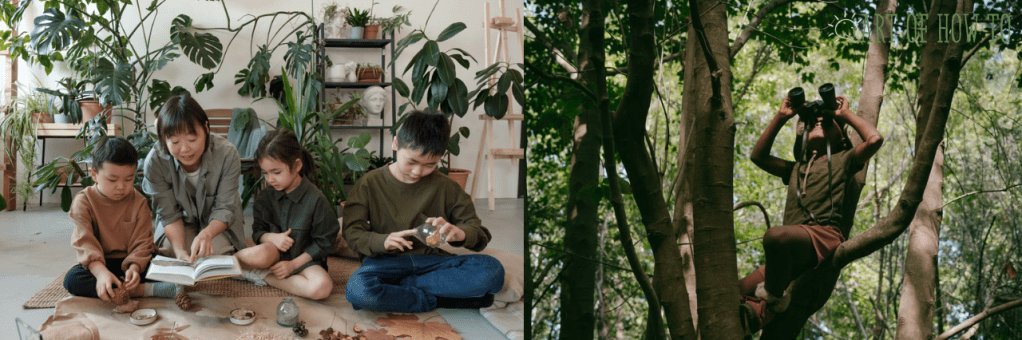
Nurturing kids with nature is a great way to get them outdoors, help them learn about the environment, and become more connected with their surroundings. Gurukul and nature is a traditional form of education in India where the students live with their teacher and learn from him. It’s believed that being close to nature helps students learn better and appreciate the value of life. Nature provides a sense of peace and enhances concentration which in turn helps the students to focus better on their studies. Nature also helps to reduce stress, anxiety, and fatigue, which is essential for learning. Gurukul also teaches students values like love, respect, and compassion. 

In addition, the students learn to appreciate the beauty of nature and develop a sense of responsibility towards it. Nature also helps to teach the students a sense of gratitude towards their teachers and the environment. There are various ways to nurture kids with nature, such as going on nature walks, planting a garden, growing plants in containers, and visiting parks or other outdoor locations. Exploring nature can be educational, fun, and beneficial to kids’ physical and mental health. Kids can also be encouraged to observe wildlife, read books about nature, or paint or draw natural scenes. Additionally, various organizations and programs are dedicated to helping kids connect with nature.

How does nature affect kids’ psychological and psychological well-being?

Nature has a positive effect on children’s psychological and physical well-being. Exposure to nature can reduce stress and anxiety, help improve concentration and focus and boost self-esteem. Spending time outdoors can also reduce the risk of developing mental health issues such as depression, anxiety, and attention deficit disorder. Additionally, nature can help improve physical health by providing opportunities for exercise and increased physical activity. Overall, spending time in nature can help children develop positive mental health and well-being.

Ten ways you connect kids to nature

1. Take them on outdoor adventures. Take them camping, hiking, or beachcombing. Explore a local park or nature preserve. Look for wildlife and collect leaves, rocks, and flowers. Involving them in a hands-on nature exploration allows kids to form a deeper bond and better understand nature. 

2. Plant a garden together. Plant flowers, vegetables, and herbs, and then watch them grow. This helps children become. Green thumbs. In today's world, with shrinking spaces and overbearing concrete jungles. A little green thumbing is a boon and not a challenging hobby. 

3. Go on a nature scavenger hunt. Look for bugs, leaves, rocks, and other items in your local environment. As shown in point one, this is an excellent hands-on experience. A good idea will be to make a scrapbook of sorts and help the children label and document what they collected. 

4. Take a nature walk. Teach your kids to observe and identify different plants and animals. This will give them a break from gadgets, redemption from idle sitting, exercise from walking, and a general love for the outdoors.

5. Have a picnic in the park. Enjoy a meal outdoors together and observe the wildlife. Again a great bonding exercise for the family. 

6. Visit a local farm. Spend time with animals, explore the gardens, and learn about farming. Children will be well informed on where food is grown or farmed.

7. Make time for stargazing. Go outside and lie on the ground to look at the night sky. 

8. Go fishing or boating. Spend time on a lake or river and explore the natural environment. 

9. Read books about nature. Read stories about plants, animals, and the environment to your kids. 

10. Have a backyard campout. Set up a tent in your backyard and explore. Watch the stars together. Map the north star. Enjoy the cool breeze and make memories.

Everything you support your child to learn changes significantly how they see the world. Make their learning powerful through experience and involvement. Allow them a chance to become people outdoors. Allow them to return to the root of what nature is all about. Which are we living in it? Taking in the essence of all it means and then teaching them to teach others about nature.

The Season Of Giving

This time of the year is unique. It’s the season of feeling grateful for the whole year, reminiscing memories made, victories won, and hurdles crossed. It is the season of letting go and looking forward. It is the season of newness, hope, joy, and light.

There is something special about the December air, something about the mysterious charm in the spirit of it; vibes of holidays, roasted chicken, and smiles all over the place. It is a transitional period, readying hearts to expect the unexpected in the new years to come…


This season, let us learn the art of giving; the spirit of sharing, being there for one another, and holding on to good things in life. Let us heal and rise above our fears and battles, shine through blunders of the past, and fly through the mist of curiosity and overwhelming expectations from life. Let us be grateful for the miracles and stay rooted in the values we should pass on to future generations. Let us not get carried away by the worldly attributes of modernity and insanity. Instead, let us see through the tinted window, the rainbow for a brighter tomorrow…

Let us give ourselves the joy of self-realization, self-love, and self-worth. Let us make this world a much better place to live. This season of giving, let us give ourselves the reason to be our best versions!

With that, I wish all our readers a cheerful, beautiful, fun-filled, and fruitful New Year!

Follow Aakanksha Dinah