Budgeting For A Baby

‘Children are priceless.’ Whoever voiced that never had any! Or maybe I read it wrong. Raising a child will cost you thousands and thousands a month. Maybe even more. It hinges on what you can or is capable of spending. How do you plan and build a fund for your little ones’ expenses while providing your child with everything they need to flourish without sabotaging your financial security? The key is getting your baby budget set up, start and do the best you can before the due date arrives. Let us list the essentials you’ll need for your newborn and also give you some tips on how you can afford them.

Many new parents buy more than what is actually “needed.” You might want a nice rug, a cool swing or chair, or some cute pictures to hang around the nursery. It’s all fine, just make sure you buy these things after budgeting for food, medicine, and diapers.

Essentials need NOT be expensive at all. 
They need to be functional and reasonably priced. Research is key to staying well within your budget. 

Financial Planning Before Baby Arrives

1. The Dreaded Labor & Hospital Cost

Surprisingly and often astounding is the cost of giving birth. The cost of giving birth completely depends on your location and insurance. Plan in advance. Check with your hospital and doctor on the costs and options available. In some places, you can select your preferred payment plan in advance. This will include all costs for birthing your little one. As always do research.

2. Nursery Cost & Other Home Needs

The cost of furnishing a nursery varies the same way the cost of furnishing your bedroom varies. Are you buying from a boutique? A local store? A sale? You can also if needed get your hands on some hand-me-downs to save on costs. Try freecycling sites to keep costs low. 

3. Setting Up A Nursery Cost

The price or costs can vary. You can do the whole nursery in under a lakh or decide to use hand-me-downs or Freecycle groups to set up. 

4. Ongoing Cost For Childcare

Keep in mind some things will always cost money, though. Food and diapers can’t be shared, not the same as clothes, toys, and some baby care equipment. Same with the medical cost and, depending on the age and type of childcare.

Food and Formula, Clothing and diapers, Health care for baby, Childcare eg nanny, Other things like toys or learning aids, Includes personal care items, entertainment, and reading material.

Recurring Monthly Expenses To Budget For

1. Baby Clothes & Expenses

Despite using less fabric, baby clothes usually can cost the same as grown-up ones, and at times even more. Your little one will outgrow his or her onesie quickly. However, some baby clothes do not cost much. Again an online search can help. There’s no point in being picky or stocking the closet with designer outfits.

Or you can ask friends and family members for their old baby clothes. Hand-me-downs are not bad and have been around for ages. Freecycling is a newer concept but serves the same purpose more or less. The point is to reach out and ask and you can or may receive!

2. Nursing & Feeding Expenses

Breastfeeding is the best for a baby. According to doctors breastfeeding not only protects against illnesses like pneumonia, diarrhoea, and asthma, but it also helps baby and Mama to bond. Breast pumps are a blessing for working moms, as they can pump milk and set aside, so you can bottle feed without any hassle. Some mothers may be unable to breastfeed due to many reasons. That means bottle feeding, it can be convenient especially if you have no other choice. The formula can up the costs but if you have budgeted right you will be able to give your baby the best nutrition needed for their growth.

3. Child Care & Baby Sitting

These prices vary by country and location. Options are having a relative or close friend watch your child while you’re away. If you’re a couple, one of you may want to stay home depending on how much income you can sacrifice. Maybe work from home or freelance. Hiring any help will depend on the country, the location, and the services available.

4. Medical Costs and Health Insurance

Some of us grown-ups manage to go years without seeing a doctor and huge medical bills, but infants need regular doctor visits to make sure they’re thriving. Depending on the need you can choose to pay per visit or take insurance. Whichever works best.

For insurance, you can contact your insurance provider and discuss options to insure your newborn. Having a baby is not cheap but with insurance, you may be able to control what you spend for the little ones’ regular and timely doctor appointments.

5. Life Insurance

If this is your first baby, this may be the first time you’ve ever considered life insurance. Many of us have life insurance, which you can purchase from a well-known or reliable provider. Ask yourself this: “If something were to happen to me tomorrow, how will my child survive?” Purchasing life insurance can help answer this question. You can rest assured knowing, at least, your child’s needs will be met.

Saving for Your Family’s Future

Right now, your main worry is providing for your newborn and making sure you’re financially secure. In addition to the new expenses, you have to ensure you put something away for the future. Investing or saving using banks can help. Do some research, see what you can do and how best you can do it. Take baby steps if needed but get it done. This will be a huge relief factor for you in the days to come. Also always focus on three saving terms short-term, mid-term, and long-term savings plans or options. More on this can be found online and gives detailed information on programs available for you to start or continue saving. 

 Follow Ignatius Deepak Stanley

LOVE Sacrifice or Compromise

Most people in some point of their life have some kind of encounter with love. They may have seen it as a fairly inconsequential affair, a nice experience that they were able to take pleasure in without having to spend a great deal of time considering the factors that contributed to its production.

That is often how the beginning stages of love are. You find yourself attracted to this person, and in the beginning stages of dating, you have the impression that everything is carefree and simple. However, if you care about someone for a sufficient amount of time and are with them for a considerable amount of time, you may realize that your love for that person will cause you to prioritize their requirements over those of yourself at some point.

“Love is sacrifice.” It’s the kind of relationship advice we hear from marriage counselors and relationship experts. But is that the case? Is giving up your happiness for someone else a sign of love? Love does call for sacrifice sometimes. But generally speaking, isn’t love is more of a compromise than a sacrifice?

To sacrifice is to give up something valuable to get or keep something, such as a worthwhile cause or a meaningful relationship. As a result, we can argue that some women forgo their careers in favour of their families. In sacred contexts, the word “sacrifice” is frequently used to refer to the act of giving something valuable to a divinity, such as the sacrificial killing of a victim. Because romantic ideology shares some similarities with spiritual ideas. The word “sacrifice” is commonly used in romantic situations as well. Love is so great that it is willing to make great sacrifices.

Compromise means forgoing the pursuit of a better future in favour of maintaining the status quo, even if it is thought to be marginally worse than the potential foregone. The opportunity might even be better and thought to be feasible, yet the person decides against going for it.

The sphere of sacrifice is the real world, whereas the realm of compromise is the hypothetical and possible world. Sacrifice entails concrete actions and costs. One cannot give up something that one does not have in reality.

Compromises are more difficult to bear since they entail unresolved issues that could change the current situation. They are also filled with powerful emotional factors. The subject of sacrifices is tangible, practical action. Like other activities, they may have positive or negative effects, but once they are done, they are over and often do not have a heavy emotional impact.

When you compromise, you give up something you might eventually get; when you sacrifice, you give up what you already have. It is useful to contrast the dynamics of compromise and sacrifice with those of envy and jealousy in this regard. When you are jealous, you fear losing something valuable that you already have, like a close relationship, to someone else. When you are envious, you desire something that you do not already own. As it is harder to lose something you already own, especially when it is to a rival, than it is to succeed in gaining something you have never had, jealousy is usually more painful. The compromise-sacrifice combination is different in that the prospective loss is more detrimental than the actual loss.

Due to unresolved issues, the possible loss from compromise is more emotionally unpleasant; the person may not accept the compromise and may be continually conscious of its drawbacks. Since the sacrifice was made voluntarily, the recipient has no additional reservations about its necessity or value—unless they start to feel guilty about it. Loved ones often don’t even realize they are making sacrifices since it comes so naturally to them. Compromise is frequently accompanied by frustration, whereas sacrifice is frequently accompanied by sympathy and compassion. Compromise, rather than sacrifice, is often where sorrow over lost opportunities is found.

The choice to compromise is typically motivated by apprehension about the risk and potential harm of pursuing the alternative, as opposed to the decision to sacrifice, which is made in light of the significant benefit for the other person or the relationship. In a compromise, the agent does not fully accept the reality because they still think the potential alternative has a higher worth. Therefore, when making sacrifices, people might not even think to ask themselves, “Why should I make a sacrifice for my loved one?”

While making compromises, though, a sense of unfinished business can set in, causing people to continue to wonder whether the compromise is worthwhile and wish for the alternative. This will go on until they adjust to the new circumstances and stop seeing it as requiring a compromise. As a result, concessions can have greater negative emotional effects than sacrifices.

Compromises and sacrifices are both necessary in loving relationships. Because the sacrifices are easier to accept, partners try to accept their compromises and stop seeing them as sacrifices. Even though compromises and sacrifices are common in romantic relationships, they are not felt in true love.

Follow Naveeta Shokeen

A Chai Lovers Soliloquy

My love story with chai goes back to my scholar days in Kerala. I was doing my study in journalism & tea became an indispensable part of our routine – morning, post lunch, evening, and even a midnight tea session at times. We had a cozy ‘chaya kada’ (tea shop) where we went during our gaps. 

I experienced and tasted Sulaimani chai, a Malabar spiced tea influenced by and origins in the Arab nations, for the first time during my days in Kerala. Available in all tea shops there. This magical mixture is tea boiled with spices like cardamom, cloves, ginger, tea leaves, or tea dust. No milk was added. A generous squirt of lemon in the tea completed the brew. It is regarded as a good digestive after meals. Once in a while, we also had the regular chaya with kadi (tea with snacks/savouries) at tea time. Sulaimani became my regular drink when I shifted to Bangalore (fondly called namma Bengaluru). I have very fond memories of gathering every night (almost midnight) after our shifts at this small outlet near our office to have Sulaimani. Sadly, I had to leave Bangalore too. 

My next (and almost second home – spent 15 golden years there) destination, Delhi. The chai tapris (street stalls) there became my new hangout zones. I found my chai tribe here as well. Winters became extremely unique for me. The heady smoky cigarette air mingled with the smells of the brewing tea stirred a young journalistic mind. Most of my story ideas were brewed along with the chaiwala’s chai. Having spent half my youth in Delhi, I can vouch that chai is a culture and a way of life there.

A go-to-beverage for every Indian as they wake up! Every city has a distinct chai culture. Locals will always vouch for their city’s tea to be the best too. Brews may change, and preparation techniques may vary but the flavour and aromas of chai leave one yearning for the next cup. There is a huge cultural dissimilarity in the chai prepared in the north, south, east, and west. 

Chai has also been an ice breaker, be at a gathering, at official meetings – those crucial junctures when the discussion goes tangent with your brains and eyelids start shutting, that knock on the door saying “tea ready” opens every shut-eye. 

Anyone in the creative domain will testify for chai too. Any brainstorming session demands chai to stir the senses. Each drop of tea is said to stimulate and revive the brain. Good old writers sat in tea shops to start a book or article. Tea inspired them to write more. Cups of tea piled up on the table till the end of the day.

India has a sizeable tea as well as a coffee drinking population. Both groups have constant banter and discussion over which brew is the best. The discussion often enters the domain of “Coffee-Toffee…the argument continues” (a good old Doordarshan ad on a chocolate brand). Truly, no conclusion has been found yet regarding which brew wins hands down first. As they say, the excess of any of these drinks is bad, a chai lover often proudly flaunts even a doctor’s statement as a medical certificate, certifying chai is good for health. Yes, even medical practitioners are biased towards chai!

The 80s and 90s generation will have scores of tea memories – whether it was going to watch a movie in a theatre, a picnic, or any family gathering, a flask of hot chai (for adults) was an integral part of every get-together. The ‘Wah Taj’ popularized tea in all households. Other brands back then followed suit. 

Whether you go to the highest altitudes of the country or the coastline, chai is the first drink you will taste in every region you go. Coffee (according to chai lovers) remains a drink that came much later. And you will be surprised to know (chai lovers would know it) that it is brewed in different ways across the country – north, south, east, and west. Some teas have extra milk while some have less milk or even no milk. The way you brew chai determines the signature style of every region.

Recommended by chai connoisseurs, these are some of the best tea varieties in the country.

Darjeeling Tea

This tea leaf grows in the pristine hills of Kalimpong. Brew it using an infuser. Cultivated and processed in the Darjeeling or Kalimpong Districts in West Bengal, India, Darjeeling Tea tea is made from Camellia sinensis var. sinensis. These days you get leaves suitable for making not just black tea but also green, white, and oolong teas.

Assam Tea

A Black tea named after the region Assam, India from the plant Camellia sinensis var. assamica indigenous to Assam. It is known for its body, briskness, malty taste, and robust, radiant colour. A black tea brew made of tea leaves, which are grown at sea level. 

Masala chai

Masala chai contains seven primary ingredients. Of course first is water and then without a doubt tea leaves, milk, sugar. And the masala’s used for this aromatic chai are cardamom, black pepper, and ginger. This brew made of black tea leaves sometimes also has spices like cinnamon, cloves, and bay leaves too.

Kashmiri chai or Noon chai

A time-honored tea beverage with roots in Kashmir, pink tea is milky and light-colored, garnished with almonds and pistachios. Gulabi Tea as it is known is prepared from a type of green tea leaves or gun powder tea, milk, salt, and baking soda and is cooked in a samavar(a metal container to heat and boil water.).

Kashmiri Kahwah

A tea flavored with cinnamon, cardamom, and saffron, Kahwa Tea is Kashmiri beverage not to be missed. It is prepared in samovar. It is green tea served with chopped dry fruits. They include almonds, pistachios, and cashew nuts.

Butter tea

Created from stirring tea, salt, and yak butter, Po Tea or Butter tea is surprisingly good for your health. It is said to improve vitality, help radiate your skin, be better for digestion, improve mental function, quash hunger, and control dehydration. Known as Po cha, it is a chai widely available in Ladakh, Sikkim, and Arunachal Pradesh. It is brewed using regular tea leaves, yak butter, or even butter made from cow’s milk, water, and salt. It has it origin in Tibet.

Irani chai

Irani Chai is a sweet and creamy chai made by mixing mawa or khoya (dried evaporated milk solids) with black tea. At times spices like cinnamon and green cardamom added. It’s optional. It is a is a Persian-influenced tea. It is a creamy, brown colour milky tea and quite sweet. Available in Irani bakeries and very popular in the city of Hyderabad.

Amrutulya chai 

Boiled in brass pots, with an equal amount of water and milk, Amrutulya chai is loaded with sugar and spices. To give it the taste, crushed cardamom, ginger, dry ginger, pepper corns and more spices are added. The brass pot retain the heat and flavour is brilliant. The name has sanskrit origin meaning Nectar of immortality, the tea has its origin in Pune, Maharashtra. This chai is extremely famous in Pune. The chai masala is special – powder dry ginger with lightly roasted black peppercorn, white peppercorn and green cardamom, nutmeg.

Sulaimani chai

Mohabbat… love is the secret ingredient in Sulaimani chai, a Malabar tea. This no milk tea is widespread in Kerala and has it’s influence from persian and arab nations. The tea is brewed with assorted absolute spices in black tea powder. It is brewed till it gets the golden color. A squeeze of fresh lemon juice just before serving makes it super rejuvenating. This black tea is made with cinnamon, cardamom, cloves, and ginger with regular tea leaves.

Mumbai’s Cutting Chai

A popular half cup/glass chai in Mumbai, brewed lovingly with fresh ground elaichi, saunf, lemongrass, or ginger. In Mumbai, ‘Cutting Chai’ is half a cup of tea. Tea is life and, in Mumbai people drink more than three cups. Hence ‘Cutting Chai’ makes sense, small portion, flavourful and fragrant. This concoction is made with tea leaves, ginger, cardamom or any other available or suitable spices with milk.

So, I sign off, going to drink my next steaming cuppa chai and leave you with this popular meme to enjoy with your tea.
What is your blood group?
Tea positive!
Follow Priya Rajendran

Rocketry

Today after a very long time, I feel mortified to be part of a nation that did what it did to a man like Nambi Narayanan. For those of you who don’t know who he is like I didn’t know who he was till I saw Madhavan’s Rocketry, he is one of those pillars of ISRO who made it possible for India to get to what it has achieved in the field of Space and Research.

We don’t get to enjoy good movies often, but when we do, we get ones like Rocketry. To begin with, may I dare to say, we don’t deserve men like Nambi Narayanan in our country. To a man who has gone beyond measures to financially, physically, and technologically aids the nation to do better and achieve a position in the global run for successful space missions, it is simply unacceptable what has happened to him and his family.

I would like to take time and appreciate and admire the impeccable job R. Madhavan has done. He brought to light something so serious and significant. Not all filmmakers are interested in delivering good-quality movies to the audience. There’s always a preconceived notion that the public only likes ‘masala’ and commercial movies – well, I do not agree.

Some movies make us laugh, some make us emotional, some make us ponder and some inspire us. Very few movies virtually slap their audience – Rocketry was that slap on our face for not knowing the facts, not being aware of what was happening to a person of substance like him, and for being part of a society that jumps to conclusions and rioting against one another for merely NO gain whatsoever!

I want to request each one of you to stand up as an individual and rise against constitutional and bureaucratic entanglements that destroy the meaning of secularism and democracy. Honestly, we as citizens of this country should not be allowing such things to happen. We should use our common sense a little more, research what we hear and see, and then choose to believe or disbelieve the obvious. It’s high time we do something about being gullible and taken for granted.

It’s been happening for years and it will continue to happen if we continue to live like the three wise monkeys – the only difference is that those monkeys taught us to see, hear and speak no evil – today we see, hear and speak nothing, as if we don’t care what’s happening with/to us as a country. Ignorance is not bliss.

It’s time to take in the essence of what’s being said. Movies if viewed in the right spirit are not simply works of art, but also powerful social messages that force us to open our eyes and see reality.

Rocketry was a reality check. Thank you, Madhavan for making this film. It was worth every goosebump, every tear shed, every emotion felt. Kudos to good movies.

Follow Aakanksha Dinah

Love Signs And Astrology

Every now and then… you may come across a believer and a non-believer in occult science. Astrology… is one such exciting science! There have been claims of prophecies coming true and events taking place as ‘predicted’. 

Whether you are a believer or a non-believer, there is always teeny-weeny interest in knowing how the planetary alignments affect a person’s intrinsic nature. My area of admiration has always been how astrology affects compatibility between souls. How the five elements of mother nature orchestrate the mind to ideate the strongest emotion experienced by humankind – Love

It is not like the zodiac will pave your way for eternal love. Or will serve you love on a platter because you belong to a certain star sign. It just has to do with the compatibility between two signs and hence more likelihood of love blooming between them. Love or compatibility between zodiac signs has been an interesting study although it has no real science backing it. It is interesting to see how the zodiac affects a person’s basic nature and how two different people get drawn to each other because of that very nature. 

Since astrology can explain your nature, it can also determine your compatibility with the other sun or moon signs to an extent. There are some ‘Star’ matches as also some ‘disaster’ matches according to the science of Astrology. The star compatibility can well be termed ‘Divine’ matches that have proved their prowess more often than not. If you have experienced ‘Love at first Sight’ or ‘Hatred in all its might’, it could well be because of your Zodiac! Let’s look at some of these Divine and stellar compatible zodiacs and why they may be so!

The sign of Cancer belongs to the Water Signs, while Capricorn is essentially the Earth/Land sign. Just as land and water complement each other, so does this match. Cancer is the shy crab. Emotional and intuitive. They are highly sensitive to their surroundings and will instantly pick up changing energies in a room. Draws into its shell at the first signs of trouble. And it takes a lot of effort to bring the crab out of its shell. Capricorn on the other hand is the Horned-goat that climbs up the mountain. 

Capricorns are very practical, very hardworking, visionary and ambitious people. They have a relentless pursuit of their goals in life. Since the Cancer and Capricorn are so vastly different, they end up complementing each other. 

Heard of ‘Opposites attract’? They may well be talking about a Cancer-Capricorn match. The perseverance required to draw out the crab from its shell can only be offered by the relentless Capricorn. And the emotional side of this practical, material world can only be introduced by Cancer to the Capricorn. Just like the land protects water and water nurtures the land, similarly, this is a match that has all the elements of an eternal, everlasting relationship. Sweet, Sincere and amorous.
Pisces. The fish, and Scorpio – the scorpion are both Water Signs. Their innate qualities are very similar. Both are intuitive and emotional to the extent of being schmaltzy. Pisces, essentially, is very sensitive and soulful. Their emotions flow like water and are very protean. Very Spiritual and seldom materialistic. No one is more aware of the temporal qualities of life than a Pisces. Taking a practical decision is particularly hard for them. 

Scorpio on the other hand is an amphibian. It lives on land as well as water. Which makes it adept at living both spiritual and material life simultaneously with ease. Scorpio is spiritual while also being ambitious. They can work hard and party hard. They love the fine things in life. And more so if there’s a personal touch to it. 

Both, the Pisces and the Scorpio are clairvoyant and intuitive to a great extent. This makes their attraction toward each other almost transcendental and psychic. Scorpio derives its strength from the psychic and emotional realm, just like the Pisces and that makes them ‘soul-mates’ forever. Scorpio is determined and direct, which Pisces is not. No one is more loyal than the Pisces, while no one demands more loyalty than the Scorpio – Which makes them the perfect pair.
Leo. The lion is a Fire Sign. And so is Sagittarius – The Archer. This is a ‘House On Fire’ combo in every sense of the word. Sagittarius is unique and brazen. A rare blend of passion, curiosity and intensity. They are seekers – of knowledge and pleasure. Driven by wanderlust, they are not afraid to lose their way and chart their own path. Brutally honest and equally ruthless. Their motto is ‘Go Big, or go Home!’ They seek knowledge and adventure, which makes them so very attractive. Leo is passionate, eccentric, egoistic and egotistic. Full of themselves. ‘They’ are their favourite people on earth. Not a bad thing at all. They love themselves and hence love to self-indulge as well. This also means they are well read and knowledgeable, curious, generous and great entertainers. Leadership comes naturally to them and they like to ‘Rule their Pride’. 

The Sagittarius’s quest for knowledge draws them to the All-knowing Leo! Leo’s grandeur appeals to Sagittarius. Both are passionate and fire-bellied. Conformity is alien to them. They can love and romance with complete abandon. Nothing can bind this fiery combo down or stop them from having a fulfilling, inspiring and whirlwind affair. Caution is only when they can’t tone down their anger. They can literally set the House on FIRE!!
Aquarius. The water bearer, is ironically an Air Sign. And so is Gemini – The Twins. Talk about ‘Love is in the AIR’! Dubbed one of the cleverest of all signs – the Aquarius, is exceptionally intellectual and optimistic. They are the ‘Nurturers’ of the Zodiac. Somewhat of a perfectionist, they seek sovereignty and authenticity. ‘Nothing but the best’ is what they expect and hence become quite a loner. Often misjudged as ‘difficult’, they seldom have a huge friend circle. Melancholy is their ally. 

Gemini on the other hand is easy-going and adaptable. They easily blend in any situation. Extremely enthusiastic and extroverted. They are the ‘Social beings’ of the zodiac. They love to party and have massive social circles. Intelligent but indecisive and very very impulsive. Everything in their life is a ‘spur of the moment’ decision. They could be raging angry with you one minute, and forget about it the next. They can even forget what made them angry in the first place. There’s never a dull moment with a Gemini. 

Intelligence and Individuality bring the Aquarius and Gemini together. Gemini’s dual nature makes it indecisive. It needs direction and nurturing which is Aquarius’s USP. Gemini’s social skills draw the Aquarius out of their solitude and enjoy the sunlight. Gemini, being the social butterfly, douses Aquarius’s monotony and brings fun and frolic. Aquarius on the other hand brings sense and sensibilities to Gemini. Together they balance each other out like yin and yang. 

There are many other compatible matches for sure and this definitely cannot be an exhaustive list. Compatibility cannot be defined and governed by astrology alone. There are many other factors that affect our perceptions of love. Just as there are divine matches, there are astrological disasters…and exceptions to the rule too!

Whatever you choose to believe, love does move mountains……sun, moon and planets too.

Love, they say, is Blind. I say it could be Astral too !

Follow Veena Gupta

Catching em Bullies

Every parent desires to provide the finest education for their progeny in the best schools and universities across the country. Children look forward to leaving their nests and going to school to discover new things every day. Each child has their dreams as they grow up. But no one hopes that they will be taunted or heckled. Most of the time, it’s brushed off saying it is normal to get roughed up by seniors or peers. Teasing is normalized. But when teasing crosses the line, it turns into bullying. 

The word bully means “seek to harm, intimidate, or coerce”. Bullies are those who habitually terrorize, insult, and physically and mentally torture the weak and smaller ones. Bullying is seen as a sign of power and control. Attacking the self-respect of more vulnerable ones is a thrill for these people. In schools and colleges, it begins with the entry of new students or freshers. 

While taking the risk of playing Devil’s advocate here, all children are not in-born bullies. They turn into one too. Role modeling – peers/family members/television/society in general – goes a long way in turning them into what they become later. 

Is ragging different from bullying?

Ragging… It is considered an offence and is against the law to engage in ragging. However, bullying (the alter ego of ragging) is STILL not considered as serious an offence despite high crime rates. This century-old phenomenon is still rampant in schools and colleges. Even though ragging was forbidden years ago, overt and covert forms still exist.

Typically bullying is invading someone’s personal space, taking away their belongings, eating their lunch without consent, pushing and hitting them, teasing someone about their body parts, clothes, appearance, and above all, insulting or demeaning them. 

Bullying changes colours at different ages. When children are quite young, bullying will be limited to breaking stationary, throwing the bag around, pushing and kicking them, taking away belongings without consent, and name calling too. Bullying among older children is perceived as more serious vis-a-vis younger ones. In all age groups, the effects are serious. Younger children can get more terrorized and might develop an aversion and dread to go to school. The fear of bullies adds to separation anxiety among toddlers similarly.

As they grow older, above 10 years, typically both genders will bully children by demeaning them, insulting their appearance, or possibly even talking about status and money as well. Above 14 years, they begin to mimic on-screen bullies or video game villains. The language turns abusive and name-calling becomes vicious. Insults can be serious. At some point, blackmail also enters the scene. In most ragging and bullying cases that come to light in schools, children have been seen to dare their peers into doing something adventurous and if they refuse to comply, they would be called names or made fun of in class openly.

Media reporting & unreported cases

Newspapers and media are full of cases that have been prematurely closed by police due to varied reasons – lack of evidence, fear of losing respect in society, and intimidation by families of bullies. Many cases have been closed because of societal pressure again. Recent cases this year have been extremely shocking with children committing suicide since they couldn’t handle and tolerate the abuse because of bullying. 

An important question for all: why is it still there? Why aren’t the voices loud enough to make punishments stringent in educational institutions? The trouble is that lawmakers have made laws against ragging but hardly get implemented.

Anti-bullying laws are not adequate in our country to penalize offenders. We have had scores of movies highlighting the problem of bullying over decades. Bullies are so relaxed that they think they can easily get away with a fine or some mild punishments. Sadly, victims and their families suffer life-long scars thanks to them. They never feel remorseful.

Be it an engineering college, medical college, or any other professional degree college, the educational institution is more often than not seen to be hand-in-glove with families of bullies. The cases either go unreported or are made to look like a mild offences. A disciplinary action like the suspension is all that happens in most cases. Loopholes in law end up making the perpetrators look like victims too. Every year, suicide statistics are on the rise as well. More youngsters are falling prey to this vicious crime.   

The consequences of bullying are so strong that victims are not only scarred for life but also families too suffer. There are ways to deal with bullies. If nipped in time, bullying won’t take scary proportions. 

Sadly, many dreams have got snuffed out prematurely thanks to bullying, and emotional and mental stress. Pressure on children to perform in school is already taking a toll and bullying makes it worse. 

How to deal with bullies?
How to empower our children to deal with bullying?
As they say, the earlier the better.
Nip it in the buds. 

Let’s start with some tips to counter bullies:

1. Teachers and parents can orient children about bullying. Schools can conduct workshops to sensitize children on the same. Teaching children about consent and boundaries is extremely important too. A strong NO can stop a lot of bullying the first time.

2. Movies and plays can be screened or organized to talk about bullying,

3. Every school must be equipped with counselors who can help children in distress. A safe space will ensure that children will talk about their problems and report bullies.

4. The institution heads must take initiative by taking every complaint seriously. Be sensitive to the child who is complaining. Parents also must take their children’s words seriously when they approach them about getting troubled by kids in school. Shooing children off when they come to share something must instantly stop. Immediate help goes a long way in nipping things in the bud.

5. Schools must have a buddy program where every child in class must be assigned a buddy – a classmate with whom he or she can share their troubles or distress. 

6. Recognize the body language of a distressed child. Many times, a child stops sharing with parents, peers, or teachers for fear of being labeled as silly or constantly scared or anxious.

7. If a child is exhibiting bullying behaviour, institution heads/counselors must counsel these children separately, and inform the parents about this as well. Early intervention can go a long way in making these children realize what they are doing.

8. Schools can keep a fine as a deterrent. They can begin with oral warnings in the beginning. Then go on to suspend the bully. Parents can be warned right in the beginning about the child’s behaviour. Expelling the child can be considered in rare cases.

9. Teach children what to do in case they are bullied – for instance, provide numbers or email addresses of school authorities to contact anonymously and report complaints. Setting up help desks in the school can go a long way too. Senior children can volunteer for the same.

10. Posters across the school about the consequences of bullying can deter bullies too. Going one step ahead, there must be CCTV cameras everywhere in the school as well.

Please say NO to bullies! Do not encourage your children at home or school to tease or bully anyone. It hardly takes any time for a “mild teasing” to spiral into emotional and physical bullying. Every child deserves a safe and beautiful future. Let’s raise happy children and a stress-free generation!!

Follow Priya Rajendran

Connected The Right Way

Picture of Writer in a garden with headphones on her ears.

Human beings are social animals and thus it is our core requirement to be around people who mould us and support us. We are designed to be within a circle. A circle of family, friends, relatives, acquaintances – people in general. Yet, we the Millennials & Gen Y are a generation that dwells inside our smartphones and never bothers to give time to real-time people around us. Always looking for friends and counseling in the virtual world. A time has already come when family dinners are occasional and online “family groups” are active!

This lack of communication and face-to-face conversation is the major cause of unhappiness and other mind and emotional instability noticed in today’s generation. We are con-netted and not connected. This perhaps is the root cause of health hazards that are probably not too serious on the outside, (like it may seem for now), but are slowly but surely eating up the health and wellness of the current generation and the generations to come.

It is hard to put a finger on what exactly the problem with our generation is. There are many – from the rising number of suicides to the incessantly growing crime rates, there are many factors that need to be sorted.

Phones are getting smarter day by day but the ones who are using them outlandish, too relied upon, lazy, unstable in all ways, disinterested, unhappy, low, offended, aloof, indifferent, unfriendly, and unhealthy! Above all low attention span.

This rising issue is also taking away outdoor playtime of young children. Young kids are given ipads, video games, and mobile phones to pass time. This leads to obesity and other health issues. The situation is worse than we think. This is enough to destroy the wellness of future generations, making all the dysfunctions and the mental, physical, emotional, and psychological instability a part of genetics!

Allocating time off screens can go a long way in terms of health and wellness. Bringing back moments spent being physically present and among loved ones can aid in fighting major concerns like depression, anxiety, and fear of losing out!

The ever-increasing consumption of social media and aspirations to behave and live a lifestyle that is seen online is hazardous to health and for the overall contentment in life. 

Let us make sure we do not let this heat beat the future. Let us stand up and stay connected the right way… 

Follow Aakanksha Dinah

Infant Care

A StayAtHome Dad’s Version

Your little one has been home for just over two, three or about six 6 months now. At this point comes the decision on who stays back and/or who goes to work. Even how do we both go back to work but take care of our little sunshine at the same time? Daycare, crèche and many options are available for working parents. There are a few who opt to take care of their bubs. After the lots have been drawn and the coin tossed or by a mutual agreement, ‘a decision’ is made. 

Maybe…Mommy could stay back. The other option is Daddy stays at home and will take care of the little one. Mama can go to work! Yay! For some this may sound as a joke. No, it’s a great decision too. As a father, and from personal experience, I will say, you will get more time to bond with your little one and it’s pure joy at times. Note my emphasis on at times… It’s not going to be a walk in the park. But it’s going to be fun and just fair. The key is preparation. I read somewhere luck is when hard work meets preparation. And believe me, it’s true!

To put it simple, what do YOU have to keep track of? And let’s explore each one in detail.

Important Note - Remember do not do anything without consulting with your child's paediatrician. 
These are just suggestions and illustrations to help and give an idea. 

1. Feeding time

For a six-month-old baby, you will need to feed the little one at least once every 2 hours. At this stage, it’s mostly formula, purees, and soft food. This is aside from mother’s milk when mama is at home with the baby. Remember breastfeeding is the best and do continue breastfeeding your little one until the doctor says so or the mother cannot express milk any longer. Once the baby has eaten then it’s burping time. Either seat baby comfortably on your knee with baby’s head held carefully but securely in your hands. Gentle tap baby’s back till he or she lets out a glorious burp! Once this has happened the next thing is to allow the baby some time to lettuce food settle in. Now is not the time to play with the baby! Allow the baby to lay on your shoulder and you can walk about or rock the baby gently while sitting.

2. Diaper change time

This one is not hard at all. Keep checking your little one’s diaper as often as possible. Usually, when the infant has answered nature’s call it won’t be too hard to tell especially if it is a big job! Also known as number 2, poo, etc etc. 

Choosing a diaper for your tiny tot is usually based on the child’s skin reaction or acceptance of certain types and even brands. Please be warned diaper rash is not pleasant for the child. Especially just as the little one starts to crawl and walk. The reason I won’t give outbound names here is that each baby is different. What worked for our little bundle of joy may or may not work for yours.

Another important thing is to know when to powder the baby’s bottom. If you have used wet wipes allow the bottom to air and dry a bit before you put the next diaper. We wouldn’t want a cake-like paste on the little one’s tender soft skin. This can cause rashes.

3. Bath time

Always good to bathe the baby when it is warm outside. Cold season and rains call for a sponge bath and when the sun does come out ensure the baby has a bath. Now you can choose to give the little one a nice oil massage before the bath. It has its benefits! However, do not yank at his/ her limbs or roughly rub your little one’s skin. Gently does the trick. Usually, this is an amazing time for fun play while getting the baby the needed limb movement and getting some blood circulating as well.

Bath amenities are something I will leave for you to decide. Trial and error can help. But easier still is to do some snooping (haha). Ask people, check google reviews, and ask your paediatrician. You will be surprised at what you learn. Some may be even better for your tot! Make bath time fun, add rubber duckies, bath books, and bubbles if you can. The baby will have a ball during the bath.

4. Playtime 

Your infant will need tummy time and the best time is when the little one has eaten about 45 minutes prior. And do not strain the baby’s back by leaving him or her to lie on their belly for too long until they can turn on their own. Check for appropriate times from your paediatrician. Why? It’s better to go with an expert’s opinion and working knowledge than to follow a fad or hearsay. Toys, a designated play area, and a stimulating environment can help. And finally the most important…

5. Sleep time

A baby of this age tends to need a lot of sleep. The reason is they are growing fast. Fast. They almost double in height and triple in weight by age 1. Newborns should get about 14–17 hours of sleep over 24 hours. Some newborns may sleep up to 18–19 hours a day. Newborns wake every couple of hours to eat. 

It’s a challenge. A challenge worth every second. Relax a little, brace for impact, there are plenty. All you have to remember is, these moments are precious and they never last for ever. I will simply say, just enjoy, cherish and be kind to yourself, your partner and let love flow.

Follow Ignatius Deepak Stanley

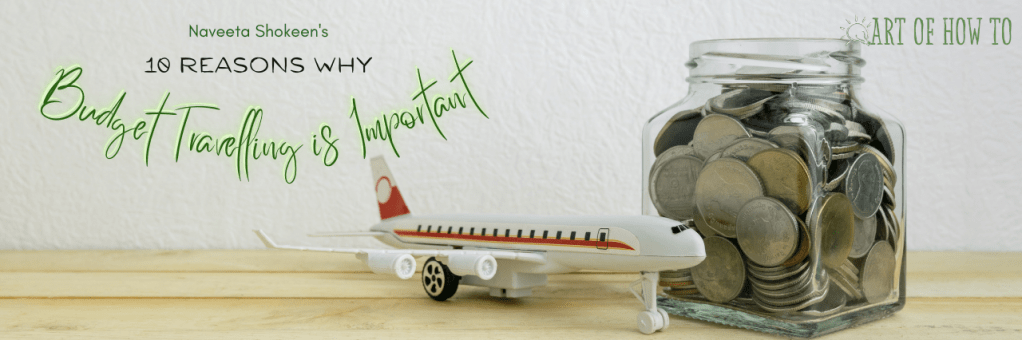
Budget Travelling is Important

Every person who travels is technically a tourist in some sense. There are some who like to see all of the well-known tourist attractions. There are also people that seek out secluded areas that have not yet been explored. People who have a strong desire to experience nature often enjoy going on hikes and camping trips. And then there are those that make it a point to visit all of the destination’s most well-known nightclubs and lively party locations.

When it comes to the ways in which people spend their money while traveling, there are essentially two types: the cheapskate and the spendthrift. Although they each have their own advantages, my personal preference is to travel in a cost-effective manner. The vast majority of budget travellers all over the world opt to explore the world in this manner. You might not be aware of all of the benefits that come with low-cost travel, but they are numerous.


Traveling on a budget is something you should always give some thought to doing, regardless of how much money you have. 
Here are 10 reasons why Budget travelling is important.

You spend your money on experiences rather than things

Spending less allows you to avoid paying for ostentatious accommodations, souvenirs, and activities. You decide to do things that are less expensive or free. As a result, you pay closer attention to the experience and bring back unforgettable memories.

You get a taste of local life

What sense does it make to travel halfway around the world if you don’t get to see the place? Many guests at all-inclusive resorts choose to spend their whole stay inside the resort. They might have just as easily stayed at home! When you travel on a budget, you get to see how locals live. If you want a truly authentic experience, you might choose to stay in one of the residents’ homes. A much better method to understand a culture is to really engage with the locals and take public transportation.

Budgeting enables us to travel farther

This is well recognized; stretch the funds, and the trip will follow suit. What we currently spend a month on, we could spend a week on. We can stretch the money that the typical traveller would spend on a two-week holiday to last us a month or longer. Easily. Not everyone can or wants to travel for an extended period of time. However, if you are considering a lengthy journey, why not push your financial limits as far as they can go so that you can spend more time discovering the grandeur of our planet?

You get aware of the real value of money

Since you’re making the most of your money, you inevitably come to understand its true worth. You develop the habit of shopping around and comparing costs; this is a life skill. This does not, however, imply choosing the least expensive alternative; rather, it means evaluating the value of your purchase and developing your bartering skills. I have a tendency to ask myself, “Well, that’s X number of nights at a hostel. Is that worth it?” when I see prices.

You think outside the box

No matter where you are, when you have limited finances, you occasionally need to get creative with what you eat, where you stay, and what you do for pleasure. Some of our best dishes have resulted from getting inventive with what’s already in the house.

Maintaining a budget is similar to completing a puzzle that keeps your mind active and your creative juices flowing. There are many inventive ways to exchange for the necessities you require, including bartering, gift economies, swaps, and volunteering. Knowing that we can be creative when things are hard is an important life skill.

You connect to your real self

Every person has a variety of desires. But only a small percentage of people genuinely know for sure what they need to be the healthiest, happiest, and most present version of themselves. Traveling is a gift you give to yourself because it allows you to deprive yourself of the comforts of first-world living and really identify the things you actually need to be a whole person. Budget travel accelerates the illumination of this innate wisdom. Everyone has a different answer, but practically everyone I know is a little taken aback by what they learn and is constantly appreciative of the road they undertook to arrive at those answers.

You come across other nomads

When you travel on a budget, you encounter other budget travellers. More frequently than not, there are more of these folks than there are people who travel lavishly. As a result, you unintentionally encounter more people.

You keep your feet on the ground

Budget travel is not the same as vacationing. Exploring and experiencing everything you can is what it’s all about, not taking a break and kicking your feet up. You take care of your own laundry, bedmaking, and towel cleaning; no one waits on you. You come to the realization that you can handle everything on your own and don’t need another person to follow you around.

You feel more liberated

Having everything you require on your shoulders is incredibly liberating. You have less to worry about because you are not constrained by worldly possessions. You become more independent when you have to acquire anything additional that you require. When you first get to a new location, you only reserve one or two nights; if you don’t like it, you simply pack up and leave.

It’s Challenging

Who doesn’t enjoy a good challenge, really? I know I do, and that’s what a challenge traveling on a budget is. To ensure that you can travel for a longer period of time, you must think creatively. You must evaluate which lodging is best, taking into account both the cost and the benefits. If you intend to spend a lot of time in a city, you need to plan activities aside from the primary tourist attractions. You push the limits of what’s possible since there are always fresh challenges to consider.

Follow Naveeta Shokeen

Spice Up Your Monsoon Wardrobe

The first rains, the earthy smells, hot kadhais with oil spluttering – sliced onions and potatoes jumping into the hot oil, and a good rainy walk. School-going kids wearing raincoats, jumping in the puddles, dancing in the rains – our fantasies of monsoon since childhood. Isn’t it? 

I just conjured a few scenes of the rains for you while I was growing up (and for most of us who grew up in the 80s, 90s, and the 2k kids too). These have become rare sights now but I can still see these visuals in some places. In that era, kids simply wore frocks/shorts/skirts with a pair of floaters/rubber chappals to splash about in the rain. I still remember ladies back then would wear synthetic sarees, and salwar kameezes and carry black umbrellas to protect them from gushing winds and rains. Puddles were meant for rollicking! I am sure all of you will have beautiful rainy memories. 

Monsoons always meant our wardrobes going through another change. As summer vacations were getting over, we got our raincoats, and fancy-looking colourful umbrellas out (shopping only if needed). Any clothing is easy to dry. The markets used to be suddenly flooded with sarees, dresses, shirts, skirts, etc made of rayon, linen, or silk. It was fun exploring markets, and walking around – not to forget the yummy street food too! 

Fashion trends for the monsoon have evolved over the years. As I mentioned above, there was a time when only basics were considered for the season. Now, you can see personal preferences and choices have become trendier and, markets are catering happily to the masses. From synthetic sarees to trendy cut-offs and short hemlines, it has been a long journey for monsoon fashion trends! Our fashion designers have also been working hard to make budget-friendly designs every season. After all, budget-friendly shopping is top on the bucket list for almost every working individual, and looking stylish makes it attractive in any workplace! 

Barring the last two years of the pandemic (when the industries and markets suffered financial losses), markets have come back in full force now that lockdowns are no longer in place. People have got back to retail therapy with full force. 

Monsoon fashion trends have gotten trendier in 2022 vis a vis the Covid era. ‘Tis time to hit the local markets and indulge in amazing fashion melange. This season, go in for floral printed shirts, capris, asymmetrical skirts and kurtas, cut-offs, hemline shirts, crop tops, and colourful blouses. If you love accessories, the summer and rainy seasons are a time to go light on accessories. You can avoid sweating. Pair your outfits (depending on formal/casuals) with light accessories – a single silver Kada (bangle), tiny pair of jhumkis with thin layered chains (women), layered bracelets, and silver anklets. 

Easy-on-pocket shopping!

Whether it is office goers, students, homemakers, or small children, there is an eclectic mix of clothes and styles for the rains everywhere. Almost every city in India is colourful as soon as it is the month of June – a time when the rainy season hits most parts of India. As summer ends (the last week of May), most markets start displaying rainy wares. This is the time to hit the markets and stock up for the rains. You will get the best deals for raincoats, umbrellas, waterproof bags – school bags and handbags, slippers, floaters/crocs, and various attractive rain accessories.

(Sans treasure hunting & high prices.)

1.   Culottes – trousers cut off at the ankle, giving a skinny look.
2.   Floral print shirts – collared & round necks
3.   Colourful stoles (solid colours) wrapped around formal shirts (collared and non-collared)
4.   Crop tops paired with formal trousers or casual capris/cutoffs/denim skirts
5.   Sleeveless and spaghetti-strapped Kurtis (Pstt…go for oranges & yellows!)
6.   Kurtas (long)/Kurtis (short) in bright solid colours
7.   Asymmetrical Kurtas
8.   Hemline tie-up shirts 
9.   Short Kalamkari side-slit ankle-length skirts
10. Classic net shirts with spaghetti straps

So, what are you waiting for? Ditch those long skirts and long frocks, choose a short skirt or capris, pair it with accessories and comfortable crocs, and swing that translucent (transparent) handbag as you go. 

“Rain, rain, come again, ‘Tis time for getting’ stylish again!”

Let’s brighten ourselves as the clouds darken and pour down!

Follow Priya Rajendran