Soulmates Exist

Do Soulmates Exist? When you say the word “soulmate” in front of a group of people, you can almost guarantee that some of them will roll their eyes. The concept that there is a single, perfect partner out there for you—one with whom you will fall in love at first sight and with whom you will never find yourself at odds—is just not grounded in reality.

What does exist, at least for many individuals, is a person with whom you have an innate familiarity, with whom you share a profound connection, and with whom you can develop as a person while you are in a romantic relationship with them. When it comes to connecting with someone and discovering your perfect soulmate, it appears like a dream come true, and if that person is a love partner, you’ve stumbled across something genuinely unique and extraordinary.

What exactly is a soulmate?

Finding someone to share your life with and develop a meaningful relationship with can feel like the realisation of a lifelong fantasy. The idea of having a specific individual who acts as your counterpart would make this whole “thing” a great deal less difficult to deal with. 

Who you ask will determine how you understand the meaning of the term. ‘The concept of ‘soulmates’ and what it means might mean different to different people. It’s safe to assume that the most widespread interpretation of this term is the idea that there is only one person in the entire world who can be your soulmate, and that this one person is the only one who can fulfill all of our needs and desires.

Why is the concept of soulmates debatable?

The idea of finding your “soulmate” can be romantic, but only if you’re doing it with someone you love and who makes you feel really, very good. The concept that your significant other is your soulmate is fraught with controversy amongst professionals for a variety of different reasons. To begin, the idea conveys the disturbing implication that you are incomplete without the presence of another person, which is a problem for several reasons. If you can’t let go of the idea that you and your significant other have a soulmate, you could experience loneliness even when you’re single. 

Then there’s the reality that being in a relationship with someone, even if you’re a perfect fit for one another, will never be an entirely problem-free adventure for either party. We can be misled by the idea of soulmates into believing that once we discover “the one,” everything will be easy and wonderful. In actuality, this is not the case.

Do romantic soulmates exist?

If you are currently single, you don’t want the romantic notion of love that you have in your head to make you close your eyes to potential companions just because they might not appear to be the perfect soulmate fit for you. Being a hopeless romantic can most certainly work against you in this regard. 

On the other hand, there is no reason not to believe in the existence of a soulmate if you are convinced that you have already found this person and if, in addition, you are living a happy and fulfilling life. You also need to keep in mind that whether you find your “soulmate” or not, partnerships need effort on both sides.

How to Identify If You’ve Found One

A soul mate is someone who inspires compassion and kindness in you and brings out the best in both of you. A soulmate is more than just someone with whom you have a certain amount of similarities. A soulmate may not even share many interests or values with you, yet the two of you are still destined to be together. Below find the telling signs that you have got one.

SIGNS YOU FOUND YOUR SOULMATE

Exchange Messages Silently

Soulmates connect intensely on all levels of being, and they can read each other like an open book. They might pick up the phone and contact each other at the same time, or they might feel as though they simply can’t live without their spouse. Additionally, a soul mate is aware of how to react to your emotional cues. They remain nearby when you confide in them, pay great attention to you, and move in to meet your needs. They smile and hug you when you are happy and gently console you when you are hurt.

Tangible Physical Chemistry

Even after many years of being together, holding the hand of the person you believe to be your soulmate can cause a flurry of emotions in your spirit. The energy that you experience is not limited to occurring on a sexual level.

Completely At Ease Around Each Other

When soulmates are together, they instantly click and are free to exhibit their true selves without worrying about being judged. Around each other, soulmates frequently experience a sense of familiarity and ease.

Soulmate Challenges You Like No One Else

Despite what some people may believe, the relationship between a person and their soulmate is not always smooth sailing. A person’s physical appearance or their living circumstances don’t need to be ideal for them to be their soulmate, nor does the existence of a soulmate guarantee that their relationship will be problem-free. In addition to this, we are dependent on our soulmates to assist in our development. We may find that a relationship with our soulmate is tough and that our partner will be someone who pushes our buttons and annoys us at first. This is because soulmates frequently bring with them some of the most difficult life lessons. 
Experience Inner Peace As A result of Their Connection

When you’re with the wrong person, it’s easy to tell since you feel insecure about the relationship and fear that the slightest misstep could cause your partner to withdraw their interest. With soulmates, this is not the case.

And last but not the least, despite having different identities, you and your partner present to the world as one.

Follow Naveeta Shokeen

Judge Not

We seldom put much thought into the reasoning behind why we should not pass judgment on others. We all pass judgment, and most of the time, we are not aware. However, there are other reasons to refrain from passing judgment on other people, many of which are beneficial to ourselves as well. Let’s be honest: Would any of us wish to be aware that other people are evaluating us? 

10 STRONG REASONS WHY NOT TO JUDGE

1. Clear Your Facts First

Whatever the motivations behind your judgment of someone, it’s possible that they were formed on the basis of insufficient information. There is probably much more going on than you realize, and you don’t know the whole story. So, since it’s challenging to get all the information, it might be best to refrain from passing judgment. Holding off until you have all the facts is much more responsible; in fact, it’s one of the finest excuses not to condemn someone.

2. Nobody’s Perfect

One of the primary justifications for refraining from passing judgment on other people is the realisation that none of us is flawless, so why should we assume that anyone else is? Before passing judgment on the actions of another person, you should ask yourself whether those actions are truly so awful. You should also consider whether or not they have motivation for the actions that they have taken.

3. Patience Is The Key

Increasing one’s level of tolerance might be a beneficial trait to cultivate. It’s possible that you disagree with something that another person has done, but even if you do, why not try to let it go as long as it’s not anything truly terrible? Recognize that you are not alone in making mistakes, and do your best to put this behind you.

4. Happy People Don’t Judge!

Happy individuals don’t pass judgment. They do, ok…Maybe a little less than the bulk of the people. In general, we are less able to love ourselves the more we judge others. Indeed, there are countless reasons why we make judgments. Perhaps our friends or co-workers did something wrong, or perhaps it’s just random strangers passing us on the street. Maybe we thought the jeans was too tight or too baggy which made them look silly. Therefore, the first step towards ceasing to judge others is to comprehend its origin, which ultimately stems from our unhappiness. The next time you are joyful, pay attention to how little you care about what other people think, do, or say. You only experience your own happiness.

5. You Draw People Who Are Negative In Nature

Let’s face it, it feels much nicer to assess someone with a friend there. There appears to be solid evidence for making judgments. What does this actually mean, though? Most of the time, it simply means that two people are choosing a common victim to disparage in order to boost each other’s self-esteem. Additionally, there are more effective ways to strengthen your friendship with the other person than using your shared pastime. You shouldn’t want to exhibit this kind of behaviour. Stop making assumptions about other people. Additionally, you want to be surrounded by upbeat, driven individuals who don’t have the time or desire to pass judgment on others. No matter how positive or negative your friends are, you eventually start to resemble them. Avoid choosing the latter.

6. Beware Of Outer Appearances

It is important to remember that things might not be as they seem while passing judgment on people. Even though we may believe that we understand all that is happening, the truth often differs greatly. Recognize that there may be many things going on that you are unaware of and that you cannot know everything that is taking place.

7. No Two People Are Similar

Everyone is unique, so just because you disagree with something doesn’t mean that no one else should. Consider a tattoo as an example. You may not like them, but you are not in a position to criticize their appearance. Others have the right to treat their bodies however they like. We must cease evaluating other people according to our own tastes.

8. Reframe

Consider the possibility that when someone does something you don’t like, they are merely coming up with a different solution than you would. Or perhaps they follow a different schedule than you. You might find it easier to accept their behaviour if you do this. People travel diverse paths in search of pleasure and satisfaction, according to the Dalai Lama. It doesn’t necessarily mean they’ve lost their way just because they’re not on your road.

9. Look At Your Own Conduct

There are times when we may judge another person for something that we do ourselves or that we have done in the past. For instance, the next time you feel yourself becoming frustrated with another driver and yelling at them, ask yourself, “Have I ever driven poorly?” Naturally, each and every one of us has.

10. Speaks More About You

The best reason to abstain from passing judgment on others is that doing so may reveal more about you than it does about the target of your criticism. Do you truly want others to perceive you as judgmental? If a friend says you do have a tendency to criticize people, it’s time to start being more tolerant.

There are numerous motivations why you should not criticize anyone. Accordingly, start to evaluate your actions if you catch yourself doing so. It is not practical to have that mindset. It goes without saying that we must evaluate others, but we must do so, fairly. Do you believe that others judge you based on how you look or the music you enjoy? Tell me what you’re doing to stop criticising other people.

Follow Naveeta Shokeen

Technology Drives Learning Journey

The role that technology plays in the learning journey. Our personal and professional lives have become increasingly intertwined with one another as a result of the COVID epidemic. In the aftermath of the epidemic, many businesses continue to operate on a remote basis; some have transitioned to a hybrid model, while others have started to gradually reopen their doors. Over the past two years, the world has undergone a profound transformation. Newcomers to the workforce who entered the workforce during these trying times are having trouble breaking the ice with their teams, having trouble writing the ideal email to their clients, and having trouble responding appropriately to difficult situations. There are a lot of problems like this one where new talent wants to be shown the ropes.

The majority of businesses in today’s world are aware of the significance of knowledge transfer and mentorship, but they are limited in their ability to take action because they rarely put the necessary infrastructure in place to make these types of training and exchanges possible. In the very competitive environment of today, one of the most important differentiators is the knowledge that a business has accumulated during its many years of existence. A survey found that the failure of Fortune 500 corporations to share their knowledge results in an annual loss of almost $31.5 billion. If a business doesn’t have established ways for information to get out, it will be hard for it to stay in business.

According to research, the quality of mentoring relationships, as well as those in which knowledge is shared, can have powerfully positive consequences for young people entering the workforce in several personal, academic, and professional contexts. Thanks to technology, young Turks can interact with mentors all around the world and learn from their experiences. This is particularly helpful since learning and development (L&D) costs continue to decrease.

Technology in today’s world serves as a platform that makes it possible for young professionals, students, and teachers to collaborate on the development of unique educational experiences for others.

Learning experiences can take place regardless of the time or place, and they offer each student or young professional more personalized opportunities for interacting with their peers and the content. This is all thanks to the advancements that have been made in technology, which have created a larger, boundary-less global village. Because of this, the atmosphere is good for open and productive communication, which happens as a result.

Thanks to the advancements that have been made in technology in recent years, both employees and employers now have access to insights that allow them to evaluate their current standing concerning the abilities required for current or future employment.

The Impact That Technology Has Had on
Instructional Methods in the Workplace

People now learn differently as a result of technological advancements. It is currently one of the most important factors in the delivery of our learning solutions. Learning in today’s corporations has been completely transformed as a result of the proliferation of digital tools and media such as gamified learning interventions, animated videos, and online content. Today, anyone with a smartphone can make, change, and upload information that a lot of people can see with the touch of a button.

The process of converting educational materials into digital formats is frequently disregarded or undervalued. A digital learning strategy needs to be developed to adapt the content in such a way that it maximizes its impact, enables improved decision-making, and delivers a better user experience. This is required to create a learning organization. AI-powered learning tools are being used to bring together many teams under a single voice and communication guideline so that the digital learning strategy can be made and carried out.

Five areas of technology rising to the forefront as a result of development and these trends will shape how businesses learn and evolve.

1. LEARNING ENHANCED BY AI
Training programs that are powered by AI make it possible to engage in adaptive learning, in which the learning modules are tailored to the specific requirements of each learner.

2. QUICK RESKILLING & UPSKILLING
To make the switch to working remotely, people needed to learn new skills and get better at the ones they already had. This was so they could use the technology that is needed to support remote working and collaboration.

3. THE USE OF MICROLEARNING
Microlearning is a relatively new method that entails breaking down a skill into its parts and then instructing solely on those parts. According to research, microlearning is beneficial and gives students a boost in their confidence.

4. EXCHANGE OF INFORMATION
Because of changes in the working environment, an efficient communication strategy has become an absolute necessity to improve the quality of the user experience.

5. LEARNING ON DEMAND 
Learning on demand refers to the process of developing a platform that gives students access to content that is knowledge-based in real-time.

After conducting additional research into how technology is modifying the learning process, we have concluded that technology has altered how our brains process information on a neurological level. The average attention span of a member of Generation Z is now just 0.8 seconds, compared to 12 seconds for a member of the previous generation, the Millenials.

The way we remember things has also changed a lot since technology came along.

Lessons for our L&D Teams

The four stages of learning—attention, encoding, storage, and retrieval—have been reimagined as a result of technological advancements. The learning process should shift from being focused on the individual to be more collaborative. Additionally, it should transition from passive learning to active learning. Last but certainly not least, the days of a single-size fitting have long since passed. To improve the quality of the learning experience, individual learners’ educational routes have to be tailored specifically to meet their requirements.

Follow Naveeta Shokeen

Be A Better You

It is a standard belief, ‘that you can always do more to improve yourself. Whether at home, at work, or just when we’re out running errands, the majority of us desire to be better people. But being too hard on yourself won’t help you become a better person. In actuality, the reverse is true. The point is understanding where to begin.

Your power to treat those around you with kindness and compassion will increase the more you cultivate self-kindness and self-compassion. Helping others may also help you feel more purposeful in life. Even your physical and emotional health may benefit from it.

Analyze Your Words

Words can convey a great deal of meaning. Think back to the first time your partner expressed their love for you by telling you they loved you. How amazingly awesome did that make you feel? However, words have the potential to cause harm. Have you ever made someone uncomfortable by telling an inappropriate joke or by calling them a bleeping-bleep? After that, you will for certain feel terrible. Before expressing something out loud, you could always give some thought to how it will sound to others and how it will affect the situation. 

Self-Assurance & Praise Yourself

When you wake up in the morning, stop what you're doing for a few minutes and compliment yourself before continuing with the rest of your day.  If you give yourself a little emotional boost, whether it be by complimenting your wardrobe, hairstyle, or the way you recently performed a task using your particular skill sets, you will feel happier. When you're content with who you are, it might rub off on the people around you and make them feel the same way. Tony Robbins, the great motivational speaker, and author says a mantra to himself every day to get himself in the finest state for work.

Accept Change

Change is necessary for individual growth, evolution, and development. You should not be resistant to change; rather, you should be open to attempting new things, regardless of how terrified you are of them. You shouldn't just be open to change; you should also be someone who advocates for positive change. At work, you could organize a food drive or a recycling program, both of which would contribute to the improvement of the community in which you live.

Stop Making Excuses

Placing the blame on your partner, your employer, coworkers or your customers is pointless. It will not get you very far. Instead of blaming other people or coming up with excuses as to why you aren't happy or successful in your personal or professional life, look inside you. Take responsibility and try to find answers to your situations. Accountability and self-awareness will help you evolve as a better individual. 

Be Grateful

Research has shown that those who keep gratitude journals tend to have a more positive outlook on life and report having a greater overall sense of well-being. People who regularly show gratitude to those who have more material things are more likely to help those in need and have a lower chance of getting coronary artery disease.

Let Go of Anger

A lot of people let their feelings of anger and hatred influence their ability to make decisions. When I was younger, I was a very angry person, but as I got older, I realized that my anger did nothing but harm the connections I had with other people and raise my blood pressure. The ability to rein in one's rage is one of the most challenging skills to perfect, but it is also one of the most useful. I decided to look for a solution to alter my bad emotions rather than allow myself to become furious. Keeping my anger does not benefit me in any way, and it does not solve any difficulties. It merely results in more of them being created. When you're feeling irritated, you should try to find a way to calm your tension.

Listen more

People have tremendously packed schedules due to the demands of their jobs, families, and lives. People are always in a hurry, yet they seldom ever have time to sit and pay attention to what other people have to say. My experience has taught me that one of the most important things you can do is to make sure that everyone has a chance to be heard. Because I made an effort to pay attention to what other people had to say, I have been able to form relationships that will serve me for the rest of my life, as well as become acquainted with some of the most fascinating individuals in the world. Your life can shift in a positive direction in response to your improved listening skills.

Be Honest

Due to the sheer demands of their professions, families, and lives, people's schedules are extremely full of commitments and obligations. People are perpetually pressed for time, yet they hardly ever have the opportunity to slow down long enough to listen to what the thoughts and perspectives of others have to offer. My experiences have shown me that ensuring that everyone has an opportunity to express their thoughts and opinions is one of the most critical responsibilities that one person can take on. Because I made an effort to pay attention to what other people had to say, I have been able to form relationships that will serve me for the rest of my life, and I have also become acquainted with some of the most fascinating individuals in the world. Both of these things would not have been possible if I had not paid attention to what other people had to say. As a result of your being better able to listen, there is potential for a transformation to take place in your life.

Appreciate Others

How wonderful it is to put a grin on another person's face. You must be enjoying yourselves, right? Occasionally, take the people you care about or the people you work with by surprise by giving them a present, treating them to a night out on the town, or offering to assist them when you are aware that they could use some assistance. Improving oneself as a person is not an overnight process, but it is something that can be done. Have faith in yourself and realize that anything is within your reach!
Follow Naveeta Shokeen

Social Media And Mental Health

We need the company of others to make headway in life. Simple. This is exclusively because we are social creatures. Thus, maintaining social connections with other people can alleviate feelings of stress, worry, and depression, whereas failing to maintain such connections can result in major menaces to mental health. Fact.

People choose to spend a substantial amount of time on social media platforms. Facebook, Instagram, Twitter, and Messenger as a result of the relatively recent incorporation of these platforms into daily personal habits. As a result, a significant number of researchers and academics are analyzing the effects that social media platforms and applications have on numerous facets of people’s lives. Besides, the number of people who utilize social media platforms is always growing daily. There is no ignoring the fact that social media has now evolved into an essential component of the lives of a lot of individuals. The use of social media can bring about a variety of positive and delightful benefits, but it also carries the risk of causing issues with one’s mental health.

Researchers are finding that social media if not used in moderation
could have significant drawbacks, particularly in terms of mental health.

1. Depression may be enhanced by social media use

Ironically, a technology that’s designed to bring people closer together may have the opposite impact, particularly when arguments break out over social media platforms. The use of social media has been associated with feelings of loneliness, sadness, and anxiety It could cause people to feel isolated and alone. According to the findings of several studies, young people who use social media for more than two hours per day are significantly more likely to rate their mental health as being on par with or below average when compared to individuals who only use social media on occasion.

2. Social media could damage your self-esteem

You could start to feel like you don’t measure up in terms of both your life and your appearance if you spend too much time on social media. Even if you are aware that the photographs you see online have been edited or represent the best moments of someone else’s life, looking at them can still make you feel insecure, envious, and dissatisfied with your own life.

3. It is mentally bad to compare our lives to others

The comparison factor contributes, at least in part, to social media users’ perception that they are socially isolated, even though this perception may not be accurate. As we scan through our feeds, it is easy for us to fall into the trap of comparing ourselves to others and making snap judgments about how we stack up against them. One study looked at how we make comparisons to other people’s posts, either in an “upward” or “downward” direction—that is, feeling that we are either better off than our friends or that we are in a worse situation. It was shown that both forms of comparison made people feel worse, which was a surprising finding given that in everyday life, people only feel awful when making upward comparisons, in which they believe that another person has it better than they do. On the other hand, it seems that any form of comparison is associated with feelings of depression in the realm of social networking.

4. This can result in a vicious cycle of jealousy

It’s no secret that the comparison factor on social media leads to feelings of envy; in fact, the majority of people will agree that reading about other people’s idyllic vacations and well-behaved children on social media makes it difficult not to feel envious. There is no doubt that research has demonstrated that using social media can bring up feelings of envy. In an ongoing cycle of one-upping and feeling jealous, a person may find that experiencing envy motivates them to want to make their own life look better and post things that will cause others to feel jealous of them.

5. Having more social media friends does not imply being more social

There appears to be a limit to the number of friends a person’s brain can handle, and it takes actual social interaction to keep these friendships alive. According to several studies, having more friends on social media does not necessarily mean that you have a better social life. So feeling like you’re being social by being on social media doesn’t work. Getting genuine social support is essential given the numerous negative effects that being lonely can have on both physical and mental health. Time spent with an online buddy does not have the same curative effect as time spent with real ones.

6. The use of social media as an unhealthy survival tactic

The use of inappropriate coping mechanisms to deal with difficult sentiments or emotions is a risk that comes with using social media. For instance, if you turn to social media when you’re feeling unhappy, lonely, or bored, you may be utilizing it as a way to distract yourself from the bad feelings that you’re experiencing. In the end, utilizing social media as a kind of self-soothing is not a good idea. This is especially true when you think about how often looking at social media makes you feel worse instead of better.

How and why you use social media is typically the most important factor in determining the impact it has on your mental health. The use of social media may make you feel more disconnected from others and alone in the world. However, it also allows you to interact with people who are going through experiences similar to yours or who are interested in the same things you are.

Discovering how your use of social media influences you is ultimately the most important step in developing a healthier connection with these platforms. Taking small steps and using social media with more thought can lead to a better relationship with it and with yourself.

Keep in mind, too, that the majority of social media applications are structured in such a way as to encourage you to remain engaged and make frequent use of them. As a result, you may find that cutting back on your own is not always as easy as you had hoped. If this is your situation, a therapist may be able to give you more direction and help you set limits so you can use social media more thoughtfully.

Follow Naveeta Shokeen

Cesarean Not A Cakewalk

It is a general belief, that a woman who opts to have a cesarean is skipping out on the hard work of labour and giving birth. Amusing fact, many people still believe that she did not give birth at all. If a woman can become pregnant, then she is also able to give birth without medical intervention. Sure, it is a scientific fact. 

Although, this surgical procedure is performed and recommended when vaginal childbirth is not possible or safe. Happen when the health of the mother or the baby is in danger. Sure some women opt to have cesarean sections consciously to dodge the normal birthing process. Because of this, some believe you have not given birth if you have opted to have a C- Section rather than destroy your vagina by pushing a baby through it during childbirth. 

Maybe it was for medical risk or personal reasons, it sure is a women’s choice to make. I had a C-Section because my baby was at risk, and here are my 10 reasons why Cesarean was not a cakewalk.

1. THERE IS NO SUCH THING AS TAKING THE SIMPLE ROUTE OUT

Easy?! There is no such thing called; the "easy, effortless, painless, or uncomplicated" approach to delivering a human baby from within a body. Bringing a new life into the world is never a leisurely task. Even though giving birth is a natural procedure for our bodies, it is never an easy experience and affair." I know I'm not the only one who feels this way.
2. POSTPARTUM STILL PLAGUE US JUST LIKE EVERYONE ELSE

After having a C-section, I experienced the same amount of blood loss, the same baby blues, the same lack of sleep, the same fears, and the same problems as any other mother who gave birth vaginally. How my daughter emerged from me did not alter those feelings or the hardships that followed. Because she was delivered eight weeks earlier than expected, I cried incessantly for the first eight weeks after she was born. I used to have to get up to feed a cranky baby every hour. When I was worried about her safety, I would always Google everything she did. In the beginning, I had to rely on either formula milk or breast pumps to extract whatever breast milk was available; thankfully, for around six months, her requirements were met by the natural flow of my milk. How she came into this world has nothing to do with how much I am her mother.
3. C-SECTIONS ARE PERFORMED TO PROTECT MOM & BABY

There must be some complications in the pregnancy; for example, in my situation, my blood pressure was on the higher side. I was under observation for more than two weeks, and the doctor had to plan the delivery to save my baby. When my doctor began to tell me just some of the catastrophic consequences of the few vaginal deliveries that go wrong, I broke into tears just thinking of the danger we were in. The majority of C-section deliveries are done to save the baby and the mother; there must be some complications in the birth. C-sections are frequently carried out to assist in helping to achieve the best possible outcome; they can save the lives of both the mother and the baby, and some women are unable to deliver their babies in any other way. This is the truth. 
4. RECOVERY'S EARLY STAGES ARE MISERY FILLED 

One to two weeks after the birth, it feels like everything inside of you is torn apart. This suffering can frequently make you feel like crying, wailing, and sad. When you combine this with the uterine cramps that come with nursing, you will have agony in the same region. It's not a lot of fun. The recovery process following a C-section varies from patient to patient. If the nerves are cut during a C-section, the patient will experience a loss of feeling after the procedure. Recovery is made more difficult when there is not sufficient time to heal. I have no idea what it's like to get back to normal after giving birth vaginally. I am in no way trying to minimize the progress that has been made in recovering from that. No matter what method you choose for giving birth, the fact that you are expelling another human being from your body will make it challenging for you to recover. 
5. MOMS ARE IN CONSIDERABLY GREATER DANGER AFTER C-SECTION

It can potentially lead to complications during the process and in the future, choosing to have your child delivered through C-section is not an easy method. According to a report in the journal CMAJ, women who had C-sections were 80 percent more likely to have difficulties than those who delivered vaginally, and women, in general, are likely to have severe difficulties. And especially women over age 35 who had C-sections were almost three times more likely to have severe complications. It is true it saves the life of mother and child. Although, harrowing complications can occur in the mother during or soon after the delivery. If you have a C-section instead of vaginal birth, you are more likely to have problems like deep vein thrombosis, bleeding, or an infection. I am not trying to scare you off, just sharing the facts.
6. BEING A MOTHER ISN'T DETERMINED BY HOW YOU GIVE BIRTH

The act of physically giving birth is merely the first step in the long and winding road that is parenthood. It is not only disrespectful but also wholly incorrect to suggest that a woman who chooses to have a cesarean section is not a "genuine" mother. A woman is considered a "true mom" if she makes the conscious decision to love and care for her child, regardless of how the child entered the world: vaginally, via C-section, via a surrogate, or by adoption. It is not how a woman gives birth to her child that defines her as a real mother; rather, it is the presence of a child in her arms.
7. YOU MIGHT EXPERIENCE AN ORGAN LOSS

I felt may be I am suffering from "Empty Womb Syndrome." After my baby was born, I had a genuine fear that the medical team had forgotten to put something back in. My feeling.
8. HEALTHCARE PROFESSIONALS ARE SKILLED 

The use of C-sections is on the rise, and your healthcare professionals, doctors, and nurses are trained, skilled, masterful, and proficient in this procedure. One of the most difficult aspects of being a mother is learning to let go of one's grip on control. At least, that is how it has been for me: not only is it difficult to control when they join the world, but it is also difficult to regulate how they go about doing so. Believe that you are in skilled, knowledgeable, and compassionate hands with your doctors and nurses, since they have most undoubtedly assisted in the delivery of dozens of babies via cesarean section. The health and happiness of both mother and child should be everyone's top prerogative. Understand that they will do all in their ability to make your birth as comfortable and safe as is humanly possible. Make sure to ask all your doubts and raise with them your concerns. Talk to them. Make yourself sure about your healthcare professional and knowledgeable about your rights and check if your rights as a patient are being infringed or that you are being mistreated in some other way.
9. TWO WAYS

Babies can enter this earth in one of two ways: vaginal birth or a surgical delivery by cesarean section. A woman can decide to have a C-section if she has overwhelming anxiety about vaginal birth. It is possible. One hard truth is women who have had C-sections are less likely to suffer from urinary incontinence and pelvic organ prolapse. C- Section can be scheduled in advance, making it more convenient and predictable than a vaginal birth and labor. TRUTH. If the baby or mother is in danger, a C-section can be lifesaving. 
10. THE EXPERIENCE

Feelings & Emotions are high from the beginning to the end of a pregnancy. My plan did not include having a cesarean AKA C-section. My baby was at risk and, I would do anything to bring my baby into this world. Lucky for me, everything went with ease with the procedure. It was a great comfort to both myself and my baby during a time when we could have experienced some anxiety, stress, and tension. Ultimately your birth plan should always result in a healthy and happy baby and a healthy, satisfied and wholesome mother. You will learn to embrace the scar that was the result of this one-of-a-kind and glorious moment we become a mother. Also embrace the fact that no matter what anyone say, how you bring your baby into your life is no one else's business. Be it a personal choice or due to the fact that medical requirement becomes a part of your life, it will not detract in any way from your experience.

Finally, let me just say, the subject as a whole is straightforward agonizing. I have the impression that the entire argument is quite callous to the agony that we had to go through just to ensure the safety of our children’s entrance into the world. For some it is personal preference and for some of us for us it was a must. Life was in danger. In either way, should we be passing judgment on the birthing and even parenting choices of other mothers? In the end, I think it’s important for all of us, as mother’s to encourage and uplift one another in the choices we make. This job of motherhood is hard enough as it is, so let’s not debate who had the “better” or “right” birth approach.

Follow Naveeta Shokeen

Deep Inside

Deep inside
Life is quiet.

Deep inside 
The sun is bright.

Deep inside
Thoughts are flowing.

Deep inside
Flowers are blooming.

Deep inside
Stars are shining.

Deep inside 
Scars are charming.

Deep inside 
Pain is healing.

Deep inside
Dreams are breathing.

Deep inside 
Winds are blowing.

Deep inside
Love is blind.

Deep inside 
I am awake.

Deep inside 
I am braver.

Deep inside 
everything is fine.

Deep inside 
the whole world is mine.
Follow Naveeta Shokeen
LOVE Sacrifice or Compromise

Most people in some point of their life have some kind of encounter with love. They may have seen it as a fairly inconsequential affair, a nice experience that they were able to take pleasure in without having to spend a great deal of time considering the factors that contributed to its production.

That is often how the beginning stages of love are. You find yourself attracted to this person, and in the beginning stages of dating, you have the impression that everything is carefree and simple. However, if you care about someone for a sufficient amount of time and are with them for a considerable amount of time, you may realize that your love for that person will cause you to prioritize their requirements over those of yourself at some point.

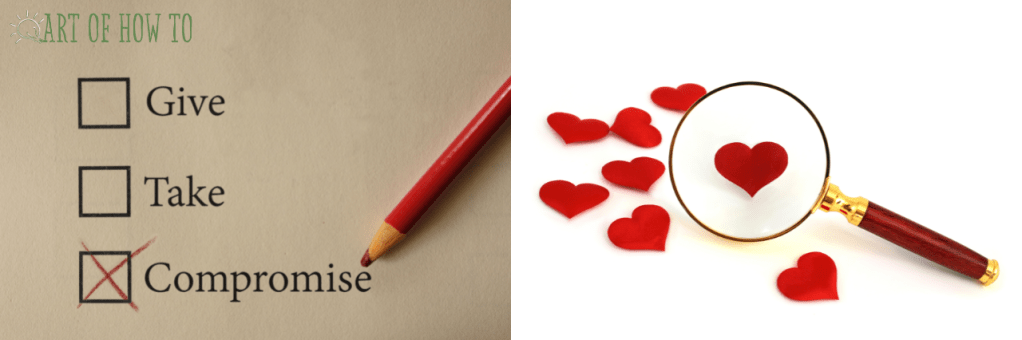
“Love is sacrifice.” It’s the kind of relationship advice we hear from marriage counselors and relationship experts. But is that the case? Is giving up your happiness for someone else a sign of love? Love does call for sacrifice sometimes. But generally speaking, isn’t love is more of a compromise than a sacrifice?

To sacrifice is to give up something valuable to get or keep something, such as a worthwhile cause or a meaningful relationship. As a result, we can argue that some women forgo their careers in favour of their families. In sacred contexts, the word “sacrifice” is frequently used to refer to the act of giving something valuable to a divinity, such as the sacrificial killing of a victim. Because romantic ideology shares some similarities with spiritual ideas. The word “sacrifice” is commonly used in romantic situations as well. Love is so great that it is willing to make great sacrifices.

Compromise means forgoing the pursuit of a better future in favour of maintaining the status quo, even if it is thought to be marginally worse than the potential foregone. The opportunity might even be better and thought to be feasible, yet the person decides against going for it.

The sphere of sacrifice is the real world, whereas the realm of compromise is the hypothetical and possible world. Sacrifice entails concrete actions and costs. One cannot give up something that one does not have in reality.

Compromises are more difficult to bear since they entail unresolved issues that could change the current situation. They are also filled with powerful emotional factors. The subject of sacrifices is tangible, practical action. Like other activities, they may have positive or negative effects, but once they are done, they are over and often do not have a heavy emotional impact.

When you compromise, you give up something you might eventually get; when you sacrifice, you give up what you already have. It is useful to contrast the dynamics of compromise and sacrifice with those of envy and jealousy in this regard. When you are jealous, you fear losing something valuable that you already have, like a close relationship, to someone else. When you are envious, you desire something that you do not already own. As it is harder to lose something you already own, especially when it is to a rival, than it is to succeed in gaining something you have never had, jealousy is usually more painful. The compromise-sacrifice combination is different in that the prospective loss is more detrimental than the actual loss.

Due to unresolved issues, the possible loss from compromise is more emotionally unpleasant; the person may not accept the compromise and may be continually conscious of its drawbacks. Since the sacrifice was made voluntarily, the recipient has no additional reservations about its necessity or value—unless they start to feel guilty about it. Loved ones often don’t even realize they are making sacrifices since it comes so naturally to them. Compromise is frequently accompanied by frustration, whereas sacrifice is frequently accompanied by sympathy and compassion. Compromise, rather than sacrifice, is often where sorrow over lost opportunities is found.

The choice to compromise is typically motivated by apprehension about the risk and potential harm of pursuing the alternative, as opposed to the decision to sacrifice, which is made in light of the significant benefit for the other person or the relationship. In a compromise, the agent does not fully accept the reality because they still think the potential alternative has a higher worth. Therefore, when making sacrifices, people might not even think to ask themselves, “Why should I make a sacrifice for my loved one?”

While making compromises, though, a sense of unfinished business can set in, causing people to continue to wonder whether the compromise is worthwhile and wish for the alternative. This will go on until they adjust to the new circumstances and stop seeing it as requiring a compromise. As a result, concessions can have greater negative emotional effects than sacrifices.

Compromises and sacrifices are both necessary in loving relationships. Because the sacrifices are easier to accept, partners try to accept their compromises and stop seeing them as sacrifices. Even though compromises and sacrifices are common in romantic relationships, they are not felt in true love.

Follow Naveeta Shokeen

Shaping People Strategies

Shaping People Strategies Using HR Analytics

In the years after the epidemic, the function of a human resources professional has evolved into a more strategic one. Return on investment, sometimes known as ROI, has emerged as the most important metric to use when assessing the effectiveness of any HR function. HR analytics, often known as people analytics, may play a significant role in this stage of the game. One might find it helpful to use data-driven insights when making decisions about the HR policies and business strategies of a company.

Let’s take a step back and speak about analytics in general before diving into the conversation of how analytics may be used to shape human resources policies.

The scientific process of transforming data into meaningful insights to facilitate improved decision-making is referred to as analytics. It is always focused on doing something.

Analytics could be a three-fold process

1. Descriptive Analytics

The first step in analytics is to collect, organize, and describe the properties of the information that is being investigated. In more conventional parlance, one may refer to this activity as "reporting."
2. Predictive Analytics

Moving on, predictive analytics is a type of data analysis that is used to make forecasts based on historical data. Using patterns and relationships found in historical data, one can guess how likely it is that something will happen in the future.
3. Prescriptive Analytics

The use of prescriptive analytics allows one to forecast not just what events will occur but also when they will occur and, most importantly, why they will occur. In the third stage of business analytics, the goal is to make a recommendation for a choice or to provide several alternatives for a potential next step.

What is People Analytics?

The collection and utilization of data on individuals to improve key business decisions are what is known as “people analytics.” Insights that will help you find and keep top talent, as well as improve employee engagement and performance.

Important elements of People Analytics

It is very important to understand where your people data come from and how is this data related to business success. People data comes from-

1. Demographics
2. Tenure
3. Recruitment Data
4. Talent Management Data
5. Talent Engagement Data
6. Compensation and Benefits data
7. People Assessment Data

When you connect these data points to business result data, you can take strategic and evidence-based people decisions. 

How to build an effective people analytics strategy 

Building an effective people analytics strategy seems to be a daunting task, however, with the right process, a business can uncover key insights critical to strategic decision-making.

A forward-thinking organization uses the following parameters to shape its people analytics strategy.

1. Identify goals and their impacts 
2. Understand the data source and the gaps
3. Understanding the right technology 
4. Collect, integrate and analyze data
5. Use data to implement changes

Using People data to craft organizational success

HR as a function has undergone a significant transformation, shifting from being a reactive department that dealt with hiring, talent management, and training to taking on the role of a strategic business partner. This is a significant development. As HR increasingly aligns itself with the business, it is now driving outcomes that impact the performance of the firm. HR directors now can support corporate goals, whether it be acquiring and retaining the finest talent, implementing programs for employee satisfaction, or revising existing policies, all of which can be accomplished through the utilization of technology. People analytics lets HR departments align their goals with those of the company, provide insights that can be used, suggest actions that could be taken, evaluate the effects of these actions, and show the company numbers that show how well these activities worked.

There has never been a more favourable time for human resources to have a greater strategic influence on the company than right now. People analytics is a relatively new dimension, but it is slowly and stealthily making its way into the normal processes of organizations, even though it is a relatively new dimension. According to the report that was published by Deloitte Insights in 2018, people analytics is the second most important trend in human resource management. The use of people analytics is driving investment in innovation by organizations to accomplish their business objectives. So, it’s safe to say that the fourth industrial revolution, which will be driven by digitization and automation, will usher in a time when human resource management and people analytics will play a very important role in redefining people and company strategy.

Follow Naveeta Shokeen
Why Spirituality

Spirituality. Every individual has a degree of spirituality within self. It encompasses everything that stirs up and give an expression to your spirit or your inner force. Your spirituality is self personified in every facet of your life. Be it in private or public spheres. It is simply a component of who you are, and as such, it is woven into and exhibited through all that you think, feel, and do.

People have different interpretations of what it means to be spiritual. However, it does involve a belief in a higher force or something larger than ourselves. As well as a relentless pursuit of deeper meaning. Take into consideration the possibility that some individuals make it a habit to visit a sacred site on a frequent basis. Others might choose to get together for hikes in the great outdoors or even to take part in community service projects as a way to draw tremendous motivation from either the natural world or other people.

Discerning our authentic selves is made possible and encouraged by spirituality. We do believe that perception is a potential that arises from the sense organs located throughout our bodies. Still, once we have spiritual awareness, we can tell the difference between our own thoughts and those that come from the spirit.

When we get in touch with our inner selves, we are able to view life from an entirely new angle. Consider the activities that bring out our sense of vitality. Spirituality is a vital component of what it is to be a human being. In addition to helping your mental health, spiritual wellness is easy to achieve and can also help your physical health.

Signs of Spirituality

There isn’t just one way to practice spirituality or one set of beliefs that defines it. There are many different paths one might take to have a spiritual experience and reap the rewards of such an encounter. This may involve a person’s faith in a higher power or their participation in a particular religious ritual for certain individuals.

For some people, it may mean having an awareness of a link to a higher state, while for others, it may involve having an awareness of interconnectedness with the rest of humanity and nature.

The spiritual realm can be experienced and expressed differently by different people. Some people may look for spiritual experiences in every facet of their lives, while others may be more prone to having these sentiments in particular circumstances or in particular locations. Some people may seek spiritual experiences in every element of their lives. For instance, while some people are more prone to having spiritual experiences in places of worship such as churches or other religious institutions, other people may be more likely to have these sentiments when they are out in nature enjoying its beauty.

Difference Between Spirituality and Faith

Spirituality is knowing that our lives have greater significance than the mundanity of everyday existence. It is a journey of healing and letting go of our ego in order to experience a positive state. In people’s minds, spirituality, in their minds, is synonymous with research for meaning, for purpose, and direction in life.

Faith, on the other hand, may be a defined value system which can include who and why, teachings, theology, and beliefs. For some, faith instills hope for the long term and helps you overcome fear of the known and unknown. Faith is mostly misunderstood, misused, and abused. Terrible atrocities are committed in the name of faith—religious terrorism, persecution of minority groups, marginalization of women, and the list is long.

Importance and Impact of Spirituality

Identifies the Meaning of One's Existence
It sheds light on the true meaning of life for the individual concerned. Spiritual practice can answer questions about where a person fits in the universe, like why he or she was born. This not only enables one to forgive the suffering but also to accept life in its current state.
Fosters a climate of calm and harmony
People are more likely to live in harmony and peace when they practice spirituality. It lessens the likelihood of violent acts, aggressive behaviour, and power conflicts, promotes acceptance and forgiveness, and so makes it easier for people to coexist peacefully, and it also helps alleviate poverty and clean up corrupt institutions in a society.
Social organization
Spirituality not only provides mental peace but also promotes consistency in the family and in the business. This makes spirituality an important factor in the efficient organization of society. In addition to this, it contributes to the maturation of patient and tolerant attitudes.
Increases feelings of love and affection
It helps motivate a person to demonstrate love and care for everyone around him, including the environment, and it also encourages him to be more compassionate. You will therefore find that a spiritually enlightened individual has a softer impact on the natural world. He expresses his love and affection for everyone.
Increases welfare and growth
People who have a strong spiritual practice have a greater likelihood of succeeding in whatever endeavours they undertake. Because a spiritual person works with the intention of improving the lives of others through their labor, they bring a higher standard of ethics and quality to their employment. Even successful people like Swami Vivekananda, Steve Jobs, George Carver, and a great many more credited their achievements to living a spiritual life.
Nature supremacy
It enables a man to exert dominion over the natural world. The fact that we are able to tame nature seems almost impossible to believe. Even with the science and technology that we possess, we are unable to accomplish it. There have been many people who have attained spiritual enlightenment who have done miracles that tend to keep nature under their control. It's possible that you've heard someone talk about the power of belief and how it can move mountains. This conviction strengthens as a result of a spiritual existence.
Increases physical and mental wellbeing
Spirituality instructs when to eat, how to eat, and maintains positive thoughts, all of which contribute to improved health. Take care to avoid becoming dirty. Even in the face of physical illness, mental fortitude aids in the healing process. It wades off fear and helps keep the mind composed as pleasant thoughts roll in. This reduces feelings of despair and assists in the body's overall recovery process.
Clear thinking sans fear
It eliminates the dread of death as well as other types of insecurity. It also helps people break ties with the problems of this world and life in general.

The importance of spiritual understanding is beyond words. In fact, it is the advent of any state that is beyond normal and metaphysical. It is to be balanced by a substantial amount of self-discipline, rational enquiry and practical guidance. Spirituality allows a person to try to do what he thinks is true at that moment with no obligation. Spiritual science is universal with a transparent path and goal.

Real faith is an entry to spiritual science. It provides a coherent and well-structured belief system that is built on a solid moral and ethical foundation, which is necessary for the pursuit of transcendental knowledge. It prescribes practices that have stood the test of time and proven themselves effective.

Follow Naveeta Shokeen