4 Myths About Stay-At-Home Dads


From being called glorified babysitters and labeled as not earning an income, there are some myths. How wrong are these misconceptions about Stay-At-Home Dads, AKA SAHDs? 

Surprisingly I am not the first stay-at-home dad, and I won’t be the last. However, this time has been nothing short of a fantastic experience. But, to tell you the fact, it has had some, let’s call them, unpleasant conversations and unwanted advice from friends and family. 

I do not mean my immediate family or in-laws when I say, family. I mean the nosy know-it-all aunties and uncles who like to carry out investigations that will make special units blush. Then comes their opinions and advice that no one asked for in the first place. But before we digress, let us knock out the myths, state some truths, and tell some simple facts about the stay-at-home dad club. Yes, I said club! That is because we are simply the cool gang! LOL.

1. All stay-at-home dads are unemployed 

Fact: Most stay-at-home dads are employed and choose to do so to support their partners.

In many cases, this eliminates the need for a nanny or caretaker for your little one. It also allows the child to grow with one parent at all times. Surprisingly, this also allows each parent time with their tiny tot! Bonding is at its highest, and both parents and child/ children have a super time.

2. Stay-at-home dads are lazy 

Fact: Many stay-at-home dads, myself included, have tons to do for the little ones around the day.

For example, if the baby is younger, the whole routine is based on when the baby is up, fed, burped, tummy time, playtime, and bath time. Do you see where this is going? Any parent, whether mom or dad, is not having a siesta. It is fun, but it is not walk-in-the-park stuff. The time and personal investment in raising a little one at home is full-time work.

3. Stay-at-home dads are not man enough

Fact: They are men enough to allow their wives to have a professional life. Surprisingly this is from my viewpoint. We are!

I mean to have the courage to take care of your child, go to the gym, hold a job, cook, and clean for your little angel. It is not a woman’s role. It is a shared responsibility; if your work environment allows it, I say do it. Times have changed; wives, AKA mommies, also have jobs and careers. So be supportive, and enable and empower them to shine at their workplace.

4. Stay-at-home dads won’t have time to work and have their own life

Fact – I have been a stay-at-home dad for over two years, and I have enough and more time to do what I need to, when I need to, thanks to having a unique and supportive partner. Life has been more fun this way.

Stay-at-home dads, and let me add, moms are superheroes, especially if they hold jobs. Working from home is not easy, it is not convenient, and it is emotionally more challenging than working from the office. But it is possible. It is fascinating that all this became even more acceptable to corporates after the terrible pandemic. The good from it rewrote our understanding of how the world functions. 

As a stay-at-home and work-from-home dad, I never thought I had it in me to hold a full-time career as a consultant, caregiver/ dad, and partner to my wife. It is very tiring and testing at times. There are terrific days, and there are meh days. The good and the not-so-good. But it has been worth every minute of it. Paradigms have shifted. We quickly know how to hand over our kid without blaming or passing the parcel. It has become our little one’s routine to look for Baba in the mornings and Mama in the evenings for his support, comfort, and plain old security feeling. Watching this fascinating little human grow, we are encountering milestones. We are not missing out on life. The ultimate truth is we are taking advantage of a lot. Best of all, we are first-hand witnesses to the process and progress called life!

Follow Ignatius Deepak Stanley

Co-Parenting The Easy Way 


The simple truth. Children are the casualties of divorce. Almost always. Divided between having two parents and the separated lifestyles of their parents. Co-parenting is typically one of the trickiest problems divorced parents overlook in a brand-new, untested relationship. 

Regarding the parents, they could deal with sentiments of rivalry, annoyance, and miscommunication. Furthermore, they intended to avoid co-parenting in two separate residences when they decided to have children – the barriers to co-parenting spread to every aspect of the relationship.

And yet, after a divorce, parents and kids frequently adjust to the new situation and manage to co-parent successfully. Whether the parents share parenting time or each has sole custody, being prepared and trying to put the kids’ best interests first can help them work together in a more friendly and productive way. Here are few tips.

1. Communication is the Key 

Poor communication is a significant factor in the breakdown of many marriages, which is why divorced parents frequently have difficulty communicating effectively. Co-parents must develop far more straightforward and effective communication techniques and patterns for the benefit of the children. They must communicate with one another through a variety of means, including face-to-face interactions, phone calls, emails, and texts.

2. Documents are Essentials

The difficulty of co-parenting frequently results in additional legal action. Every encounter between fathers and mother must be recorded, including the date, time, topic of the conversation, and a list of any additional witnesses. Maintaining accurate records promptly promotes honesty and accountability among all parties.

3. Maintain a Consistent and Regular Schedule

Children crave stability and become worried when things don’t go as expected. Therefore, co-parents must put forth the extra effort to maintain realistic and reliable schedules. If dad has the kids on Wednesday evenings and every other weekend, the children’s schedule comes first. Suppose one cannot avoid disagreements; attempt to resolve them as early as possible so everyone can make plans. The less worried the kids are when both parents stick to the plan, the better. 

4. Dispute Privately

Parents often have diverse parenting philosophies, so you might occasionally or more frequently disagree with how the other parent is raising the children. Deal with such a quarrel privately, away from the children, if you have one. The children will feel safer if they perceive their parents as caring and devoted to them and one another. Avoid involving the children in your arguments or using them to hurt the other parent.

5. Prepare for Brief and Pleasant Exchange

Make the meeting between mom and dad to drop off or pick up the kids as quick and unimportant as you can. At the time of the transaction, avoid any drama. Don’t, for instance, take your new girlfriend with you when you pick up or drop off the children. Save talking to Mom about a delicate subject for a later time.

6. Don’t expect your ex to follow your rules.

You might have a few unbreakable home rules, such as a strict bedtime of 8 p.m., a ban on fast food, and a daily screen time limit of one hour. But, on the other hand, your ex might allow them to stay up late watching movies and take the kids to McDonald’s. Try to let it go because you can’t expect your co-parent to uphold the same standards that you do. But do attempt to reach a consensus on essential principles, such as religious practice or a prohibition on violent television, by sitting down together.

7. Make and adhere to a parenting plan.

A parenting plan that the courts have approved is used by many parents who have custody agreements. If you have a formal plan like that, stick strictly to it used by many parents with custody agreements. If you have a formal plan like that, adhere strictly to it. If not, make one on your own after careful consideration and cooperation so that you and your ex-spouse know what to anticipate from the co-parenting agreement. If complex topics are discussed ahead of time, it can significantly affect how co-parenting works. 

Follow Naveeta Shokeen

Bottle Feeding Is Just Fine


The relationship between babies and their mom are unfathomable. It is beyond beautiful and surreal. Nature has its ways of caring for life. And it is natural for mammals to feed their babies breast milk, like humans. However, not all mothers can nurse their babies for various reasons – one of which is not lactating enough to do so – which is pretty natural and not an excuse like Manu humans (incredibly nosy aunties) think it is! 

Well, there are numerous thoughts and comments about how different babies that are boob-fed and bottle-fed are! And here are my thoughts, being a new mom myself and not being able to breastfeed my baby for more than two months after his birth. 

To begin with, my journey has been very different from that of many moms. I was unprepared to be a mom and thrust to take on this role unexpectedly. Having PCOD all my life, I was not even a girly girl who knew what an intense period felt like! But, blessed to be a mom today, I watched myself transform and be the best version of myself for my little munchkin. 

Not having a smooth and “expected” pregnancy might have affected the way I perceived breastfeeding – maybe even the fact that I was not prepared to even after the baby’s arrival – something many people would not relate to – it is entirely natural and nothing to be awestruck – had an impact on my nursing techniques and ideologies. 

I was unsure how to touch or hold my son when he was brought to me after birth! I did feed him for a while when people around me started having inhibitions of whether the baby had enough milk to feed on since he cried his lungs out during the night – which again is natural – but the guilt of not having enough inside me to feed my baby worsened the situation and my confidence to nurse him appropriately. 

Giving him formula relieved me of that anxiousness about whether he had enough milk. Giving him formula made me question something different, however. I was scared that he would be as attached to me as other breastfed babies are to their moms! 

Breastfed or bottle-fed, it does not make any difference! Skin-to-skin need not always come with feeding the baby. I have had skin-to-skin sessions with my boy for hours together – we have fallen asleep like that, and those moments have been so special for him and me alike! I am sure he feels warmth and security with me being beside him and feeding him from a bottle just fine. It has made me realize what a special bond we share outside the norm. 

Today, many women face this issue and feel guilty for not being able to feed their babies their milk. However, there is absolutely nothing to feel guilty about. The bond between a mom and her baby does not have to be defined by whether or not they feed them from their breasts! 

Bottle-feeding my son has helped me personally in several ways. Looking at the brighter side of the story, I can spend quality time alone, do my things and not feel my boobs will burst anytime, and go to the office in peace and not worry about leaks or stains and so on. I have a life of my own (which many moms forget they do) and cope and survive this new phase. I encourage and help women and my friends who are new moms to realize and understand that the bond with their babies is unique and does not matter what others say. What makes us comfortable is to be practiced. 

Hugging him to sleep, caressing his soft skin and hair while he drinks from his favourite feeding bottle, watching his little fingers hold mine, and staring into his starry eyes, are all ways I bond with my angel boy. He is almost one now, and the time has flown, and there are so many different things I need to focus on rather than worrying about whether or not he will love me enough because he is not breastfed! He does not go to sleep at night without me. So there was my answer – he has no reason to bond less with me – he is outstanding and healthy. It is all in the new mom’s head! 

I want to repeat that bottle feeding is acceptable; and just fine. Anything that gives you peace, calm, confidence, and mental stability IS JUST FINE. 

Follow Aakanksha Dinah

What In The Name Of LOVE

It’s a different morning today – colder than usual. I like it. It is a welcome change from how the climate has been playing for a while, and a little drop in temperatures has been something I have been looking forward to.

I peek out the window and am delighted to see a tiny film of haze clouding my view, and a few dew drops roll down my window pane. I feel elated. I can see the light hazy mist far in the open. I sigh with relief and am ready to start my day with a spring in my step. I am happy the day will not sap me of all my hydration due to excessive heat, as was the case for a few weeks.

I help myself to a cup of tea and sit beside my window to enjoy my cup and the morning newspaper. This is the time of the day I love the most. I am an early riser; everyone is still in bed, and the house is quiet, allowing me to tune into the sounds of nature, the birds chirping, and the swish-swoosh of the leaves swaying to the wind like a dance that is free of Care!

I look at the newspaper, go through a few pages, and stop at one. My heart starts to beat faster, and my eyes are consuming every piece written in this part. My ears have suddenly stopped listening to the sounds I love most, and I am somehow recreating the scene in my head that is described in this news piece. I am suddenly beginning to feel rage. Not anger, but RAGE!

I am looking at the news of one Shraddha Walker – a 26-year-old woman killed by her live-in partner Aftab Poonawalla. This is not a typical case of murder. It is gruesome, heartless, and devoid of any humanity. Yet, ultimately, this Man, who is all of 28 years old, has the guts, audacity, and bestiality to kill his partner, chop her body into pieces, keep it refrigerated in the same house for over four months, look at it every day and meticulously dispose of her parts little by little each day in the dead of the night! 

What is more enraging is that this woman had fought with her entire family, leaving her home and parents behind to be with this Man. She fought for her love and a future she thought was her ‘happily ever after.’ She fought with her family, who disapproved of her relationship and walked away, saying, ‘You may think your daughter is dead.’ And all this while she was already suffering abuse at his hands and writing to her boss that she was too bruised and beaten up to report to work. She was already writing to the cops that she suspected he would kill her one day and chop her off to pieces!

The guy kills his live-in and in-love partner because she wants to marry him, and he had probably fallen out of love and was already looking for his new dose of adrenalin rush. He was high on drugs, drinking, dating, and cheating. Let alone being remorseful or guilt-ridden for his barbaric act, he prides himself in being inspired by the OTT series ‘DEXTER.’

The dew drops rolling down the window pane till some time ago are now rolling down my cheeks…

I am wondering – WHAT, in the name of LOVE? 

She probably only wanted marriage and commitment—a social validation for her bold choice of HIM over everything else. To fulfill his promises while pursuing her promises to be faithful and loyal in good times and bad, in sickness and health – till death did them apart!

That did not happen. But what was she thinking? She did have rough episodes where she woke up from her dreams to a harsh and rude reality. She knew something was coming. Something was not as ‘fairy-tale as she would have loved to believe. Then WHY DIDN’T SHE LEAVE?

Love makes you blind, they say – I agree – Been there, done that. It makes your world go round, puts you head over heels, turns you into a Selenophile, blah blah… yes, but why didn’t she realize when the love ended, when things went downhill? Why did an independent woman like her continue an abusive relationship even though she wasn’t married, had no kids, and had no strings attached? And not just her… So many women are subjected to so much lovelessness, carelessness, violence, and brutality, yet we hold onto it. Women are Killed for Wanting to Marry; Not wanting to Marry; Killed over an Argument; Killed for wanting to move on; Killed because there was too much salt in the food! 

And it does not matter if you are dependent, illiterate, or challenging physical condition, independent women, highly educated and successful women, accomplished celebrities, and financially independent, It happens to all.

The question is, What are we doing wrong? Why are we doing this to ourselves? Why are we loving ourselves so little and looking for so much validation from people who have let us down? Why are so many women becoming Shraddha and Ankita and Vaishali Thakkar… What, in the name of love, are we accepting? 

Yes, love still makes the world go round, but I guess…we need to choose differently. Choose the right person to love. Choose ‘Yourself’ to love. “Love yourself first, and everything else falls into line. You have to love yourself to get anything done in this world.” — Lucille Ball

Promise to love yourself First.

Rest In Peace, Shraddha!

Follow Veena Gupta

Riding The Waves Of Queer Pride


The football fever has hit hard. Two announcements that hit me harder than the loss of Argentina was the sudden ban on alcohol sale and the discrimination of LGBTQ+ individuals at the world cup arena. However, the ban on ‘OneLove’ anti-hate armbands at FIFA World Cup did not stop the rock sales of the armbands and how supportive the world reacted to it. 

"Pride is for everyone."
"We're here. We're queer."
"Celebrate Trans Pride."
"Not gonna hide my pride."
"We're all born naked, and the rest is drag."
"I fell out of the womb and landed in my mother's high heels."  

I am sure you all would have read these slogans and quotes in your cities during Pride Month (celebrated in India in June). However, the last quote is my favourite! It touched me and many others. 

In the last few years, many have shared how they or their friends were ready to come out about their sexual preferences and gender orientations. Though unfortunately, it wasn’t for me. A thought that disturbed me was: why we need permission to be what we are and who we want to be. It saddened me that gender and sexual discrimination did not allow so many of us to live our lives as we wanted.

In the same way, when you fall in love with someone or are attracted to someone, you are driven by instinct and your heart. It shouldn’t matter whether you love someone from the same sex or the opposite sex. So why be called queer for going against “norms”? Why be shamed for loving someone from the same sex? Love doesn’t change definitions whether you are a homosexual or a heterosexual. The feelings, emotions, and bodily reactions remain the same.

So, what is the meaning of queer? We all know queer is a word in the English dictionary to describe a person who is odd or different or did things differently. Interestingly, queer has been referred to as LGBTQ+ (Lesbian, Gay, Bisexual, Transgender, and Queer). 

But how did the word enter the LGBTQ+ lexicon? In the 19th century, “queer” came to be referred to as people in same-sex relationships. Back then, homophobia was widespread, and violence against the homosexual community increased. As a result, a group of activists enraged by the brutality wanted to raise their voices in protest. So, a group of HIV/AIDS activists formed the “Queer Nation” organization in New York on March 20, 1990.

Nearly 60 people from the LGBTQ+ community gathered for the event. Their message to the world was to accept them as they were and instill a sense of Pride among the community members. Many movements like these came later and encouraged them to get themselves as they are and come out of the closet to accept their sexuality. Hence the term “Queer Pride” was born. 

Queer Pride is accepting one’s sexual orientation openly and being proud of it. There is nothing incorrect with being different and having different sexual preferences. However, it doesn’t reflect on you as a person. This shouldn’t be a reason for discrimination. Each person has their personal choice and right to live their life as they want to. But ever since countries were born, boundaries were drawn, and they started drawing lines for citizens – how they must behave, dress in public, set rules and laws, and their gender and sexual preferences. 

Sadly, even spiritual sects, political forces, cults, and self-proclaimed moral police did not remain far behind in crusading against the LGBTQ+ community to date. People for centuries have been trying hard to “treat” or rather “cure” homosexuality. This “abnormality” supposedly goes against their idea of sexuality. Yet, they are still discriminated against and denied access to fundamental human rights like food and shelter. 

Even though it is hard, many opt to come out of the closet, face the world, and be who they indeed are. The world is more accepting now. Maybe a few… However, it takes time…more time to get a mindset change. Even more, time to gain acceptance. It is indeed a difficult road ahead in India. The number of Pride marches is increasing every year in most cities worldwide. There is better acceptance and more tolerance now in mainstream cities or metros. Smaller towns and cities in India are also beginning to organize seminars, conferences, and events for the public. It is crucial people are made aware of LGBTQ+ individuals and their struggles and gives space for them to share their life.

Of late, there are laws supporting LGBTQ+ Community. Gay and lesbian marriages have become legal in some parts of the world. Celebs are also coming out of their closet about their LGBTQ+ identities without worrying or fearing being judged. Recently, two former beauty pageant winners, Mariana Varela from Argentina and Fabiola Valentin from Puerto Rico, publicly announced their two-year-old relationship and marriage ceremony through social media. Their cute love story has left many more people to talk about their relationships openly. Public acceptance is slowly taking precedence in some countries, yet a long way to go. 

India has a long journey to bring up a sensitive and tolerant generation. Recently, the most horrifying case was that of a schoolboy in a leading Delhi school who committed suicide. He could not take in the atrocities of his seniors bullying him over his sexuality. It is heartbreaking to see how much intolerance is seeded by families who pre-define sexual and gender identities. Unfortunately, many such cases go unreported or shoved under the carpet. The only way things can change is when schools and academic institutions take the initiative to organize workshops and seminars to sensitize children. It will ensure lesser crimes and encourage inclusivity among children, irrespective of their gender or sexual preferences. 

Rainbow of Hope Expanding

Since the Supreme Court of India decriminalized consensual homosexual intercourse, it has proven to be a ray of hope for the LGBTQ+ community in India. Unfortunately, India is yet to legalize homosexual marriages, and there is still a long way to go for the complete acceptance of homosexuals. However, more stories about their identity and relationships emerge thanks to the ruling. Some have migrated abroad to LGBTQ+-friendly countries and got married there too. 

Social media accounts like Official Humans of Queer, Queers of India, and many more handles are helping more and more people get comfortable with their sex and gender identities and accept themselves for what they are. 

In an age where body shaming and toxic positivity are viral, these initiatives are a rainbow of hope for humans to walk with our heads held high on a road not taken at all. So, cheers to all of us who want to be what we are – pure, unfiltered! 

Do share your experiences/stories in our feedback box. We would love to feature them.

The top 10 countries ranked on the LGBTQ Global Acceptance Index (GAI) index developed by UCLA researchers in 2021 are in the following order – Iceland, Netherlands, Norway, Sweden, Canada, Spain, Denmark, Ireland, Great Britain, and New Zealand. In addition, Human Rights Watch, based in New York, has profiled 132 countries on its website. It gives information on human rights for the LGBTQ+ communities there. There are also maps accompanying these country profiles, showing countries that criminalize homosexuality and are ridden with gender-based crimes.

Most countries have different timelines for celebrating Pride Month. For example, India and the United States celebrate Pride Month every year in June. Others celebrate in February, August, and September. Pride Month is yet to be recognized internationally, hence the different timelines of celebrations too. India celebrates Pride Month every year in June.

Follow Priya Rajendran

Fear Of Failure


Have you ever been so terrified of failing at anything that you chose not to attempt it? Or the thought of failure has caused you to unconsciously sabotage your efforts in the past so that you might avoid the prospect of a more significant setback.

It is something that undoubtedly happened to a good many of us at some point in our lives. The fear of failing may be paralyzing; it can make us do nothing, preventing us from moving forward. But if we give in to our fears and allow them to halt our forward movement in life, we will pass up some fantastic opportunities along the way.

This essay will discuss the fear of failure, including what failure is, what causes it, and how to overpower it so you can experience genuine triumph in your professional and personal lives.

What Gives People Fear of Failure?

We all define failure differently simply because we all have different standards, ideals, and worldviews. So push through your apprehension of failing and continue to work toward your objectives. Easier said than done! Right.

Many of us, at least periodically, are terrified of failure. However, fear of failure epitomizes when we allow it to prevent us from taking action that will help us advance toward our goals. Numerous factors might contribute to the fear of defeat. For some people, having critical or unsupportive parents is a contributing factor. They carry the negative feelings they experienced as children into adulthood because they were frequently undercut or made to feel inferior.

A distressing experience that happened to you can also be a contributing factor. Say, for instance, you gave a crucial presentation in front of a sizable audience a few years ago and performed horribly. The experience was so dreadful that you feared failing in later endeavors. And even now, years later, you still harbour that anxiety.

How You React to Failure Fear

If you have a fear of failing at anything, you might suffer from one or more of the following symptoms or even all of them:

  • Unwillingness to engage in challenging activities or to try new things, often known as “risk aversion,”
  • Self-sabotage can take many forms, such as putting things off until later, experiencing extreme worry, or not following through with plans.
  • Low self-esteem and self-confidence, as seen by the frequent use of negative phrases such as “I’ll never be good enough to receive that promotion” and “I’m not smart enough to get on that team.”

What Is the Definition of Failure?

It is improbable that a person will make it through their entire life without falling short of their goals in some way. People who do this probably conduct their lives so guardedly that they never venture anywhere. To put it another way, they are not alive at all in any sense.

The good thing about failure is that we choose how we want to look at it. So it gives us a lot of freedom. 

Failure can be interpreted in two ways: either as “the end of the world” or as evidence that we are not good enough. On the other hand, we may view failure as the tremendous educational opportunity that it frequently is. Failure is a learning curve.

When we are unsuccessful at something, we always have the option of looking for the lesson we should learn from the experience. These are valuable lessons since they allow us to develop as individuals and ensure that we do not repeat the same errors in the future. Failures are only able to stop us if we allow them to.

Just think about all the chances you’ll pass up if you give in to your insecurities and give up. In addition, failure can teach us something about ourselves that we would not have been able to discover in any other way. For instance, making mistakes is one of the best ways to figure out how strong a person you are.

Failing at anything might help you find your most genuine friends or lead you to unexpected sources of encouragement to succeed. Both of these can be beneficial. However, in many cases, gaining valuable insights requires experiencing some defeat. Therefore, understanding how to take in new information and grow as a result is essential to having a successful life.

Understanding that failure is always possible in anything we attempt is critical. So, in addition to being courageous, taking that opportunity and running with it provides us with a more prosperous, fulfilling existence.

Here are a few strategies to lessen the anxiety of failing:

  • Because you are afraid of the unknown, many people struggle with the fear of failure. By carefully weighing all of the possible outcomes of your choice, you may overcome that anxiety.
  • Thinking positively. It is a very effective strategy for overcoming self-sabotage and boosting self-esteem.
  • In certain circumstances, the worst-case scenario can be devastating, making the fear of failure reasonable. Recognizing that this worst-case scenario may not always be the case can be helpful.
  • Having a “Plan B” in place will boost your confidence in taking action if you’re worried about failing at anything.

How to Stop Fearing Everything

Setting goals could make you feel uneasy if you suffer from a fear of falling short of them. But setting objectives helps us define the direction we want our lives to take. Our destination will only be confident if we have goals.

The practice of visualizing one’s success is one that numerous authorities endorse as an effective method for goal setting. Imagining how different your life will be once you’ve accomplished your objective can be a powerful incentive to keep you moving in the right direction.

On the other hand, people who fear failing could find that visualizing adverse outcomes has the opposite results. For example, after being asked to picture setting objectives and achieving those goals, research has shown that those with a fear of failing are frequently left in a terrible mood.

What other options do you have available to you?

To get started, select a few manageable objectives. These ought to be goals that present moderate difficulty but are possible. Consider achieving these objectives as “early wins” to strengthen your confidence.

Make an effort to make your ambitions more manageable by taking baby steps toward more ambitious goals. Taking things one step at a time will make you feel more confident, keep you toward your objective, and prevent you from becoming overwhelmed by thoughts of the accomplishment you want to achieve.

Follow Naveeta Shokeen

Friends, How They Influence Kids

What is friendship in a kid’s life? I bet you can name your first friend without missing a beat! Not just any friend but the very first one. If you can’t, it’s OK to take a moment and think back. Take a simple stroll back in time, and you will suddenly remember that friend as you walk through events and timelines. So what was it about this friend that seemed unique or stood out? I am sure you fondly remember the adventures, escapades, great fun, and everything between those times. 

Whatever your age, I am sure you have always had the few you could always count on that were not your immediate family. Instead, you are blessed with what we know as friends who become family! 

Kids have a simple formula to make friends. They seek those that match their wavelength and bond. As tiny tots, they don’t have hidden agendas to make or have friends. They know that so and so is my friend and if you ask them why the most probable answer is “simply because!” So before judging these innocent souls, remember you once were just like them. 

As I write this, I realize I have lost some of these friends along life’s journey. Strangely, we were supposed to be BBFs (Best Friends Forever). Somehow, those friends are now nothing but a whisp of a memory. But one thing is sure. The lessons I learned being around them helped me make better friends and forge better relationships as I progressed in life.

“Show me your friends, and I will tell you who you are,” ever heard this line? This world has much more good than we care to admit. I say this simply because I have some of the best friends in the world. I also say this because I know they (these friends) and I would give our lives for each other. I have known several of them for many years now. 

What would a child need to make or have this kind of quality friends?

1. Communication 

Yup, children need it too. Teaching a child to talk to and be with others their age helps. This is also vital as the child interacts with others. It helps them continue to sharpen this elementary and yet essential skill.

2. Networking Skills 101

From saying hi, being friendly, thanking, and sharing, all add up to networking crafts. This works for grown-ups too! Try it! Have you noticed how well children make friends? That is because it is built into their DNA. Humans, I have read this somewhere, are social animals. Which means we were not built to live in isolation.

3. To have a friend, you got to be a friend

This is an addition to the previous point. Teaching your child to be compassionate and empathetic helps them make friends, stand up for each other, and use their simple yet non-judgemental approach. Kids make friends for life or at least better than most grown-ups. 


It is also essential to keep track of how your child is behaving. They learn a lot by observing and are still in the process of finding themselves. In their younger years, you have nothing to worry about. They are just chilling with their clique. As they grow older, they keep track of what’s going on in their lives. You do not want to wake up one day to a strange teenager in your kitchen eating all your food and running wild. You knew one as a sweet child, but it has changed due to neglectful parenting. As a parent, you must know who your child is connected with or hangs out with. Remember, the child is not trying to rebel or prove a point at a young age. 

However, as they grow, you will need to be sure they are running in the right groups or hanging out with a good crowd. Do not ever take it easy and then blame your child, later on, saying, “I did not want to interfere.” Also, please do just what is necessary. Know their friends and keep an eye as a loving parent should. Have the friends come over for a game day, for a meal, and if possible, get their parents over just for a get-to-know-you meeting/ meal/ tea. Whatever you do for your child’s safety, do it from a space of love, concern, and care. And do this FROM A DISTANCE. Then, your child will be just fine.

Follow Augustus Stanley

Spice It Up


Life is uncertain and ever-changing. We all tend to get lost in the monotonous routine of every day and somehow lose our identity and love for anything adventurous. We almost give into the drill and forget the essence of living life to the fullest. Yes, work is essential. Yes, kids are important. Yes, spending time at home and doing our duties is necessary. But, what is more important is to make sure that we are ourselves the whole time – what we used to be when we laughed freely, what we used to be when we traveled without second thoughts, and what we used to be when we lived life our way!

Somewhere, most often than not, men and women equally lose touch with what used to be before all these so-called responsibilities, and mundane rituals came into being. How effortless it used to be to self-love, self-indulge, and be a little selfish!

While it is important to stay rooted and grounded, it is also necessary to let loose and be free once in a while. If a partner can understand and participate in this holistic approach to life, there is nothing like it: if not, it is outstanding to wave off, take a break, and spice it up ourselves.


Breathe – it is not that hard! Taking a day off, listening to good music, shaming a leg, writing a journal, reading a book or two, and being away from the routine can be a start. This has more positive effects than one can imagine! Thinking outside the box, doing things differently, and enjoying what we do, are all ways to revitalize and rejuvenate our inner selves. The idea is to avoid getting bored of ourselves – which is more often the case with many individuals though they might choose to disagree.

Being a little selfish is healthy – for our mental health! But on the other hand, being greedy, prioritising self-love, and honouring peace and mental satisfaction are necessary for us. This will help us maintain a healthy life outside of who we are and help us be better spouses, better parents, better friends, better colleagues, and better us, to put it straight!

There are other exciting ways to heal ourselves and focus on bettering ourselves. Get out into nature, smile and laugh more often, take charge of our routine lives, and always have something fun and exciting to do apart from loving what we do regularly. Taking more pictures, being more relevant and in the scene, recording instances, keeping memories fresh, replaying and reliving happy moments, zoning out once in a while, fantasizing about life, dreaming big and living life entirely can also help with spicing up things and keeping life happening!

Days are not coming back, and they are not stopping for us to lay back. Time is flying, and so are we aging; there is so much more to life than just being us! However, exploring and encountering outside of our comfort zone will never lead us to regret – they will create memories that we can relive a thousand times, and it is worth it!

Follow Aakanksha Dinah

Having Difficult Conversations

Life has never been easy on anyone. On the contrary, anyone who even seems like they had it easy – has had it extremely difficult. Trust me on that. Life is not a smooth ride for any rider, and it has always been a bumpy ride riddled with potholes, sharp turns, flat tyres, bad roads, and No roads at times!

But as Paulo Coelho puts it, ‘Straight roads do not make skilful drivers,’ similarly, easy life never made happy people! All the happy people you see out there; who look like they have everything under control; have had to overcome some of the most challenging tests until now, i.e., Having Difficult Conversations.

Whether you are in a relationship and feel the need to move past it, communicating this to the other half, who is still invested in the relationship, is a difficult conversation. Or, it would help if you told an employee that they need to resign…is a difficult conversation. Or you must deny a request to lend your money to a friend…is a difficult conversation. Or demanding your rightful share in a property or reasonable dues at the workplace, especially when people are not being fair…is going to be a difficult conversation. Or sometimes something as trivial as asking your friends and relatives to pay for your professional services, which they feel you offered to them as goodwill, is also a difficult conversation.

These are those times when life puts you at a crossroads, and you must choose one road to advance. What makes it more complicated is that you must choose the road without full knowledge of what lies ahead, of what that path brings you. It is sometimes a blind choice, a leap of faith, or even a gamble. But it would help if you still made that decision. 

Why is it Difficult!!!

These conversations may feel normal for some but extremely difficult for others. What makes it difficult is the realisation of ‘What is at stake!’ What may be at stake is what makes it challenging to make such a decision and what makes it difficult to communicate this to the other person. 

It’s probably a considerable amount of money involved or probably something more inestimable – Emotions, feelings, self-worth, hurt, and pain!

You probably know what the other person may go through post what will be said. You also know how much s/he may have invested personally, monetarily, and emotionally all this while. Therefore you understand that the amount of hurt and pain it will cause them is unfathomable. Probably for the same reason you have waited on the sidelines and endured what has been going on for a while. Probably you have chosen to keep quiet about it and brush it under the carpet for a long time now, ‘just to keep the peace.’ It might be little things that have added up or bigger let-downs that happened over time. Or it is probably what will follow after the rude surprise that will be too emotionally heavy that you cannot deal with, so you have continued to bear that in silence.

Whatever the case may be, one thing is for sure – it is getting heavier by the day, getting increasingly difficult to keep up with the chagrin. 

Why must we still make those decisions!!! 

Your decision to be quiet about the issue to keep the peace is probably not working in the long run. The more you decide to ignore it, the more intensely it backfires. It has become that wet brick you have been holding for way too long that has now started to get heavier and heavier, and you know you must put it down to stop the discomfort. 

Talking about the issue is challenging, but you must do it to unload yourself. It is precisely when you feel like you don’t want to talk about it – it IS when you MUST talk about it. 

If not now, it will only get more and more difficult later and may come out at an unwarranted time over an unnecessary issue and at a needless place. Times when you feel you have no choice but to do it, but still don’t want to do it – is when it is the most important to do it!

Keep in mind

Now that you eventually muster up the courage to talk remember it will not be accessible by any means. It will not be easy for anyone and may change the order of things forever. Therefore, there may be some essential things you must realize and remember.

First and foremost, be honest about why you want this conversation and what you want out of this. If the goal of your discussion is proving yourself right and putting the other person down, you might as well drop the conversation altogether.

Next, always remember that the other person deserves as much respect and dignity as they held while things were hunky-dory between you both. Just because things are falling apart does not give you the right to strip them of their respect and dignity due to feeling wronged!

Then, be ready for a NO! This is probably something that most of us find challenging to deal with… A Rejection. A denial. A Failure. But this is where you need to remind yourself, time and again, that the other person does reserve the right to say No. And that you must respect that as much as you would respect an agreement to your terms. Be prepared to hear a ‘No’ and plan your response if the outcome is not in your favour. 

In addition, avoid any urge to get even, score over them, put them down, hurt them or resort to blaming. Remember you shared a good part of your life with them. They are there in your life for a reason, and respect that reason. Just because things may not be going the way you imagined them does not give you the right to be mean to them. 

Additionally, avoid Sarcasm, belittling, personal remarks, and manipulating the situation to make your demand look justified.

And last but not leastfocus on the situation. Approach them with sensitivity and take care not to mock them. Keep it private and genuine. Be objective and fair to both of you. Remember, you are dealing with a Human whom you shared a part of your life with, and they deserve better treatment. Be empathetic and see the other person’s point of view as well – because this probably came out of nowhere for them. They weren’t even expecting this. Allow them time to come to terms with it, sink, and sulk. Allow them space to process what’s happening and have the maturity not to dictate how they ‘should’ be feeling according to your plan! 

Remember, difficult conversations will always be difficult until you make them challenging. But your job resumes after the dialogue. The person at the other end might require help coming to terms with it. So give Closure where necessary – the other person deserves it. And do check on them to see if they are OK and if they are OK with you checking. That’s it!

Follow Veena Gupta

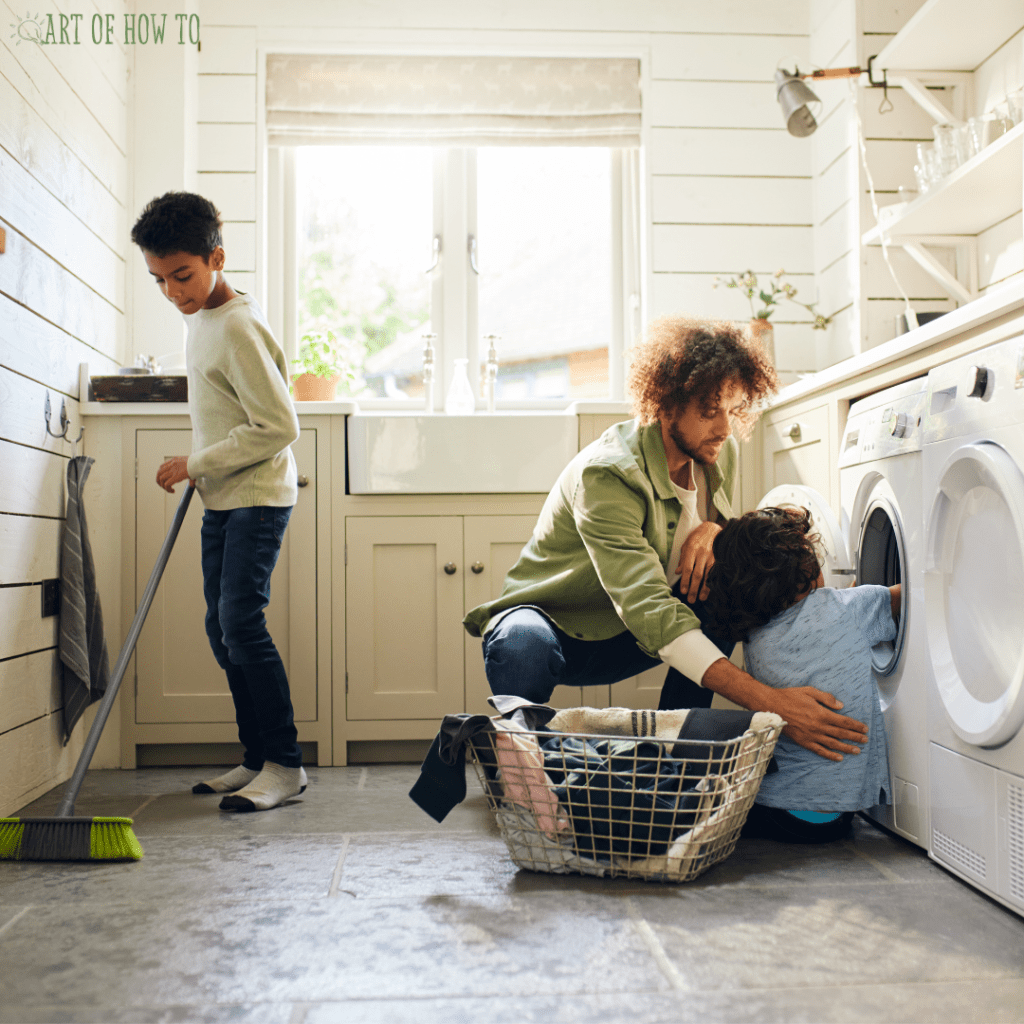
Chores At Home


Here’s a thought for the weekend. ‘What must-do tasks should every household aim for kids to do?’

We all have had or still have chores to be done at home. Unless we have help at home. At some point, we had to clean and arrange something at home. Sometimes even cooking or meal prep had to be done. Some of us love doing them sometimes, and others dislike doing chores.

That said, it is essential to teach children to be self-dependent. One of the ways to do this is to instill in them a sense of responsibility and accountability from a young age. Now you can have them as demanding tasks and make them as dull and life-sucking as you can. OR….. You can make it amusing and inclusive. Making anything into an adventure or fun for kids has fantastic, immediate, and long-term results.

Setting up our little stars to become chore champions

A mentor taught me a long time ago always break down my to-do list into sizeable nuggets, get those you are happy to, or most likely to, finish fast out first. Then go for the rest of the ones I find challenging or mundane and boring so that you can treat yourself to easy tasks later. Take the same approach to give chores to your young ones. Start them off on the easy duties. And slowly help them skill up. Whatever the undertaking, please ensure it has some fun or reward element added to encourage the child to engage in the process. Also, doing chores should not be seen by the child as a form of punishment or a way to keep the child from having some child-sized fun. 

Classifying tasks by child’s age and capabilities 

That is the easiest part! Yes, it is true. Pick a task, any task. Think of your child and their current ability to carry out that chore. And voila! You have your answer. Please, and I repeat this, do not give your kids assignments that are hard for them to do at their current age or capability. It will make them hate or dislike doing chores. Growing up, my parents started by making us do tasks in old school style. But one visit from a family friend who lived in Canada and kaboom. Before you knew it, my brother and I became chore champions. My parents went all guns blazing on setting up a chore chart and a reward system. Guess what? It was fun. My brother and I had fun doing chores. We also got some form of reward, and as we grew, this turned into pocket money. Very useful for two kids with big plans, LOL. But it did work.

Here is a list of everyday chores, and I encourage you to set them and segregate them based on your child’s age and handling capacity. 


1. Taking out the trash

2. Making their bed

3. Helping set the table at meal times

4. Help mum or dad make packed meals when needed

5. Mowing the lawn

6. Watering plants in the home garden

7. Taking care of their pets

8. Cleaning their room or study spaces after use

9. Putting their toys away

10. Cleaning up after meals

11. Washing dishes after each meal and keeping them back in its place after finishing each meal when at home

12. Washing the family car

13. Helping mum or dad with the laundry

14. Folding clothes and keeping the wardrobe neat.

The list can go on and on. These are a few examples that I could think of, but there are many more. Now, if you look at what I have listed, you will see most of them can be done by children between the ages of 5 to 18. Why did I say five and not 4? Because you start teaching them from 18 months and keep at it till they are five years old. As mentioned, ensure the chores have a light-sided approach but with a life-skill type of learning. Children learn and grow to become what their parents prepare them. Teach them reasonably. They will turn out well!

Follow Augustus Stanley