Empathy In Classroom

Teachers and empathy. Teachers are a vital part of the educational system, responsible for nurturing the minds of the future. Tasked with educating and developing the child, including taking care of their emotional well-being. Therefore, it is paramount that teachers ought to have empathy. 

Empathy is the mastery of understanding and conveying the feelings of another. It is a fundamental skill for teachers to have, as it allows them to connect with their students on an emotional level. They can better understand their students’ feelings and challenges and provide support and guidance. Empathy also helps teachers create a safe, supportive learning environment for their kids. 

We have all been in classes where we either enjoyed the course or did not. And this was because some teachers made us feel confident, appreciated, and valued as students. And those are the same teachers we thank every day for allowing us to be ourselves and become who we are today!

By recognizing and responding to their students’ emotional needs, teachers can build trust and foster positive relationships. This will make students comfortable enough to take risks and be open to learning. Furthermore, empathy helps teachers be more adaptive to their student’s needs and learning styles. This adds to the previous paragraph. We are who we are today because a teacher believed we would someday change society, the world, or the universe. The last point is valid. Think of the scientists who put the Hubble telescope in space! Or the teachers who supported their students, and those very students made the Mars rover! 

They can better adjust their teaching strategies to meet the unique requirements of each student. It will help them to be more effective in helping students to reach their learning goals. Empathy also has a positive effect on student’s behaviour and academic performance. Students who feel understood and supported by their teachers. 

Here are five tips to help teachers have empathy for students

1. Get To Know Your Students

Take the time to get to know your students in person. Ask about their hobbies, interests, and goals. Knowing them in person means understanding them and getting a simple idea of their family and lives. All great movies about teachers who impacted their students are based solidly on this point.

2. Show You Care

Show your students you care about them by being patient and understanding. It is an attribute that cannot be faked. Youth today are well aware of who is nurturing and who is not. They respond very well to those who are understanding and patient. Sometimes you might think these kids are not listening to or paying attention to what you say. They might be acting up and being stubborn. It could be a cry out for help. Kids from troubled homes sometimes do not know how to react when someone genuinely cares for them.

3. Listen, Listen & Listen

Practice active listening when students speak, allowing them to express their feelings and perspectives. The devil is in the details, they say. Kids will open up to teachers they trust. Not at a topographic level, but more profound and more honest. That is because they see empathetic and kind teachers as trust ambassadors. They value the support they get and believe me. These kids do wonders. I know this because I live this and have been a student with some excellent teachers.

4. Acknowledge Each Student is Unique

Acknowledge each student's unique needs and abilities, and create an inclusive learning environment. This is a skill that very few teachers have. I say few because some teachers don't care for their students. I call them portions-driven teachers. And there are a few who are out there day in and day out, finding students that are diamonds in the rough and helping polish those gems.

5. Create Family & Teacher Partnership

Make an effort to understand each student's home and family life and create family-teacher partnerships. This is vital because a child's learning success lies in the league. The moment a child realizes that they will get support at home and school. Their interest level peak. Many brilliant children do not adhere to expected standards because normal does not challenge their intellect. Einstein is an example of this. 

Teachers should be a life-changing influencer for every child they come across. As they never know which child will change the world for the best! Be kind and let kids be.

Follow Augustus Stanley

I Am Possible


“I am fabulous.” “I am awesome.” “I am good at solving problems.” “I can do anything.” “I am strong.” How often do you say this to yourselves? Yes, you may have your good friend telling you this, but do you do this for yourself? If you answer yes, then it is impressive. But if not, please start doing this. 

The statements mentioned earlier are called affirmations. In other words, they mean “the action or process of affirming something.” It means statements reflecting positive energies with a focus and an end goal of achieving something. Affirmations are also linked to emotional wellness; to be an emotionally thriving adult, we must first be emotionally healthy as children. Gentle affirmations are not toxic. They are simple ways to remind ourselves we are going well. We can do it, a subtle way to boost our inner self – a moral boost to our confidence.

Children are the most affected in this competitive world and changing social fabric. Thanks to stress and pressure from adults and external surroundings, children subconsciously become shock absorbers of all negativity and negative emotions. As a result, children end up mimicking their caregiver’s and family members’ behaviours, little knowing how to deal with them. 


For instance, if kids see adults screaming at each other or going into silent mode, there is a high tendency for they will start doing the same. Likewise, if adults suffer from self-esteem and confidence issues and do not know how to cope, how do you think children will learn to manage? Whatever family structure the kids belong to – single parent, nuclear families, co-parenting families, or joint families, all are affected synonymous. 

So, how can we help our children grow in a healthy environment? How do we boost ourselves emotionally and pass on similar positive energy to our children? In other words: how do we self-empower? Adults do so by journaling, writing affirmations, self-care, quality sleep, physical activity, avoiding alcohol and caffeine in the evening, cutting chords with toxic people, etc. The tips mentioned above can be taught to children as well. They can be taught simple ways of expressing themselves and encouraging positivity.   

So, when can children start writing affirmations? Do we have any age/time limits to create positive affirmations? You guessed it right, as early as they began learning to write. 

quick tips for children to write affirmations

1. Request them to think about dreams/beliefs they want to include in their life. You can tell them to say it to themselves aloud. Most importantly, believe in them while saying.

2. Once you know what you want, start writing the messages in complete sentences.

3. Jot statements in the present tense with an active voice – "I am enjoying a stress-free vacation" or "I am building my blueprint the way I want it to be."

4. Use positive words in statements. Avoid using negative tones like expressing doubts in the comments you are writing – "I wish," "Not sure if it will happen," or even future statements like "I will do XYZ" or "I will start believing XYZ."

5. Keep telling them "Never indulge in self-shaming. Be proud of who you are." 

6. If writing differs from what your child likes, try asking them to draw on the mirror with their fingers or even draw anything they want to achieve on a piece of paper. 

7. If writing or drawing also doesn't interest your child, suggest the child orally frame affirmations, sing them aloud daily, and dance to their composed tunes.

8. Have you heard of a money box or a piggy bank? Make one colossal piggy bank of a cardboard box where affirmations (small one-liners) can be written on chits of paper/cardboard and dropped in as and when they write. They will be like currency. Every week, they can open it and re-read whatever they wrote. It can be one affirmation per day.

Children can read these statements daily when they begin their day. Another thing is you can continue to add to this list. Affirmations change with various milestones; hence, the child can be encouraged to form the statements minus grammatical corrections/any editing by an adult. After many years, these very statements will become beautiful memories for a child after turning an adult.

If your children are too young to write, you can write/frame the statements for them. Take their suggestions when you write them. You can use colourful sticky notes (with small messages) pinned on the refrigerator/soft boards/cupboards and all places where they are likely to see them. The more they read them, the more the positivity absorbed by them. As they say, children are akin to a sponge. They will absorb all that they are exposed to. So why not surround them with positive messages? Of course, it doesn’t mean you overprotect them with toxic positivity – avoiding reinforcing unrealistic beliefs. These positive messages must be realistic and achievable. They will keep them grounded and help them develop a healthy emotional relationship with themselves and others.

10 Reasons Why

affirmations are suitable for children

1. Builds self-confidence – As children, these statements mean a lot and help them take up challenges to do things they consider problematic. Since they are framing it themselves, it is an "extra edge" feeling for their self-esteem.

2. Helps handle big emotions – Affirmations can help children label their feelings better and cope with them.

3. Improves focus – Children can create goals for themselves by writing them down. It isn't only enough to list them. Affirmations can be framed so that the child knows they need to achieve the goal at any cost, and the only way is improved concentration.

4. Ability to resolve conflicts – Whenever they have a problem, these affirmations will come of help. They will find new methods to decide issues vis a vis running away from them.

5. Encourages positive self-talkEach time they hear a criticism, they will remember the affirmations, which will trigger inner positive conversations. This will help reaffirm their own beliefs.

6. Energizes the mind during classes – For students, these positive statements or phrases can be recalled at any point of time in the day, especially in school. It will help them re-focus on the subject they are learning, especially if it is difficult to master.

7. Helps in team motivation – Children can use affirmations to boost each other's spirits before beginning their group presentations and even use them effectively during the activity. 

8. Resolves body image issues – In almost every school, children tend to body shame others – some subtly, some directly. Children get badly affected by listening to such conversations. Affirmations help resolve body image issues and restore self-esteem.

9. Setting new challenges – While learning to do a new task or activity, positive phrases are a powerful tool to reinforce confidence to do new things they haven't done earlier.

10.  Self-Esteem matters – As a tool, these statements instill a feeling of accomplishing a task – big or small. That feeling remains for a lifetime. 

Leaving you with my favourite line – “Nothing is Impossible. The word itself says I’m Possible.”

Follow Priya Rajendran

Parental Burnout


Much as we love our kids, we have stages and moments when we want to unwind, sit calmly, and not have to do any of the baby commitments we have been doing for a very long time. Life changes entirely after a baby, and it’s nothing like earlier. We must give up on many things post-baby and sacrifice many habits and routines for the same. This is not very easy mentally, psychologically, and physically. It may not seem very difficult initially, but as time passes and parenthood settles in, it becomes more mundane, monotonous, and a little overwhelming.

When all the laughs and smiles slowly fade into everyday chores and milestones hit hard as it is a different and challenging phase for the child and the parents, things turn sides, and it’s not all that fancy anymore. For instance, teething – a tough period for both the parents and the baby – all we got to do is hold on and be as positive as possible.

Amidst all this chaos, we tend to feel pressurised and vulnerable. We feel exhaustion and irritation overpowering our parental instincts. We feel agitated, upset, depressed, anxious, and helpless, all at the same time. This phase is called parental burnout or mom burnout. It is valid for working moms too – they are not spared because they work at the office more – they feel the phase equally, if not more, with all the stress from the outside world and the world inside their homes!

To begin with, IT IS OKAY to feel overwhelmed and angry. It is natural, and it must be addressed. It is beautiful to share this with someone, understand what we are going through, and acknowledge that we need a break. Lying down what makes us anxious can be a start. Talk to someone who listens. Embrace what is left and take one step at a time. It helps deal with the feeling better. The baby does not know what is happening. There’s no point in holding the baby accountable for us feeling a certain way. All we have to do is be an adult and deal with this phase as cleverly as possible.

Take a break from being with the baby. Go on a date night or maybe a movie. Take a two days vacation and relax your mind. It’s alright to miss being with the baby, and it’s completely OK to feel a little weird – it’s just parental instincts! But we deserve a break, and we must take it when we can!

These things may seem modern, but they are not. Feeling exhausted and angry is something all women have dealt with, but no one addressed it or spoken about it. Today is when everyone is open to understanding emotions and helping people with mental well-being. Therefore, it is each one of our duty to appreciate parents and mothers and open up when they need. Do not shrug off their worries or concerns. We never know what someone’s going through.

Being a good mom or dad is not about never feeling odd or angry. It is about understanding feelings and acting according to them. So, for the baby’s benefit, parents, and the family… Happy parenting!

Follow Aakanksha Dinah

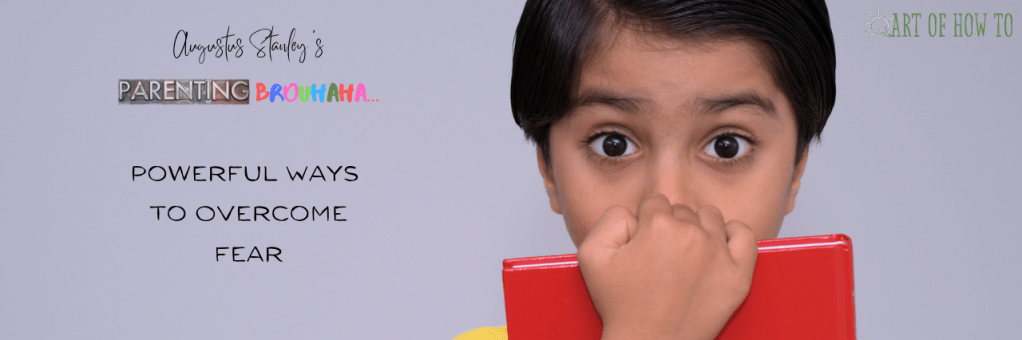
Powerful Ways To Overcome Fear


Sometimes even time does not help us get over and get through fears. Sweaty palms, palpitations, heaving breath, blank mind, perpetual fear of the ever so tricky exams. Been there and done that. However, I got some certificates that say I beat it. Exam fear is no joke. I struggled with it when I was growing up. Exams were never fun or happily awaited. I dreaded the awful end-of-term exams. And in my case, we had three terms. Oh, the horror. Imagine, if you like, in a little less than 90 days, I had to relive that torturous routine, and boy, did I dislike them. But, my parents had a solution for my exam fever or fear, and it helped me as I grew.

So let’s first figure out why kids fear exams and get sick or want to have the earth swallow them.
I have been on both sides, so I will share what I have learned.

1. Parents put excess pressure on kids to be the next big educational wonder – Now it is not harmful to want what’s best for your child. However, it is wrong to impose what you think they should have or should do what you did not. Living your dreams or life fantasies through your kids can be dangerous for them. In a surprising study, kids these days go through the highest stress ever known to us. Imagine a 10-year-old having pressure. I mean, ten is when the kid should have fun. You know, sports, watching cartoons, living the life that only kids can.

2. Poorly taught classes – When a child is pushed to a corner to achieve something they are not aware of or prepared to do, they will buckle under pressure. Fight or flight becomes a reality. One that no child should face at a tender age, at least not in academics. The world is not very lovely, but it does not need to have poorly taught kids punished for what their teachers or education systems lack. 

3. Lack of interest – Some kids don’t like specific subjects. Period. I read somewhere many years ago that in some European countries, kids have fun and have no exams till class 5. They get to have no curriculum; they are allowed to play and chill out. They attend school, but it is more to help them have child-sized fun and enable them to acclimate to using social skills in group settings. I have a hard time seeing kids break their backs carrying bags that will make a bodybuilder blush. 

Education is necessary but should not be a hassle for the little ones.

What are the remedies?

1. Create a safe and accommodative environment for the child at home to study and prepare. One with no judgment and full-on support, either with the parents being involved or tutors to guide the children where needed. 

2. Give them breaks as often as possible. Timeouts help keep them focused.

3. Set simple timetables.

4. Allow them to choose their vocation when it’s time. It is common for an art graduate to run a company just as good as an IIM graduate. Also, we all know a few school drop out who run multi-million dollar businesses. 

5. Listen to your children when they need you the most.

6. Guide them with patience and an eye for their best interests.

Exams are tools to test a child’s learning and not define the child’s intelligence. Some kids aren’t built to suit a system that does not work for their intelligence. Do not try to fit them in a box that life will later ask them to think out of. Grades will come and go or improve, should not damage a child’s mental well-being in getting them an education while equipping them for life.

Trust them, listen to them, guide them, and love them. Your child will surprise you with achievements you never knew existed! 

Follow Augustus Stanley

4 Myths About Stay-At-Home Dads


From being called glorified babysitters and labeled as not earning an income, there are some myths. How wrong are these misconceptions about Stay-At-Home Dads, AKA SAHDs? 

Surprisingly I am not the first stay-at-home dad, and I won’t be the last. However, this time has been nothing short of a fantastic experience. But, to tell you the fact, it has had some, let’s call them, unpleasant conversations and unwanted advice from friends and family. 

I do not mean my immediate family or in-laws when I say, family. I mean the nosy know-it-all aunties and uncles who like to carry out investigations that will make special units blush. Then comes their opinions and advice that no one asked for in the first place. But before we digress, let us knock out the myths, state some truths, and tell some simple facts about the stay-at-home dad club. Yes, I said club! That is because we are simply the cool gang! LOL.

1. All stay-at-home dads are unemployed 

Fact: Most stay-at-home dads are employed and choose to do so to support their partners.

In many cases, this eliminates the need for a nanny or caretaker for your little one. It also allows the child to grow with one parent at all times. Surprisingly, this also allows each parent time with their tiny tot! Bonding is at its highest, and both parents and child/ children have a super time.

2. Stay-at-home dads are lazy 

Fact: Many stay-at-home dads, myself included, have tons to do for the little ones around the day.

For example, if the baby is younger, the whole routine is based on when the baby is up, fed, burped, tummy time, playtime, and bath time. Do you see where this is going? Any parent, whether mom or dad, is not having a siesta. It is fun, but it is not walk-in-the-park stuff. The time and personal investment in raising a little one at home is full-time work.

3. Stay-at-home dads are not man enough

Fact: They are men enough to allow their wives to have a professional life. Surprisingly this is from my viewpoint. We are!

I mean to have the courage to take care of your child, go to the gym, hold a job, cook, and clean for your little angel. It is not a woman’s role. It is a shared responsibility; if your work environment allows it, I say do it. Times have changed; wives, AKA mommies, also have jobs and careers. So be supportive, and enable and empower them to shine at their workplace.

4. Stay-at-home dads won’t have time to work and have their own life

Fact – I have been a stay-at-home dad for over two years, and I have enough and more time to do what I need to, when I need to, thanks to having a unique and supportive partner. Life has been more fun this way.

Stay-at-home dads, and let me add, moms are superheroes, especially if they hold jobs. Working from home is not easy, it is not convenient, and it is emotionally more challenging than working from the office. But it is possible. It is fascinating that all this became even more acceptable to corporates after the terrible pandemic. The good from it rewrote our understanding of how the world functions. 

As a stay-at-home and work-from-home dad, I never thought I had it in me to hold a full-time career as a consultant, caregiver/ dad, and partner to my wife. It is very tiring and testing at times. There are terrific days, and there are meh days. The good and the not-so-good. But it has been worth every minute of it. Paradigms have shifted. We quickly know how to hand over our kid without blaming or passing the parcel. It has become our little one’s routine to look for Baba in the mornings and Mama in the evenings for his support, comfort, and plain old security feeling. Watching this fascinating little human grow, we are encountering milestones. We are not missing out on life. The ultimate truth is we are taking advantage of a lot. Best of all, we are first-hand witnesses to the process and progress called life!

Follow Ignatius Deepak Stanley

Co-Parenting The Easy Way 


The simple truth. Children are the casualties of divorce. Almost always. Divided between having two parents and the separated lifestyles of their parents. Co-parenting is typically one of the trickiest problems divorced parents overlook in a brand-new, untested relationship. 

Regarding the parents, they could deal with sentiments of rivalry, annoyance, and miscommunication. Furthermore, they intended to avoid co-parenting in two separate residences when they decided to have children – the barriers to co-parenting spread to every aspect of the relationship.

And yet, after a divorce, parents and kids frequently adjust to the new situation and manage to co-parent successfully. Whether the parents share parenting time or each has sole custody, being prepared and trying to put the kids’ best interests first can help them work together in a more friendly and productive way. Here are few tips.

1. Communication is the Key 

Poor communication is a significant factor in the breakdown of many marriages, which is why divorced parents frequently have difficulty communicating effectively. Co-parents must develop far more straightforward and effective communication techniques and patterns for the benefit of the children. They must communicate with one another through a variety of means, including face-to-face interactions, phone calls, emails, and texts.

2. Documents are Essentials

The difficulty of co-parenting frequently results in additional legal action. Every encounter between fathers and mother must be recorded, including the date, time, topic of the conversation, and a list of any additional witnesses. Maintaining accurate records promptly promotes honesty and accountability among all parties.

3. Maintain a Consistent and Regular Schedule

Children crave stability and become worried when things don’t go as expected. Therefore, co-parents must put forth the extra effort to maintain realistic and reliable schedules. If dad has the kids on Wednesday evenings and every other weekend, the children’s schedule comes first. Suppose one cannot avoid disagreements; attempt to resolve them as early as possible so everyone can make plans. The less worried the kids are when both parents stick to the plan, the better. 

4. Dispute Privately

Parents often have diverse parenting philosophies, so you might occasionally or more frequently disagree with how the other parent is raising the children. Deal with such a quarrel privately, away from the children, if you have one. The children will feel safer if they perceive their parents as caring and devoted to them and one another. Avoid involving the children in your arguments or using them to hurt the other parent.

5. Prepare for Brief and Pleasant Exchange

Make the meeting between mom and dad to drop off or pick up the kids as quick and unimportant as you can. At the time of the transaction, avoid any drama. Don’t, for instance, take your new girlfriend with you when you pick up or drop off the children. Save talking to Mom about a delicate subject for a later time.

6. Don’t expect your ex to follow your rules.

You might have a few unbreakable home rules, such as a strict bedtime of 8 p.m., a ban on fast food, and a daily screen time limit of one hour. But, on the other hand, your ex might allow them to stay up late watching movies and take the kids to McDonald’s. Try to let it go because you can’t expect your co-parent to uphold the same standards that you do. But do attempt to reach a consensus on essential principles, such as religious practice or a prohibition on violent television, by sitting down together.

7. Make and adhere to a parenting plan.

A parenting plan that the courts have approved is used by many parents who have custody agreements. If you have a formal plan like that, stick strictly to it used by many parents with custody agreements. If you have a formal plan like that, adhere strictly to it. If not, make one on your own after careful consideration and cooperation so that you and your ex-spouse know what to anticipate from the co-parenting agreement. If complex topics are discussed ahead of time, it can significantly affect how co-parenting works. 

Follow Naveeta Shokeen

Riding The Waves Of Queer Pride


The football fever has hit hard. Two announcements that hit me harder than the loss of Argentina was the sudden ban on alcohol sale and the discrimination of LGBTQ+ individuals at the world cup arena. However, the ban on ‘OneLove’ anti-hate armbands at FIFA World Cup did not stop the rock sales of the armbands and how supportive the world reacted to it. 

"Pride is for everyone."
"We're here. We're queer."
"Celebrate Trans Pride."
"Not gonna hide my pride."
"We're all born naked, and the rest is drag."
"I fell out of the womb and landed in my mother's high heels."  

I am sure you all would have read these slogans and quotes in your cities during Pride Month (celebrated in India in June). However, the last quote is my favourite! It touched me and many others. 

In the last few years, many have shared how they or their friends were ready to come out about their sexual preferences and gender orientations. Though unfortunately, it wasn’t for me. A thought that disturbed me was: why we need permission to be what we are and who we want to be. It saddened me that gender and sexual discrimination did not allow so many of us to live our lives as we wanted.

In the same way, when you fall in love with someone or are attracted to someone, you are driven by instinct and your heart. It shouldn’t matter whether you love someone from the same sex or the opposite sex. So why be called queer for going against “norms”? Why be shamed for loving someone from the same sex? Love doesn’t change definitions whether you are a homosexual or a heterosexual. The feelings, emotions, and bodily reactions remain the same.

So, what is the meaning of queer? We all know queer is a word in the English dictionary to describe a person who is odd or different or did things differently. Interestingly, queer has been referred to as LGBTQ+ (Lesbian, Gay, Bisexual, Transgender, and Queer). 

But how did the word enter the LGBTQ+ lexicon? In the 19th century, “queer” came to be referred to as people in same-sex relationships. Back then, homophobia was widespread, and violence against the homosexual community increased. As a result, a group of activists enraged by the brutality wanted to raise their voices in protest. So, a group of HIV/AIDS activists formed the “Queer Nation” organization in New York on March 20, 1990.

Nearly 60 people from the LGBTQ+ community gathered for the event. Their message to the world was to accept them as they were and instill a sense of Pride among the community members. Many movements like these came later and encouraged them to get themselves as they are and come out of the closet to accept their sexuality. Hence the term “Queer Pride” was born. 

Queer Pride is accepting one’s sexual orientation openly and being proud of it. There is nothing incorrect with being different and having different sexual preferences. However, it doesn’t reflect on you as a person. This shouldn’t be a reason for discrimination. Each person has their personal choice and right to live their life as they want to. But ever since countries were born, boundaries were drawn, and they started drawing lines for citizens – how they must behave, dress in public, set rules and laws, and their gender and sexual preferences. 

Sadly, even spiritual sects, political forces, cults, and self-proclaimed moral police did not remain far behind in crusading against the LGBTQ+ community to date. People for centuries have been trying hard to “treat” or rather “cure” homosexuality. This “abnormality” supposedly goes against their idea of sexuality. Yet, they are still discriminated against and denied access to fundamental human rights like food and shelter. 

Even though it is hard, many opt to come out of the closet, face the world, and be who they indeed are. The world is more accepting now. Maybe a few… However, it takes time…more time to get a mindset change. Even more, time to gain acceptance. It is indeed a difficult road ahead in India. The number of Pride marches is increasing every year in most cities worldwide. There is better acceptance and more tolerance now in mainstream cities or metros. Smaller towns and cities in India are also beginning to organize seminars, conferences, and events for the public. It is crucial people are made aware of LGBTQ+ individuals and their struggles and gives space for them to share their life.

Of late, there are laws supporting LGBTQ+ Community. Gay and lesbian marriages have become legal in some parts of the world. Celebs are also coming out of their closet about their LGBTQ+ identities without worrying or fearing being judged. Recently, two former beauty pageant winners, Mariana Varela from Argentina and Fabiola Valentin from Puerto Rico, publicly announced their two-year-old relationship and marriage ceremony through social media. Their cute love story has left many more people to talk about their relationships openly. Public acceptance is slowly taking precedence in some countries, yet a long way to go. 

India has a long journey to bring up a sensitive and tolerant generation. Recently, the most horrifying case was that of a schoolboy in a leading Delhi school who committed suicide. He could not take in the atrocities of his seniors bullying him over his sexuality. It is heartbreaking to see how much intolerance is seeded by families who pre-define sexual and gender identities. Unfortunately, many such cases go unreported or shoved under the carpet. The only way things can change is when schools and academic institutions take the initiative to organize workshops and seminars to sensitize children. It will ensure lesser crimes and encourage inclusivity among children, irrespective of their gender or sexual preferences. 

Rainbow of Hope Expanding

Since the Supreme Court of India decriminalized consensual homosexual intercourse, it has proven to be a ray of hope for the LGBTQ+ community in India. Unfortunately, India is yet to legalize homosexual marriages, and there is still a long way to go for the complete acceptance of homosexuals. However, more stories about their identity and relationships emerge thanks to the ruling. Some have migrated abroad to LGBTQ+-friendly countries and got married there too. 

Social media accounts like Official Humans of Queer, Queers of India, and many more handles are helping more and more people get comfortable with their sex and gender identities and accept themselves for what they are. 

In an age where body shaming and toxic positivity are viral, these initiatives are a rainbow of hope for humans to walk with our heads held high on a road not taken at all. So, cheers to all of us who want to be what we are – pure, unfiltered! 

Do share your experiences/stories in our feedback box. We would love to feature them.

The top 10 countries ranked on the LGBTQ Global Acceptance Index (GAI) index developed by UCLA researchers in 2021 are in the following order – Iceland, Netherlands, Norway, Sweden, Canada, Spain, Denmark, Ireland, Great Britain, and New Zealand. In addition, Human Rights Watch, based in New York, has profiled 132 countries on its website. It gives information on human rights for the LGBTQ+ communities there. There are also maps accompanying these country profiles, showing countries that criminalize homosexuality and are ridden with gender-based crimes.

Most countries have different timelines for celebrating Pride Month. For example, India and the United States celebrate Pride Month every year in June. Others celebrate in February, August, and September. Pride Month is yet to be recognized internationally, hence the different timelines of celebrations too. India celebrates Pride Month every year in June.

Follow Priya Rajendran

Fear Of Failure


Have you ever been so terrified of failing at anything that you chose not to attempt it? Or the thought of failure has caused you to unconsciously sabotage your efforts in the past so that you might avoid the prospect of a more significant setback.

It is something that undoubtedly happened to a good many of us at some point in our lives. The fear of failing may be paralyzing; it can make us do nothing, preventing us from moving forward. But if we give in to our fears and allow them to halt our forward movement in life, we will pass up some fantastic opportunities along the way.

This essay will discuss the fear of failure, including what failure is, what causes it, and how to overpower it so you can experience genuine triumph in your professional and personal lives.

What Gives People Fear of Failure?

We all define failure differently simply because we all have different standards, ideals, and worldviews. So push through your apprehension of failing and continue to work toward your objectives. Easier said than done! Right.

Many of us, at least periodically, are terrified of failure. However, fear of failure epitomizes when we allow it to prevent us from taking action that will help us advance toward our goals. Numerous factors might contribute to the fear of defeat. For some people, having critical or unsupportive parents is a contributing factor. They carry the negative feelings they experienced as children into adulthood because they were frequently undercut or made to feel inferior.

A distressing experience that happened to you can also be a contributing factor. Say, for instance, you gave a crucial presentation in front of a sizable audience a few years ago and performed horribly. The experience was so dreadful that you feared failing in later endeavors. And even now, years later, you still harbour that anxiety.

How You React to Failure Fear

If you have a fear of failing at anything, you might suffer from one or more of the following symptoms or even all of them:

  • Unwillingness to engage in challenging activities or to try new things, often known as “risk aversion,”
  • Self-sabotage can take many forms, such as putting things off until later, experiencing extreme worry, or not following through with plans.
  • Low self-esteem and self-confidence, as seen by the frequent use of negative phrases such as “I’ll never be good enough to receive that promotion” and “I’m not smart enough to get on that team.”

What Is the Definition of Failure?

It is improbable that a person will make it through their entire life without falling short of their goals in some way. People who do this probably conduct their lives so guardedly that they never venture anywhere. To put it another way, they are not alive at all in any sense.

The good thing about failure is that we choose how we want to look at it. So it gives us a lot of freedom. 

Failure can be interpreted in two ways: either as “the end of the world” or as evidence that we are not good enough. On the other hand, we may view failure as the tremendous educational opportunity that it frequently is. Failure is a learning curve.

When we are unsuccessful at something, we always have the option of looking for the lesson we should learn from the experience. These are valuable lessons since they allow us to develop as individuals and ensure that we do not repeat the same errors in the future. Failures are only able to stop us if we allow them to.

Just think about all the chances you’ll pass up if you give in to your insecurities and give up. In addition, failure can teach us something about ourselves that we would not have been able to discover in any other way. For instance, making mistakes is one of the best ways to figure out how strong a person you are.

Failing at anything might help you find your most genuine friends or lead you to unexpected sources of encouragement to succeed. Both of these can be beneficial. However, in many cases, gaining valuable insights requires experiencing some defeat. Therefore, understanding how to take in new information and grow as a result is essential to having a successful life.

Understanding that failure is always possible in anything we attempt is critical. So, in addition to being courageous, taking that opportunity and running with it provides us with a more prosperous, fulfilling existence.

Here are a few strategies to lessen the anxiety of failing:

  • Because you are afraid of the unknown, many people struggle with the fear of failure. By carefully weighing all of the possible outcomes of your choice, you may overcome that anxiety.
  • Thinking positively. It is a very effective strategy for overcoming self-sabotage and boosting self-esteem.
  • In certain circumstances, the worst-case scenario can be devastating, making the fear of failure reasonable. Recognizing that this worst-case scenario may not always be the case can be helpful.
  • Having a “Plan B” in place will boost your confidence in taking action if you’re worried about failing at anything.

How to Stop Fearing Everything

Setting goals could make you feel uneasy if you suffer from a fear of falling short of them. But setting objectives helps us define the direction we want our lives to take. Our destination will only be confident if we have goals.

The practice of visualizing one’s success is one that numerous authorities endorse as an effective method for goal setting. Imagining how different your life will be once you’ve accomplished your objective can be a powerful incentive to keep you moving in the right direction.

On the other hand, people who fear failing could find that visualizing adverse outcomes has the opposite results. For example, after being asked to picture setting objectives and achieving those goals, research has shown that those with a fear of failing are frequently left in a terrible mood.

What other options do you have available to you?

To get started, select a few manageable objectives. These ought to be goals that present moderate difficulty but are possible. Consider achieving these objectives as “early wins” to strengthen your confidence.

Make an effort to make your ambitions more manageable by taking baby steps toward more ambitious goals. Taking things one step at a time will make you feel more confident, keep you toward your objective, and prevent you from becoming overwhelmed by thoughts of the accomplishment you want to achieve.

Follow Naveeta Shokeen

Friends, How They Influence Kids

What is friendship in a kid’s life? I bet you can name your first friend without missing a beat! Not just any friend but the very first one. If you can’t, it’s OK to take a moment and think back. Take a simple stroll back in time, and you will suddenly remember that friend as you walk through events and timelines. So what was it about this friend that seemed unique or stood out? I am sure you fondly remember the adventures, escapades, great fun, and everything between those times. 

Whatever your age, I am sure you have always had the few you could always count on that were not your immediate family. Instead, you are blessed with what we know as friends who become family! 

Kids have a simple formula to make friends. They seek those that match their wavelength and bond. As tiny tots, they don’t have hidden agendas to make or have friends. They know that so and so is my friend and if you ask them why the most probable answer is “simply because!” So before judging these innocent souls, remember you once were just like them. 

As I write this, I realize I have lost some of these friends along life’s journey. Strangely, we were supposed to be BBFs (Best Friends Forever). Somehow, those friends are now nothing but a whisp of a memory. But one thing is sure. The lessons I learned being around them helped me make better friends and forge better relationships as I progressed in life.

“Show me your friends, and I will tell you who you are,” ever heard this line? This world has much more good than we care to admit. I say this simply because I have some of the best friends in the world. I also say this because I know they (these friends) and I would give our lives for each other. I have known several of them for many years now. 

What would a child need to make or have this kind of quality friends?

1. Communication 

Yup, children need it too. Teaching a child to talk to and be with others their age helps. This is also vital as the child interacts with others. It helps them continue to sharpen this elementary and yet essential skill.

2. Networking Skills 101

From saying hi, being friendly, thanking, and sharing, all add up to networking crafts. This works for grown-ups too! Try it! Have you noticed how well children make friends? That is because it is built into their DNA. Humans, I have read this somewhere, are social animals. Which means we were not built to live in isolation.

3. To have a friend, you got to be a friend

This is an addition to the previous point. Teaching your child to be compassionate and empathetic helps them make friends, stand up for each other, and use their simple yet non-judgemental approach. Kids make friends for life or at least better than most grown-ups. 


It is also essential to keep track of how your child is behaving. They learn a lot by observing and are still in the process of finding themselves. In their younger years, you have nothing to worry about. They are just chilling with their clique. As they grow older, they keep track of what’s going on in their lives. You do not want to wake up one day to a strange teenager in your kitchen eating all your food and running wild. You knew one as a sweet child, but it has changed due to neglectful parenting. As a parent, you must know who your child is connected with or hangs out with. Remember, the child is not trying to rebel or prove a point at a young age. 

However, as they grow, you will need to be sure they are running in the right groups or hanging out with a good crowd. Do not ever take it easy and then blame your child, later on, saying, “I did not want to interfere.” Also, please do just what is necessary. Know their friends and keep an eye as a loving parent should. Have the friends come over for a game day, for a meal, and if possible, get their parents over just for a get-to-know-you meeting/ meal/ tea. Whatever you do for your child’s safety, do it from a space of love, concern, and care. And do this FROM A DISTANCE. Then, your child will be just fine.

Follow Augustus Stanley

Spice It Up


Life is uncertain and ever-changing. We all tend to get lost in the monotonous routine of every day and somehow lose our identity and love for anything adventurous. We almost give into the drill and forget the essence of living life to the fullest. Yes, work is essential. Yes, kids are important. Yes, spending time at home and doing our duties is necessary. But, what is more important is to make sure that we are ourselves the whole time – what we used to be when we laughed freely, what we used to be when we traveled without second thoughts, and what we used to be when we lived life our way!

Somewhere, most often than not, men and women equally lose touch with what used to be before all these so-called responsibilities, and mundane rituals came into being. How effortless it used to be to self-love, self-indulge, and be a little selfish!

While it is important to stay rooted and grounded, it is also necessary to let loose and be free once in a while. If a partner can understand and participate in this holistic approach to life, there is nothing like it: if not, it is outstanding to wave off, take a break, and spice it up ourselves.


Breathe – it is not that hard! Taking a day off, listening to good music, shaming a leg, writing a journal, reading a book or two, and being away from the routine can be a start. This has more positive effects than one can imagine! Thinking outside the box, doing things differently, and enjoying what we do, are all ways to revitalize and rejuvenate our inner selves. The idea is to avoid getting bored of ourselves – which is more often the case with many individuals though they might choose to disagree.

Being a little selfish is healthy – for our mental health! But on the other hand, being greedy, prioritising self-love, and honouring peace and mental satisfaction are necessary for us. This will help us maintain a healthy life outside of who we are and help us be better spouses, better parents, better friends, better colleagues, and better us, to put it straight!

There are other exciting ways to heal ourselves and focus on bettering ourselves. Get out into nature, smile and laugh more often, take charge of our routine lives, and always have something fun and exciting to do apart from loving what we do regularly. Taking more pictures, being more relevant and in the scene, recording instances, keeping memories fresh, replaying and reliving happy moments, zoning out once in a while, fantasizing about life, dreaming big and living life entirely can also help with spicing up things and keeping life happening!

Days are not coming back, and they are not stopping for us to lay back. Time is flying, and so are we aging; there is so much more to life than just being us! However, exploring and encountering outside of our comfort zone will never lead us to regret – they will create memories that we can relive a thousand times, and it is worth it!

Follow Aakanksha Dinah