Guilt And How Damaging

The Feeling In A Woman’s everyday Life

Scene 1

I am a working professional. Hold a mid-level management post. Married and have two kids. Today is one of those days I need to stretch my shift and work overtime to complete the task. It’s a hard day. I called up home; my children were screaming in the background. I informed my family that I would be late.

I hang up the call and resume work, grab a coffee to keep me awake so I can finish up, and head home. 

I finish late at night, reach home, have dinner set for me, and get to bed. 

My family is proud of me and supports me since I am the breadwinner.

Scene 2

I am a working professional. Hold a mid-level management post. Married and have two children. Today is one of those days I need to stretch my shift and work overtime to complete the task. It’s a hard day. I called up home and informed my family that I would be late. My children are crying in the background. I can barely listen to or think of anything else now. I imagine they are hungry and missing their MOM. I am consumed by Guilt. Call hung-up. I told my boss I would resume work reaching home.

I reach home, prepare dinner, feed the children, attend to their needs, and tuck them into bed. Check things around the house for what is ‘on fire,’ attend to what I can… then proceed to finish my ‘work’ quietly and sleep exceptionally late. 

My family is proud of me since I am the breadwinner too.

These scenes may sound like a familiar story from different families…or the same family with different individuals. And if I am guessing correctly, you assumed the person in the first scene to be a MAN while that in scene 2 to be a WOMAN!

Well, while we could debate the gender of the people in the two scenes, that is not the point here. The fact is the treatment of the situation by two different individuals. While both scenarios eventually ended on a good note, the 2nd one highlighted something else!

Scene 2 is the story of MOST WORKING WOMEN trying to balance a Career and Family. Scenario 2 highlighted excellent time management and situation management skills. But it also highlighted the extra labour the woman put in because of the Guilt she experienced when she heard her children crying and missing their mother. What this tells us is this – 

While women are great at time and situation management, what they are PATHETIC at, is – GUILT MANAGEMENT!!

Guilt is not a feminine trait; to be specific, all and sundry experience it. But women take it upon themselves to be present everywhere, do everything, and perfect every task/event/activity/notion. Yet, somehow, they believe they must look after everything well. 

Do Women feel more guilt than their Male counterparts?

OH YES! Most definitely. 

And there are reasons for that. But, whether it is social conditioning, moral chivvying, or family-emotional blackmail, they buckle under the pressure; after a while, they become a part of the same system that pulls HER down by this guilt-tripping.

The list of guilts she subjects herself to is mind-boggling, phenomenal, and through the roof. She feels (or is made to feel) guilt for…

  • not spending ‘enough’ time with her children/family
  • not be around to see her children grow up each day 
  • not be there for them whenever they need her
  • not be around for her family/friends
  • not be able to give her 100% at work
  • not be able to tend to her ambition
  • not be able to get time for herself
  • etc. etc. etc

When questioned about how she manages family and work, my friend once said, “Every day is bad for me. If I tend to work, my family suffers, and if I give into family pressures, work suffers!” Sadly enough, this is the story most women will vouch for experiencing personally. They live this 24X7, 365 Days a year.

Guilt, like any other, is an emotion. And it is subjective. It relates to a person’s judgment of right and wrong. Women have a solid inclination to ethics, moral virtues, and fairness. It, added to social and familial conditioning, makes the problem more vicious. 

It goes on to mean that the more moral values you assume and conduct yourself with, the more guilt you may experience when things go wrong (or even do not go as planned.) Moreover, they learn from the conduct and behaviour of their predecessors, i.e., other women in the family/society. These archetypes get deeply ingrained, become a part of the subconscious, and become their intrinsic ‘Nature.’

Over and above this, if you have experienced any past traumas as a child or a teenager, you tend to assume more guilt in adverse situations. It is usually a result of self-sabotaging thoughts you keep revisiting, wondering if somehow there could have been a way to salvage the situation. Could you have averted it? Even when things go well with you but not with others around you, you experience guilt – sometimes referred to as ‘Survivor’s Guilt.’

In essence…

More Morality = More Guilt 

More Empathy = More Guilt

More Assumed Responsibility = More Guilt

More Past Trauma = More guilt

No Trauma = STILL MORE GUILT!!

GREAT!

So, it’s just guilt, right? So, what’s the big deal? BAD NEWS – Guilt is more damaging than you think.

GUILT – How Damaging can it get?

Guilt does not ruin your moment, minute, hour, and day; it runs deeper. However, it can ruin your entire personality. Cumulative guilt can grow so intense that you may find it challenging to get through each day. It gets heavy slowly but steadily and eventually to levels where you find it hard to connect with loved ones, family, friends, and co-workers. Your self-worth is defeated, and you rush from task to task to accomplish everything in one day to feel worthy of being alive.

Personally, you live a battle each day. Tired, exhausted, and defeated every day.

Professionally, your colleagues only see an already-tired, unpassionate, and incompetent person!

So, is there a way to stop this vicious and self-sabotaging cycle?

HOW TO STOP FEELING GUILTY?

Is it possible to stop feeling guilty? How?

YES – And the answer is SELF-LOVE!

Close your ears to the world and indulge in unconditional Self-love. Take a break when you can. Stop negative self-talk. Do not even think of yourself as second or inferior to anyone. The other person may seem to be doing better than you, be able to achieve more and pack more in the day – but remember, ‘Balancing Work and Family’ is MYTH. So let me shout this into your ears one more time – ‘Balancing Work and Family’ is MYTH, MYTH MYTH.

Remember

  • No one gets it all right. Even if they tell you, they can – don’t believe ‘em!
  • Get more accepting of yourself, do whatever you can best in the day, and move on. 
  • Understand that we may fail, and that is okay.
  • Stop aiming for perfection lest you lose yourself. Not everything in the day will be ACE.
  • Last and most importantly – Do not broadcast your life to people who don’t appreciate you. Know what legend says – People can’t ruin what they don’t know!!

——

Veena Gupta, a homemaker, doting mother, and a loving wife, who takes pride in a long-standing career in Banking and Finance. While her life took shape and as she was pursuing all this, something kept tugging her creativity. This pull lead her to decide to express her thoughts through writing. True to her name, her words flow from her pen to resonate with the reader’s mind like the soothing music that the musical instrument Veena creates! For someone who likes to experiment in life through adventure sports, trekking, and other varied interests, Veena likes to bring her experience, background and perspective to her readers through her simple yet effective writing to push the fact home!

Follow Veena Gupta

Keeping the Spark Alive 

We are conditioned to crave the act of falling in love rather than the act of keeping it, so when we are in a long-term relationship, it is inevitable that the “spark” will die out. How many romantic comedies do you know that begin after the wedding and follow the characters as they go about their ordinary, everyday lives?

But the “spark” isn’t nearly as necessary as people make it out to be. There is something inherently reassuring about being with someone who makes you feel peaceful rather than having butterflies. Likewise, there is something much more enjoyable about gorging yourself on the couch and binge-watching true crime shows rather than going on fancy first-date dinners. A little spark prevents a lifelong connection from turning into a friendship. Below are a few simple things you can do to keep the spark alive in your relationship.

1. Try something new

Relationships become boring when habits and rituals become standard. Try something fresh to change your perspective on your partner and your relationship. Nothing “new,” no matter how small, will make you feel like you did when falling in love with your partner and experiencing everything together for the first time. Examples include:

  • Planning a trip to a destination you have yet to visit.
  • Playing a card game when you’re more of a “Scrabble” couple.
  • Trying something new in bed.
  • Even ordering takeout that’s different from your usual go-to.

2. Exercise together

You regularly practice yoga while your partner lifts weights on Saturday mornings, or you may attend an online Pilates session on Sunday afternoons. While spending time alone is crucial, working out is a terrific opportunity to explore your tastes. However, occasionally working out with a partner can be a great way to maintain the spark. Exercise releases endorphins, which may help you strengthen your emotional connection and feel more in touch. It also encourages friendly rivalry.

3. Fulfill one action you wish your partner to take

It would help if you created what you want in relationships and most other aspects of life rather than waiting for them to occur or for your spouse to put in the effort. Be more romantic if you want your partner to reciprocate. In the end, you genuinely desire a more passionate connection, and guess what? You have the power to bring that about. It will become a habit for them to do the same for you if you bring flowers home or compliment your partner. Give your spouse your attention and ask high-value follow-up questions to help them feel heard if you want them to be better listeners.

4. “Love” in your partner’s language of affection

You’ve probably heard about love languages enough by this point to write a book about them. But how frequently do you use it with your partner? For example, take care of a duty that your partner despises, like doing laundry or taking out the garbage, without being asked if their love language is an act of service. Write a love letter if they are more of a “words of affirmation” person. Plan a special evening with them if they place a high value on quality time. Bring them flowers from the grocery store if they prefer receiving gifts, or make an extra effort to be touchy-feely if they prefer physical contact. Make a concerted effort to think of and carry out ways to show your spouse that you care, even if it forces you out of your comfort zone, and watch the spark fly.

5. Deepen your communication

When was the last time you engaged in a thorough discussion? The ability to communicate is essential to maintaining the spark. Still, with all the 24/7 closeness, you can find that you are conversing less because you don’t even have the usual conversation openers like “how was your day?” because you are present. Asking questions like “How are you truly feeling?” or “What can I do tomorrow to make our relationship stronger?” at dinner or a relaxed, happy hour on the couch. Additionally, think of questions with a lot of mileage that may appear corny but will result in a genuine relationship. 

6. Make an effort

 Of course, your partner still loves you whether you’re dressed up or down, but making an additional effort will make them feel unique and valued, and it will also put you in the mood for a little more spark. If all else seems like too much labour for a night in, put on a nice outfit, blow dry your hair, or even spritz some expensive perfume. Not only will it make your lover happy, but it will also—and maybe more crucially—give you additional confidence.

Offer to do something your partner loves but you don’t like: Going out for takeout from a Chinese restaurant when you prefer Japanese or suggesting a movie you know your partner will enjoy but find boring will go a long way. But, on the other hand, what’s a single evening of your significant other scarfing down noodles despite your dislike for them or making them laugh?

In relationships, compromise is necessary, but what is the secret to maintaining chemistry? Allowing your spouse to “win” without making any concessions. In other words, they choose their preferred options only to make them happy. So, rather than always making compromises, always give your loved one what they want. Putting your partner first will improve your relationship more in the long run than a dull movie or lousy meal.

——

“Saral hu Saadharn nhi” (Simplicity is not Ordinary). This phrase encapsulates her entire existence. A woman of few words, a daydreamer, who is certain that there is life beyond stars. An HR professional who began her writing journey when corona knocked on our doors. A Content Writer, Screenplay Writer, and published Author. She is die-hard romantic and that reflects in her quotes, poems and short stories and currently working on her first book. She enjoys cooking, dancing, singing, travelling, and is a huge Bollywood enthusiast. She is a wife, a mother and a friend you can most certainly rely on.

Follow Naveeta Shokeen

Tall N Short Tales For Kids

“Once upon a time” is a phrase most of us heard while growing up, and now our children hear from us. Storytelling is essential, “an interactive art of using words and actions to reveal the elements and images of a story while encouraging the listener’s imagination.” How many of you grew up listening to stories by your parents and grandparents? Most of you will nod and agree – mainly the 80s and 90s generations and the generations before. 

Family time was better back then, and we spent quality time together thanks to limited or almost no screen time. Storytelling was one of the mediums that kept us bound together. Traditionally, the best time for stories was always in candle lights. I am sure you just went into nostalgia mode because I just did too! I fondly recollect the time we kids would huddle up during power cuts and listen intently to all kinds of stories – fairy tales to spooky ones. The reason children and parents bonded well back then was also because of storytelling. That was the magic of storytelling.

As we grew older, we made our own stories and narrated them to our families. It became our time then, where we added characters and changed plots as we wished. We read stories aloud, too, and later enacted them. Storytelling became a part of our favourite playtime activities, where we played role-play. It was a fun and cathartic time when we did not worry about clocks, losing smartphones, or friends. Each day, someone new in the gang would come up with their stories or versions of fairy tales they read at home. Sometimes, a telly character would emerge from the narrative into our storytelling/weaving sessions. 

Cut to 2023. Stories and themes have changed over the years, and so has the storytelling style. Storytime has shrunk over time, too, because of parents’ long work schedules, children’s extra classes/tuitions, and often relegated to weekends. 

So why storytelling?
Here are a few reasons why it can be fun for Kids

1. Emotional connect

The first few words you exchange with your child daily establish a connection with their feelings and how they think and understand their environment. Storytelling becomes a medium to find out what they think and feel.

2. Enhances vocabulary

It improves word usage and helps make new words. Each time you make a new sentence while narrating a story, it adds to the memory and takes the child back to the previous level you described to them.

3. Stir’s imagination

Character sketching becomes easier once you read many books. Each character has something unique about them and will inspire you to create new ones with detailed backdrops and backgrounds. Home activities can include one of these creatives.

4. Cognitive development:

The left and right sides of the brain get activated when you read stories to a child. While the left side of the brain is the logical side, the right side is the creative and imaginative side. Storytelling fulfils both these functions.

5. Empathy boosters

Stories and storytelling have the power to make a child think and develop the trait of empathy. In other words, they are putting themselves in the character’s shoes and feeling for them.

6. Drama skills

The best time for a child to develop their dramatic side and learn narration starts when they begin talking. They considerably observe adults who narrate stories and look up to them, especially parents. The way you magnify each expression, and add pitch and volume to your tone, goes a long way in engaging a child in the character they are listening to.

7. Art & Storytelling

Children who listen to stories develop imagination and can begin doodling and drawing their favourite characters. These doodles develop into matured sketches with enhanced expressions as they grow older.

8. Love for long conversations

Children particularly love when parents listen to them about their day, to whom they spoke, their friends’ stories, and the toys they played with. Storytelling begins right here. Encouraging them to talk in complete sentences (beginning with shorter ones) will go a long way in storytelling. Ask them questions, and you will get a long story in their responses.

9. Bookshops vs. Screens –

Nothing like a good old book to occupy you and your child. Screens make them less attentive and imaginative. They want to keep jumping from one scene to the next. Storytelling can keep them engaged long-term. Characters form slowly in the pages of a book. So, keep your storytelling time minus gadgets with the actual book in your hands.

10. Storytelling dates

As parents, you can arrange for story sessions with children. It can be fun sessions while you or other parents narrate stories to them and probably ask them to weave stories as well.

Magic is everywhere and so are stories too. All you need is a story jar (you can create one – a glass bottle or jar). Ask your kids to write words of their choice in chits and drop them in them. Once you collect enough words, start weaving stories. So, you may not even need a book at times to tell a story. Storytelling is as simple as it is. So, get going and narrate a story. Imagine the same joy you felt as a child and the happiness on tiny faces as they light up listening to your stories.

——

She is a quirky writer/photographer/closet poet and singer who has traversed a non-conventional path. As a former entertainment journalist who has worked in print and online media for a decade, Priya loves talking to people and writing their unspoken stories. She is a single parent of a 7-year-old son settled in Tamil Nadu and a Content Consultant/ Communications-PR Manager. She is also an informal mentor to parents in her local parenting network. She dreams of being an author of a book and maybe the scriptwriter of a film someday!

Follow Priya Rajendran

Power Within You

You are powerful. You are strong. You are unstoppable. You are a solid individual who believes in nothing but yourself.

Affirmations are powerful. Self-affirmations are dangerously inspiring for you to begin to witness the world a whole lot differently. But, there is something more important than being a good influence on others – it is uplifting yourself each day, every day.

Wholesome thoughts, aspirations, dreams, desires – everything you have within you pushes you to better yourself and achieve that goal in your mind. Only you can drive yourself to that edge where you sit and wonder whether you are doing justice to yourself. Loving yourself has a more profound influence than you might think.

Inspiring yourself to heal and protect your vibe is an exceptional gift you can give yourself. Yes, there are times when you feel low and worthless – it’s natural. It’s just hormones doing their work! You must know yourself better – not that everyone else is perfect – each one is fighting a battle you don’t know anything about! So, get up, stop whining and start from where you left off.

Each day is an opportunity to see through the mist and find that piece that completes the puzzle. Find you. Be you. Be gladly just YOU.

——

Aakanksha Dinah, a passionate writer, orator, communicator focused on establishing a Training institution centered on creativity and innovation. Aakanksha is a true believer in loving the work we do and strongly believes in smart-work, the reason why creativity works better for her. Aakanksha is enormously focused on making a career in professional writing and publishing. She loves writing poems, self-help articles, and essays. An enthusiast when it comes to learning languages and in short, Aakanksha is a wanderer, an explorer, a mom, a dog-mom, a poet, a cook, a writer, and an influencer.

Follow Aakanksha Dinah

Resolution Tracking

All the hype, high, and hurray is done. Now what? Somewhere in our minds, we faintly remember some last-minute end-of-year December last week promises. Frantically, you scrambled to the gym or not, stopped eating wrong, decided to walk more, and stayed connected more. Finally, the ball dropped on the new year, and the countdown was done. An old year has gone out in style, and the new year arrives with much-awaited resets happening. You are super excited, but you over-commit. And in a moment of clarity (Usually on Jan 2nd onwards), they seem to disappear or lose their charm. And, suddenly, poof! All the resolutions, promises, and last-minute promises seem more challenging to keep with each passing day. 

So after you make the resolves, you need to follow through. But, as mentioned earlier, it is getting harder to follow through once the high and hype of the year are gone. Mind you, and this is easy for a select few people. But again, only some people are the same.

Well, fear not. You are not alone in this situation. Unfortunately, nearly all of us forget or forgo our resolutions and go back to being as we were in the years gone by. 

So if you’re looking to track your New Year’s resolutions, there are a few different ways. First, you can use a planner or calendar to keep track of your goals and the progress you make toward achieving them. You can also use a to-do list or online goal-tracking tools like Habitica or Way of Life to break down your resolutions into smaller tasks or milestones that you can check off as you go. Additionally, if you’re looking for more accountability, you can share your goals with a friend or family member and have them check in with you on your progress.

A planner can help you stay organized and on top of your tasks. You can write down upcoming deadlines and meetings, create to-do lists, and keep track of important events. You can also use it to set goals and track your progress.

  • Follow a to-do list. Make a list of tasks that need to be completed. This is called the to-do list or a laundry list of tasks.
  • Prioritise the tasks in order of importance or urgency. Base this on the need of the hour and the end goal in mind. Start working on the most important or urgent task first. 
  • Estimate how much time it will take to complete each task. Please give it a ballpark. A guesstimate will allow you to plan your day. Otherwise, you will get overwhelmed.
  • Set a timeline for when each task should be completed. Someone once said a goal without a deadline is a dream.
  • Break larger tasks into smaller, more manageable steps. Helps get more achieved.
  • Take breaks as needed to stay focused and energized. 
  • Track your progress and adjust your timeline as needed. Nothing is written in stone. At least resolutions are not! Also, have fun accomplishing them. Celebrate when all tasks are completed! 
  • Get an accountability partner.

An accountability partner is someone who holds you accountable for achieving your goals. They provide support, motivation and help you stay on track. They can help you set realistic goals, track and measure your progress, and encourage you to stay focused on reaching your goals. They can also offer valuable feedback and advice when needed. You can find an accountability partner by asking friends, family members, or colleagues if they would like to be an accountability partner for you. You can also join online forums, such as Reddit, to find someone who is looking for an accountability partner. In addition, some websites and apps can help you find an accountability partner.

——

Ignatius Deepak Stanley is an experienced business coach, trainer, educational consultant and full time dad. He has worked with several well known corporates before deciding to take time out and be a full time dad to his 3 year old son. Beside being a consultant, he has written and published books. Deepak enjoys riding and driving, reading, writing and travelling.

Follow Ignatius Deepak Stanley

Why Resolutions Fail


2023 is moving at a fast pace. Since the new year, we all partied like there was no tomorrow and gorged on sumptuous food and delicacies. It was all feast & fun, booze & banter, love & laughter everywhere. Full On PARTY!! And like all good things come to an end, the party fever also faded gradually, and we are back to our jobs/chores/businesses. But, wait, we forgot something very inherent to New Year’s… 

The Resolutions!

We all make them, and we are guilty of breaking them too. OOPS! Yup. It’s that time of the year. Half our resolutions are already forgotten a week post-New Year’s Eve. But, like all other years, we make them and try to keep up with them, sometimes sincerely, and then break them just as systematically. 

The Resolutions are an exciting thing. We make these promises to turn a new leaf with the New Year. It promises to change something undesired, start something new we wish to incorporate into our lives or accomplish a personal or professional goal. While this can be done any time of the year, the start of a New Year feels like the perfect opportunity to say to yourself, ‘New Year, New ME.’

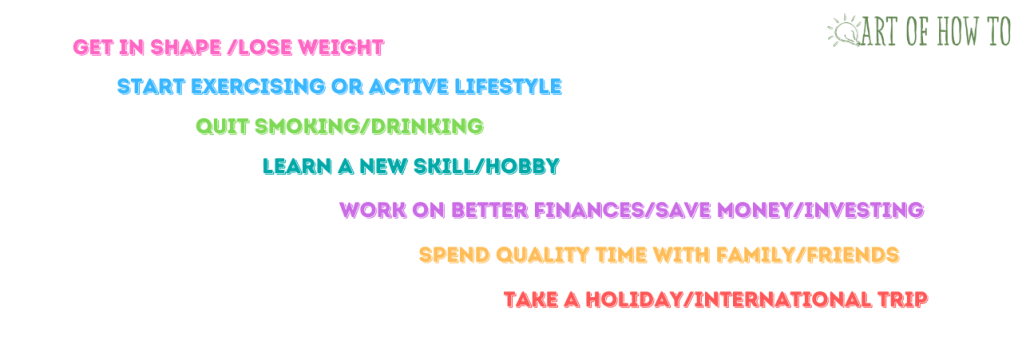
Let’s take a look at some most common New Year’s Resolutions that are made around the world (and broken around the world)

As good-intentioned as they are, we do our best to keep them going till at least the next DAY. But then the dreaded reality of daily routine strikes us, and our so-called ‘benevolent’ plans fail. OUCH!

Yes, it does. And it is more common than you think. If statistics are to be believed, most new year’s resolutions don’t live beyond the first month. A whopping 57% quit after the first month!

A good 1/5th of the resolutioners (i.e., my kind of people) will quit in the first week itself!! And only 1/10th of all will keep it running for the entire year. SIGH.

So, what goes wrong here? We had all the good intentions. Yes, we did try to keep it accurate. We kept up with it. So why do most resolutions fail?

REASONS MOST RESOLUTIONS FAIL

1. Hopping on the Bandwagon

Most of us aren’t even serious while making these resolutions. We may have all the intentions hoping it does, somehow, go well. But the fact is that we made new year’s resolutions because ‘It is New Year’ and because ‘it is the thing to do.’

The fact that we made it just out of the blue makes it lack the seriousness to follow it through, and hence the inevitable happens.

2. TIMING

If we have genuine plans to follow a resolution, then any day is a good day. It need not be a ‘New Year’s Eve’ to resolve. It is just deciding for your plans to materialize ‘One day’ or that day is ‘Day One’ on your plan execution. 

Maybe new year’s morning is not a day you are entirely ready to take on the bet.

3. Motivation

The biggest culprit of all. We lose motivation as we follow the goal. We got inspired initially, made a resolution, and had the motivation steam going strong to see the resolution launch. But somewhere in due course, we lose steam, and slowly the motivation begins to die, causing resolutions to fall apart.

4. LIFE

Yes, Life Happens. And life does take over. You may call it by different names like ‘getting busy,’ ‘prioritizing other things,’ ‘shift in focus, ’ blah blah… but yes, life does take over, and it gets difficult to break the vicious pattern of daily routine that causes plans to fall through.

So, is it the End of the Road? 
Well, not yet…If we understand what causes the fall, we may be on the road to understanding how to keep it going.

HOW TO MAKE
NEW YEAR RESOLUTIONS WORK ?

1. Get your WHY right:

First and foremost, Understand and agree in principle WHY you are resolving. Once you know your reason behind the resolution, and you can look at it daily, you will be able to follow it through.

Yes, it will still take effort but at least not in reminding yourself of the goal each day!

2. Make smaller goals:

Yes, this may sound contrary to popular notion, but think about it…if your goals are more extensive than what you have done so far, you are challenging yourself out of your comfort zone, which is challenging in itself. On the contrary, making smaller goals help your confidence in knowing you can achieve them. If higher goals motivate you, there is nothing like it. Go for it by all means.

But if you doubt being able to follow your dream, it is better not to badger your already shaky commitment. Better to begin small, build confidence and then challenge yourself out of your comfort zone. So instead of making a goal to ‘LOSE WEIGHT’ or ‘SLIM DOWN,’ make a goal to ‘Drink eight glasses of water each day.’ This looks smaller, achievable, and worth a try. And although small, it does contribute to the bigger goal of losing weight!

3. Get CONSISTENT

Motivation is a big word. I wouldn’t go for it. But if you are a self-motivated individual – You are already blessed! You do not need a new year’s excuse to resolve to achieve your goal. 

But if you are the timid kind, motivation is something you struggle with already. So, instead of looking for motivation, look for consistency. Look for how you can be consistent with doing what you have planned. It should become a part of your existing routine and, therefore, manageable. So, instead of planning a big makeover overnight, strive for something you can keep up with daily.

4. One Step at a Time

Yes, there is a lot to achieve, and we must change all that overnight, but that will not happen. Point BLANK. 

So, if you want to achieve something, make only one resolution at a time, follow it through, and then go for the next month. It looks stingy and small to aim so low, but if it works, it is not tiny!

So, my lovelies, even if you are one of my kind who cannot keep your resolutions beyond Week one, don’t lose heart. Lose your self-badgering and start ‘SMALL and STAY CONSISTENT’!!

Veena Gupta, a homemaker, doting mother, and a loving wife, who takes pride in a long-standing career in Banking and Finance. While her life took shape and as she was pursuing all this, something kept tugging her creativity. This pull lead her to decide to express her thoughts through writing. True to her name, her words flow from her pen to resonate with the reader’s mind like the soothing music that the musical instrument Veena creates! For someone who likes to experiment in life through adventure sports, trekking, and other varied interests, Veena likes to bring her experience, background and perspective to her readers through her simple yet effective writing to push the fact home!

Follow Veena Gupta

Growing Through Grief

It’s a regular morning. Coffee, in one hand, scrolling through social media with the other! Unfortunately, looking at nothing specific. But, guilty as charged, some bad habits sometimes keep us thriving, don’t they? This mindless scrolling brings me to a video I’ve already started to watch but skipped the second time. Though this time, I did not. It’s of the bride from Hyderabad, India, who was surprised by her brother with a life-like wax statue of her late father. 

My eyes stained with tears, and the fresh dawn suddenly feels blurry. The hot coffee seems cold. My thoughts jumble, and a relatable grief episode come to the fore. I feel blessed that at least my father got to witness my wedding. One undeniable fact about grief is it doesn’t necessarily come with a trigger. It’s like an uninvited guest who now you have to tend to and eventually drive away with a smile.

A year and a half since I lost my father, parts of me still haven’t recovered. It wasn’t sudden, accidental, or unexpected. The doctors had called the stage of counting on a miracle. But miracles aren’t supposed to happen daily, and we had seen our share of them in his case. There is a stage in the life of people grappling with prolonged illnesses which starts preparing them and others around them for their demise until they cross that bridge. The stark realizing the void left behind pricks you even on the brightest days.

The paradox of death is – it is inevitable and yet uncertain. I often call death a prerequisite of life. You breathe today, and life takes your breath out one day. So I am not lacking words when I say that we call the talk of death unfortunate in itself is unfortunate. 

It does not give us a chance to insulate our emotions to the onset of grief, let alone live with it for years to come. We encounter our bouts with happiness, pride, sorrow, and anger, but it has to take away a loved one to know what anguish and distress are. I have had my share of heartbreaks too, but comparing it with the heartache of a loss of a loved one is dismissing the sentimental value of both occurrences.

My father’s death is becoming a significant turning point for me to face and understand my emotions.

I often put on a mask of happiness and recovery in front of others, and I genuinely uncover my grief when I sit alone and let myself the time to process it. The truth is, the world moves on, the relatives and families stop calling, and the daunting questions of ‘what next’ keep coming my way. And you cannot possibly fathom ‘what’s next’ just sitting in a room with all the people. All one wants to do is ask them all to leave you undisturbed.

A person you have lost will find a place in your thoughts because they now occupy a bigger space in your heart. The memories you share with them will bring you grief on some days and peace on others. To recognize what brings which feeling is where the deep struggle of moving on lies. And no reassuring words can heal at this point because the close association with the lost person brings you the ownership of that emotion, that connection, and that void.

The loss of a parent, a loved one, a close relative, a favourite grandparent, or a best friend is all meant to induce a certain kind of pain that only makes us more human. It is not a thoughtless

premise when you see several movie plots where death brings out the transformation of the lead character. From my experience, the permanency of ‘never’ seeing them again transgresses our thoughts. One moment they are here, now all you have are the moments you shared. Memories…

Since every dark tunnel always opens to a bright side, you will begin seeing the light too. It can be blinding at first. You don’t know how to react when you meet someone next. Can you smile, are you supposed to be sad? Will it be, “Oh look, she’s already moved on!” or “She seems to be trying to get there?” Will I be known as “The girl who lost her father” or “Her father would have been proud of her today?” Getting to the latter is a longer road because society’s conditioning is majorly towards simply sympathising, more pitying, to be specific. Every day you will feel like crying. Cry out; you should. Yes, you may. You should. But when you wipe away that last tear and straighten yourself back up, you’ve accomplished a step toward growth. Grieving is growing, sometimes one cry session at a time.

Writer by day, an overthinker by night. I let my thoughts flow through my writing. As a definite misfit, I let my words speak louder than my actions. Welcome to my journey of sailing through emotions and experiences, with words as my paddles.

Follow Riddhi Jadhav

Little Ones Can Cook Too

“Cooking for children is not about ingredients, recipes, and cooking. It is about harnessing imagination, empowerment, and creativity.” – Julia Child. Indeed, cooking is a beautiful experience – a harmony of the three ingredients mentioned by Ms Child and with a dash of unique aromas and tongue-tingling food.

The age of two to ten is a phase of curiosity and learning new things from external experiences. Sensorial experiences rule this age range – taste, smell, vision, hearing, and touch. Of these, taste plays a dominant role in a child’s life. It is time for the child is exploring smells, tastebuds, and flavours. Once children cross four years, their tastebuds start becoming distinctive as well. It is the “my favourite food is this” phase. You will often be hearing about foods they love at this time. 

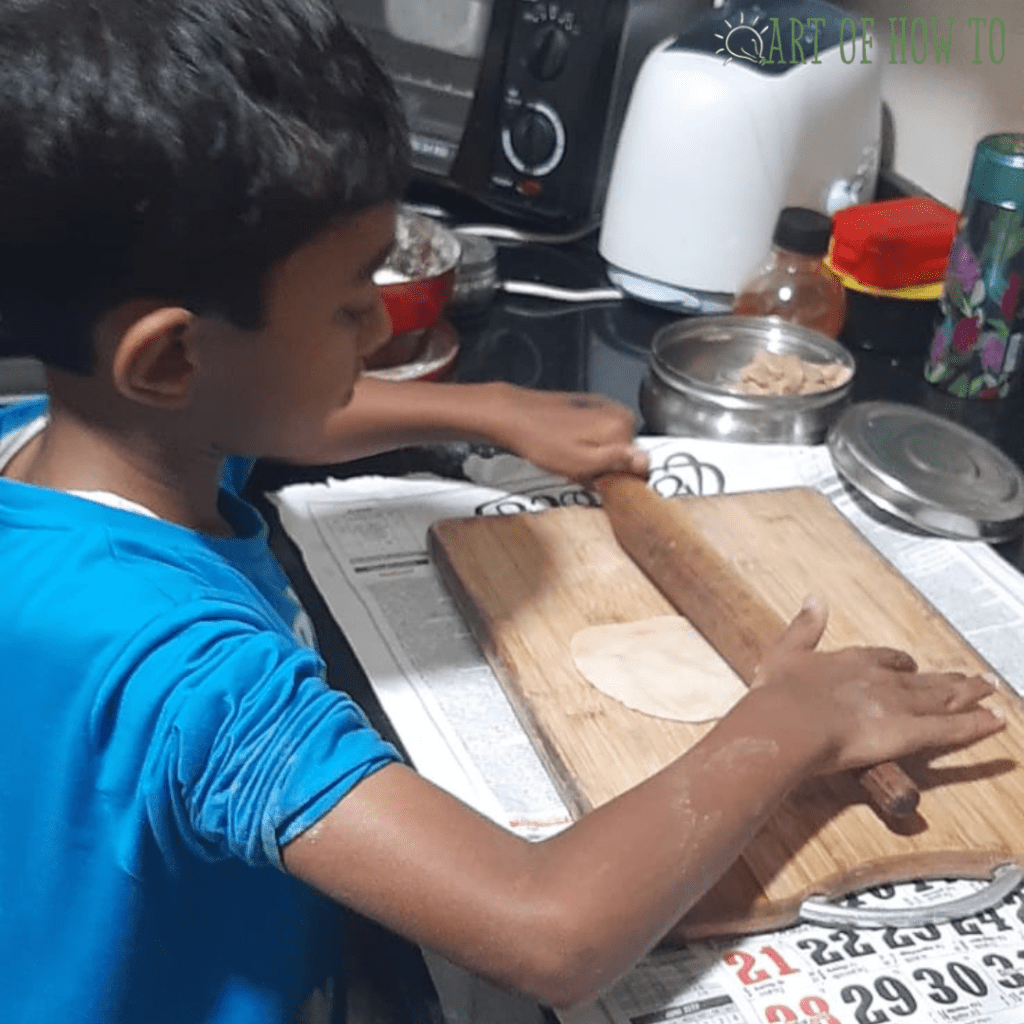
Have you thought about teaching your children cooking? Wait, most of you will gasp, I am sure, when I say this. Many of you may be thinking: “How can we teach children cooking? Aren’t they too young to learn it? Fire is dangerous, and so are hot vessels”. Well, as they say, you can never be too old or young to learn cooking. You can start with basics (minus knives, sharp objects, or fire). Yes, you can teach them how to do fireless cooking. Begin teaching basics at home, like a topping for a sandwich, encouraging them to spread the filling inside it or sprinkling from the herbs bottle (of course, all this with supervision), and applying cheese on a loaf of bread or paratha. There are many ways to introduce children to cooking at home. 

Just like home is a hearth for love, hopes, and dreams, a school is a hearth for beautiful memories and life skills. What you learn in school is irreplaceable and is for life. For example, cooking is one of the best life skills we can ever gift our children. They say you can survive anywhere in the world once you learn how to cook. 

There have been a lot of gender stereotypes surrounding cooking for years too. For instance, at home, it is a girl’s domain to cook in the kitchen, and boys need not learn to cook since a wife will cook for them in the future. Most of these myths are no longer there, but we still have a long way to go. 

Schools can do a lot to bust these myths by adding cooking to their curriculum. This way, all children can learn this valuable life skill. Have you imagined the school syllabus to have cooking as a formal subject? The higher classes in some schools in India have it as a part of life skills rather than as a separate subject. Mostly, it is only vocational schools in India that teach cooking separately as a subject. Mainstream schools do not do the same, though. 

1. Activates all senses 

While cooking, one needs to use all sense organs – eyes, nose, ears, tongue, and skin. Children will learn how to focus and concentrate on the food being cooked. Once cooking is done, they can also taste and judge for themselves if the cooked food is good or not. 

2. Makes theory practical 

Whatever the children learn at school – Maths, Science, English, and other subjects, can be applied to cooking. For instance, cooking entails a lot of precision in ingredients, and Math concepts can be applied to learn the quantities and volume of components used in a dish. In addition, children can learn to apply scientific concepts to learn more about the combination of certain ingredients and the flavours they will produce. 

3. History, values & culture 

Schools can initiate this by telling children how some dishes originated and their backgrounds. Stories will activate the interest, stimulate children’s imagination, and interest them in cooking.

4. Explore 

While teaching different types of cuisine, a child can develop an interest in tasting new foods and flavours. Many picky or selective eaters start wanting to learn cooking too.

5. Teamwork & skills 

Assigning responsibilities to each child, from adding ingredients, measuring them and mixing in a bowl, and even tasting the dish, can go a long way in children learning to cook. Children learn to cooperate better to make the meals a success. Lesser conflicts are seen when it is a team working together.

6. Builds positive food memories 

School life can be colourful and offbeat thanks to cooking classes and experiments in the kitchen. Children will have fond memories to look back at. Pictures were taken while cooking can be memoirs for both parents and children. Teachers, in particular, can beam in pride at having taught a valuable life survival skill.

7. Builds self-confidence & self-esteem 

It is a feel-good experience for children who make dishes independently or in a group. Confidence levels go up, and children also improve their focus in other subjects. They become more independent and help out their parents better too.

8. Correlation skills improve 

Learning to cook ensures children can link two different concepts better. For instance, while making a dish, they can correlate to an idea they are learning in history – a particular dish can remind them of a historical period and the characters who ate it. 

9. Spelling boosters 

Names of recipes and ingredients can add to their vocabulary. Encouraging them to write or record recipes in notebooks or diaries will help them remember the dish better.

10. Kitchen safety & rules 

Lastly, all of the above points will work only if the child is taught how to handle each kitchen tool in the kitchen effectively. Then, teachers can guide safety measures. This can go a long way in empowering children to tackle emergencies at home and outside effectively.

Parents and teachers, trust me, you will be amazed when you see these tiny kids cook you unique dishes. A message to all the children, “learn how to cook and try out new recipes. It is okay to make missteps but do learn from them as well. Make the kitchen your fun zone and help your parents and siblings! Enjoy new flavours and aromas. Happy Cooking“.

She is a quirky writer/photographer/closet poet and singer who has traversed a non-conventional path. As a former entertainment journalist who has worked in print and online media for a decade, Priya loves talking to people and writing their unspoken stories.

She is a single parent of a 8-year-old son settled in Tamil Nadu and a Content Consultant/ Communications-PR Manager. She is also an informal mentor to parents in her local parenting network. She dreams of being an author of a book and maybe the scriptwriter of a film someday!

Follow Priya Rajendran

Happy Me Over Strong Me

I have always wanted to be a strong girl. I have always wanted to be strong from within, wiring myself to be more hard on the outside. But instead, I was building concrete walls around me, stopping everything that came to me – good and evil.

Little did I realize that being strong is not the ultimate goal. Strength comes with being happy. The real power comes with being content and emotionally stable.

Strength is the capability to withstand all things difficultly, cross streams with harsh currents and solve puzzles that puzzle the mind! Real strength comes with time and healing. True strength comes from understanding how to deal with stress and anxiety and keeping a positive aura.

True strength came when I understood that being hard on myself was not helping. I gained power from within when I realized that I was more than enough for myself. I owe it to myself to be happy and satisfied. I must give myself the feeling of appreciation and stop expecting it from outside.

I realized that external validation is different from what I must seek. I must validate myself and appreciate myself for everything I am. I must show compassion to myself and stop looking out for others to show affection. When I cannot give myself the things I yearn for from others, they feel overwhelmed and suffocated too. I recognized my needs and desires and my craving for attention and empathy. I started showing all these emotions to myself and saw that I was healing from within.

I was healing from the constant need for approval, appreciation, affection, love, and care. I was healing from the hurt I felt when I did not receive what I was looking for. I was healing from the pain my heart felt when I felt lonely. I was healing from constantly pushing myself to be strong when I needed to be more considerate towards myself.

Not just a strong me, but a HAPPY me this new season…

——

Aakanksha Dinah, a passionate writer, orator, communicator focused on establishing a Training institution centered on creativity and innovation. Aakanksha is a true believer in loving the work we do and strongly believes in smart-work, the reason why creativity works better for her. Aakanksha is enormously focused on making a career in professional writing and publishing. She loves writing poems, self-help articles, and essays. An enthusiast when it comes to learning languages and in short, Aakanksha is a wanderer, an explorer, a mom, a dog-mom, a poet, a cook, a writer, and an influencer.

Follow Aakanksha Dinah

Unplug

Plug out of the reel into the real

After being extremely saturated, I decided to simultaneously go unplugged from the real and reel world. Our friends too severely needed a break, so we chose the New Year. My son had been complaining about not being able to spend as much time with me. It was time to do it. Of course, it was not as easy to imagine me minus my attachment – my phone. Yet, I stuck to my firm resolve to unplug this time. 

As we all know, New Year is when we want to wish everyone around, and at that time, we hook up to our apps and the millions of GIFs or animations sent and re-sent to all our friends. The midnight countdown (unlike earlier when it was on TV programs) is on social media reels or memes now. No longer are we hugging our friends and greeting them at midnight or making phone calls. Social media has shrunk timelines and reduced our wishes to text messages or GIFs/animations. It motivated me to be off gadgets. It was time to usher in the New Year uniquely.  

For three days, we switched off all our devices and became ourselves – raw, organic, and authentic. We stocked on all board games, slept, read, went for a walk, swam, and did what we wanted to do consistently. Then, on New Year’s eve, we played music and danced like crazy. We did a countdown on our watches, and as the needle struck 12, we greeted each other amidst hugs and loud shouts, cheering to our sounds and the firecrackers being burst in the vicinity. 

Those three days transported me back to when we did not have smartphones and only had landlines. I realized that we never really cared about the time we went out and came back home. There was no phone to keep a tab on where we went or did. It was indeed a carefree time. Those from the 2000 and pre-2000s era would be able to relate to what I just said. During that time, we got wet in the rain without getting tensed that our phones or even our clothes would get spoilt. We moved about freely and did not have to keep checking our pockets to see if we had misplaced our phones. Ah! We did check if our wallets were intact, though! That was an unplugged time. 

During the three days, we just relaxed, shared our thoughts, vented our emotions, and lay on bare grass unabashed. If we felt like it, we danced too. None of us surprisingly missed our phones/laptops/work. It was as if that world had never existed. At the end of the third day, we returned rejuvenated, tired (only physically), and with loads of memories! It was indeed an emotional detox for us. I came out born as a new soul.

In the digital era, we are entirely restricted, and many have built virtual walls around us, resulting in emotional choking often. The pandemic made it worse. We went into a further shell. It plugged us out of the physical world as we dived deeper into the virtual world. In two years, we all got hooked to all devices – laptops, mobiles, tablets, palm tops, etc. thanks to online classes, workplaces, and even schools. Children especially took the hit, doing their homework and spending maximum time on devices. Our family time became consumed by gadgets – consciously or subconsciously. 

The awareness that we were too entangled in our virtual world came late to most of us, but we are making amends for all the lost time. Slowly yet steadily, we are all returning to pre-pandemic times – traveling, having more family meal times, going to the hall for movies, indulging in playtime with children (board games and outdoor sports), meeting friends, and having good old house parties. 

Travel and concept-based event companies across the globe are also coming up with novel ways to get us to couch potatoes, aka laptop folks, into the wild and outdoors, minus our attachments. Travel bloggers are traveling more and motivating people to get off the screen and explore new places. Holistic healing gurus and leaders are reinventing their strategies to bring back people into the real world from the reel. Corporates aren’t far behind, either.

More companies are creating “Workcations” for those who want to take a break from the usual office routines. The term means working while taking a vacation from any remote location. Bosses found that employee productivity shot up after they started going on workcations. You can quickly turn into a travel nomad while working. At the same time, it is easy to plug out and complete deadlines at one’s convenience. Plugging out is good as long as work is done and deadlines are met.

On this note, I am signing off with a cuppa tea and a beautiful Swedish term, Fika. Fika, pronounced fee-ka, means a moment to slow down and appreciate the good things in life. 

——

She is a quirky writer/photographer/closet poet and singer who has traversed a non-conventional path. As a former entertainment journalist who has worked in print and online media for a decade, Priya loves talking to people and writing their unspoken stories. She is a single parent of a 7-year-old son settled in Tamil Nadu and a Content Consultant/ Communications-PR Manager. She is also an informal mentor to parents in her local parenting network. She dreams of being an author of a book and maybe the scriptwriter of a film someday!

Follow Priya Rajendran