Fall In Love With Libraries

Just like books are a man’s best friend…ofcourse apart from pets and plants, libraries are a shangri-la for book enthusiasts!

How many of you have old membership cards for libraries? I am sure if you are a bibliophile, you would have preserved them. They are a storehouse of memories for most of us. All emotions gush out the moment you mention that you are a book lover to a fellow book lover. I am sure by now you would have gone down the nostalgia lane too! 

Libraries have been an eternal spot for romance! Aha! You literally did imagine a romantic scene, right? You and your special one holding hands while reading a book. Or perhaps taking sneak-peaks at your crush while reading books. Well, for bookworm like me, romance with books meant more of falling in love with characters in the book, the smell of old books and the ambience of the library, the cozy corners where you pick a book and sit for hours. Of course, I won’t deny, I spent time in the library solely reading books! 

The best highlights of my college life were the two libraries. The one space where one could sit in peace amidst the fragrance of old wood and old books. Touching the old print gave a different high altogether.

People still cherish reading books but reading in libraries is slowly fading out thanks to the e-book and audio book culture. There is nothing like holding a good ol’ book in hand and turning each page. The excitement would increase once you knew the book was in limited edition and in demand. It would pique the reader’s curiosity to complete the book soon, just to see how it unfolds and ends.

Libraries have books which are rare and those you will not find in book stores. This is another reason why libraries were much sought after by students, research scholars and book connoisseurs alike. Not all information is available on search engines and the worldwide web. Rare collections will be found in the pristine hallways of libraries. These are the very same places where writers found their creative juices flowing faster. The calmness of the interiors coupled with book lovers sharing the same space and positive energies are a motivation in itself to spend time in the library.

1. Pristine interiors  
Most old libraries have been crafted with love by bibliophiles in such a way that people will forget the outside world till the time they are there. Don’t forget the pleasure of exploring mysterious hallways and dark corners where books have been stored and preserved.
2. Rare collections of books, papers 
Library is a place symbolic of the history, culture and geography of any place. You are likely to even find information on people who may have been forgotten by the masses – especially unsung heroes. There are papers written by scholars on rare manuscripts too. Most of these have been preserved by book lovers over years. 

3. Book reading for connoisseurs
Some libraries organize book reading sessions for adults and children alike to encourage people to read books. Books are chosen every month or once in two months and assigned to people. Then there is a date selected to discuss the books in detail. People sit in a circle and read aloud their favourite excerpts from the book.
4. Early reading can be cultivated
Children can be encouraged to get together in libraries and choose books they want to read. They can be asked to pick a book of their choice to read and later discuss. Many parents feel their children have been swept by the digital wave and hence the interest in books is slowly waning. Local libraries can help begin book clubs for them. Younger children can be encouraged to visit libraries on a weekly basis. 
5. Rendezvous for activists, campaigners
Many thinkers, creative folks and researchers need a motivation to begin something new. Libraries have resources that can help them do the same. History is proof that in the past, all our freedom movements and campaigns have taken birth in libraries.

6. Resource centers for higher studies
Most libraries are extremely resourceful. They have a lot of information on various universities. Some like the British Council and The American Library guide children and help them prepare for entrance exams and aptitude tests. There are professionals (in the above-mentioned libraries) here who specialize in helping students write the IELTS (International English Language Testing System) and TOEFL (Test of English as a Foreign Language). Academic counselling is done in most libraries.
7. Collaborations with authors
Authors often do book launches in collaboration with libraries. Book lovers look forward to the latest books by their favourite authors. Librarians often pin dates of book launches by authors. They even host book reading sessions by them. It is such a pleasure to meet book lovers here. 
8. Book fairs and festival dates
These dates usually appear in papers and are now available in the worldwide web at the click of a mouse button too. However, it can be a good motivation to visit your local libraries for dates and schedules of various book fairs and festivals. Some maybe ongoing and some scheduled for the following year. You can keep yourself updated each time you borrow a book or go back to return it. 

9. Help underprivileged kids read
Local communities in smaller cities, towns and big metros are forming small libraries for underprivileged children to teach them to read. People are encouraged to donate old books to these groups. 
10. Beating the blues
The two-year lockdown period was nightmarish for ardent book lovers. Most libraries have reopened their doors. They can re-join them. Books have a magic in them to heal all pain. Libraries are the perfect place to restore your inner peace.

So, what are you waiting for? Renew your library cards if you haven’t yet done and immerse yourself in the ocean of books. Meet your pals and beat your blues away. Signing off with this quote by a fictitious book lover: “I have always imagined that Paradise will be a kind of library.”

Follow Priya Rajendran

Catching em Bullies

Every parent desires to provide the finest education for their progeny in the best schools and universities across the country. Children look forward to leaving their nests and going to school to discover new things every day. Each child has their dreams as they grow up. But no one hopes that they will be taunted or heckled. Most of the time, it’s brushed off saying it is normal to get roughed up by seniors or peers. Teasing is normalized. But when teasing crosses the line, it turns into bullying. 

The word bully means “seek to harm, intimidate, or coerce”. Bullies are those who habitually terrorize, insult, and physically and mentally torture the weak and smaller ones. Bullying is seen as a sign of power and control. Attacking the self-respect of more vulnerable ones is a thrill for these people. In schools and colleges, it begins with the entry of new students or freshers. 

While taking the risk of playing Devil’s advocate here, all children are not in-born bullies. They turn into one too. Role modeling – peers/family members/television/society in general – goes a long way in turning them into what they become later. 

Is ragging different from bullying?

Ragging… It is considered an offence and is against the law to engage in ragging. However, bullying (the alter ego of ragging) is STILL not considered as serious an offence despite high crime rates. This century-old phenomenon is still rampant in schools and colleges. Even though ragging was forbidden years ago, overt and covert forms still exist.

Typically bullying is invading someone’s personal space, taking away their belongings, eating their lunch without consent, pushing and hitting them, teasing someone about their body parts, clothes, appearance, and above all, insulting or demeaning them. 

Bullying changes colours at different ages. When children are quite young, bullying will be limited to breaking stationary, throwing the bag around, pushing and kicking them, taking away belongings without consent, and name calling too. Bullying among older children is perceived as more serious vis-a-vis younger ones. In all age groups, the effects are serious. Younger children can get more terrorized and might develop an aversion and dread to go to school. The fear of bullies adds to separation anxiety among toddlers similarly.

As they grow older, above 10 years, typically both genders will bully children by demeaning them, insulting their appearance, or possibly even talking about status and money as well. Above 14 years, they begin to mimic on-screen bullies or video game villains. The language turns abusive and name-calling becomes vicious. Insults can be serious. At some point, blackmail also enters the scene. In most ragging and bullying cases that come to light in schools, children have been seen to dare their peers into doing something adventurous and if they refuse to comply, they would be called names or made fun of in class openly.

Media reporting & unreported cases

Newspapers and media are full of cases that have been prematurely closed by police due to varied reasons – lack of evidence, fear of losing respect in society, and intimidation by families of bullies. Many cases have been closed because of societal pressure again. Recent cases this year have been extremely shocking with children committing suicide since they couldn’t handle and tolerate the abuse because of bullying. 

An important question for all: why is it still there? Why aren’t the voices loud enough to make punishments stringent in educational institutions? The trouble is that lawmakers have made laws against ragging but hardly get implemented.

Anti-bullying laws are not adequate in our country to penalize offenders. We have had scores of movies highlighting the problem of bullying over decades. Bullies are so relaxed that they think they can easily get away with a fine or some mild punishments. Sadly, victims and their families suffer life-long scars thanks to them. They never feel remorseful.

Be it an engineering college, medical college, or any other professional degree college, the educational institution is more often than not seen to be hand-in-glove with families of bullies. The cases either go unreported or are made to look like a mild offences. A disciplinary action like the suspension is all that happens in most cases. Loopholes in law end up making the perpetrators look like victims too. Every year, suicide statistics are on the rise as well. More youngsters are falling prey to this vicious crime.   

The consequences of bullying are so strong that victims are not only scarred for life but also families too suffer. There are ways to deal with bullies. If nipped in time, bullying won’t take scary proportions. 

Sadly, many dreams have got snuffed out prematurely thanks to bullying, and emotional and mental stress. Pressure on children to perform in school is already taking a toll and bullying makes it worse. 

How to deal with bullies?
How to empower our children to deal with bullying?
As they say, the earlier the better.
Nip it in the buds. 

Let’s start with some tips to counter bullies:

1. Teachers and parents can orient children about bullying. Schools can conduct workshops to sensitize children on the same. Teaching children about consent and boundaries is extremely important too. A strong NO can stop a lot of bullying the first time.

2. Movies and plays can be screened or organized to talk about bullying,

3. Every school must be equipped with counselors who can help children in distress. A safe space will ensure that children will talk about their problems and report bullies.

4. The institution heads must take initiative by taking every complaint seriously. Be sensitive to the child who is complaining. Parents also must take their children’s words seriously when they approach them about getting troubled by kids in school. Shooing children off when they come to share something must instantly stop. Immediate help goes a long way in nipping things in the bud.

5. Schools must have a buddy program where every child in class must be assigned a buddy – a classmate with whom he or she can share their troubles or distress. 

6. Recognize the body language of a distressed child. Many times, a child stops sharing with parents, peers, or teachers for fear of being labeled as silly or constantly scared or anxious.

7. If a child is exhibiting bullying behaviour, institution heads/counselors must counsel these children separately, and inform the parents about this as well. Early intervention can go a long way in making these children realize what they are doing.

8. Schools can keep a fine as a deterrent. They can begin with oral warnings in the beginning. Then go on to suspend the bully. Parents can be warned right in the beginning about the child’s behaviour. Expelling the child can be considered in rare cases.

9. Teach children what to do in case they are bullied – for instance, provide numbers or email addresses of school authorities to contact anonymously and report complaints. Setting up help desks in the school can go a long way too. Senior children can volunteer for the same.

10. Posters across the school about the consequences of bullying can deter bullies too. Going one step ahead, there must be CCTV cameras everywhere in the school as well.

Please say NO to bullies! Do not encourage your children at home or school to tease or bully anyone. It hardly takes any time for a “mild teasing” to spiral into emotional and physical bullying. Every child deserves a safe and beautiful future. Let’s raise happy children and a stress-free generation!!

Follow Priya Rajendran

Correctile Dysfunction

Many have this syndrome of responding to others and the bonus is they make you look like a fool as well. If answering wasn’t enough, they will go one step ahead and give a wrong explanation. I found an amusing term on the worldwide web – “Correctile Dysfunction” or “mansplaining” or “womansplaining”. According to the dictionary, it means: “The explanation of something by a man, typically to a woman, in a manner regarded as condescending or patronising. It is vis a vis too applicable to women as well.” Correctile Dysfunction is gender neutral.

A female mate once narrated an incident that happened in her office during a group discussion on a specific computer program. The team consisting of seven was discussing it. My friend decided to raise a point and talk about a bug in the program. The moment she began to raise her point, a male team member cut her off and started explaining the same topic but had a different definition. To add insult to injury, he added that “this is what she wanted to convey”. At first, she was confused, it did not even register to her what just occurred. Then her jaw dropped and she was in shock. After the first few minutes of the blur, she acknowledged she just got “Mansplained”. 

Have you ever come across such “mansplainers”? I am sure you definitely would have come across one in your life. In Hindi, there is a popular phrase for this – it is referred to as a “keeda” or a bug that a person has in-built in them, to explain on another person’s behalf without consent. The intention is mostly to snub the other person with half-baked knowledge.  

Correctile Dysfunction: When did it all begin? 

As intrigued as I was with this term, I decided to trace its journey. Let me take you through the fascinating timeline of events leading to the birth of this word.

2006
The term was first coined in 2006. At that point, it “described the act of instantly jumping on the keyboard to point out another person’s spelling error”. 

2011 
It was used for students who submitted assignments extremely close to the deadline without checking them for errors. 

2012 
It was used to explain misunderstandings created by auto-correct. 

2017 
The term got a new meaning altogether when a female artist took to Twitter to rechristen mansplaining. She felt the term must be gender neutral – applicable to both genders since even women have been observed doing the same. 

How do we deal with the Explainers?

Here are some tips to deal with Mansplainers

Dodge
Just like in a sport, you have players who come and slug you or push you around. We have mansplainers in the real world. In a sport, you deal with them by dodging their moves. So, you can simply say “I have got this. Can we go to the next?” or “I appreciate your knowledge but I am afraid you are barking up the wrong tree.”
Quick Banter
Spot repartees and humour function great in a workplace or a social setting with mansplainers. If someone is insisting, that they know better than you, cut them short with “Aha, I can see how much you love swimming in deep waters.” Or “Oh wow! I am sure birds would love listening to your deep insights”.
Reroute
There is another amazing way of dealing with these “smart alecs”. You can reroute the conversation to another person in the same group. Preferably from the same gender or pick a silent partner in the group and ask him/her a question on the same topic. Start by saying, 'that's a great take on that issue. Ms X or Mr Y, what's your outlook on it? Probably also could say, “Umm, it was great listening to your suggestions. Why don’t we hear from rest of the group as well. What do Ms Z has to say?” 
Raise your volume
Raise your tone intentionally and say “I want to add something too”. Sometimes to prevent yourself from getting heckled, you need to verbalize louder. Remember, 'I am speaking. Mr Vice President. I am speaking,' as Mike Pence cut Kamala Harris during a debate. Sometimes we got to tone up and make sure our voice is heard.
Stand up for yourself 
This is so necessary. Establish boundaries with colleagues, friends, acquaintances, and everyone around. I am not done yet. This is my time and, I will speak.Take charge of your life.

An ordinary and common error that everyone makes is to maintain silence when one gets “mowed” by people with Correctile Dysfunction. It is important to raise your voice at the right time. Use every tool you have in hand, to deal with these tyrants. It is a subtle form of pushing you off the stage or hogging your limelight. The common traits of such “Mansplainers” is to constantly snub people, show off their skills and knowledge on a subject and finally, try to become a “mouthpiece” for people regardless of whether their opinions are sought or not. Truly a dysfunction or error, they behave as “Mr. Know-it-all (s)” or “Ms. Know-it-all(s)”.

The moment you spot one, if you cannot scoot off from the situation, speak up for yourself and continue to make your point heard. You could also confront them and question them. They don’t like to be contested. Call them out in the open and they will be the first ones to retreat. As said, those engaging in mansplaining without realizing will need a wake-up call. Oftentimes many of these folks don’t realize they are disrespecting others by doing so.

Many of us think it is not good to engage with those with Correctile Dysfunction, but don’t you think “errors” are meant to be corrected? Lets Un-Mansplain!! On this note, I leave you with this quotation I read.

“A man recently mansplained to me, how he was not mansplaining to me while continuing to mansplain to me about mansplaining, and for that, I’m out sharks”.

Happy Un-Mansplaining!!!

Follow Priya Rajendran

Time To Go Indoor Plant Shopping

Indoor Plants Usher Love, Peace & Prosperity. There is no delight like having plants at home. Having a green space at home means gifting fresh air to self and your loved ones. These days, there is a green thumb in every home. Gardening has become one of the most favourite and recommended activities, especially since the pandemic. The garden is a good place to unwind after a long day of work, a space to have your cuppa of energy drink – be it chai or coffee – in the morning as you begin your day. 

Who said animals are the only best friends of humans? Plants are great friends too and plant parents will vouch for this. They will tell you how much plants enjoy their company, and will express their passion and care needed for plant babies. They can talk to plants daily just like you talk to animals. Switch on good music daily, spend time with them, and they say plants respond to music quite well.

Plants can grow anywhere, even inside rooms. These plants do not need much sunshine but moderate amounts of water. There are many who do not have outdoor spaces to plant a garden. But it shouldn’t deter them from having indoor plants either. There are plants especially for homes and various rooms too. There are so many benefits of having plants inside your room. Here is my list of indoor plants to choose from.

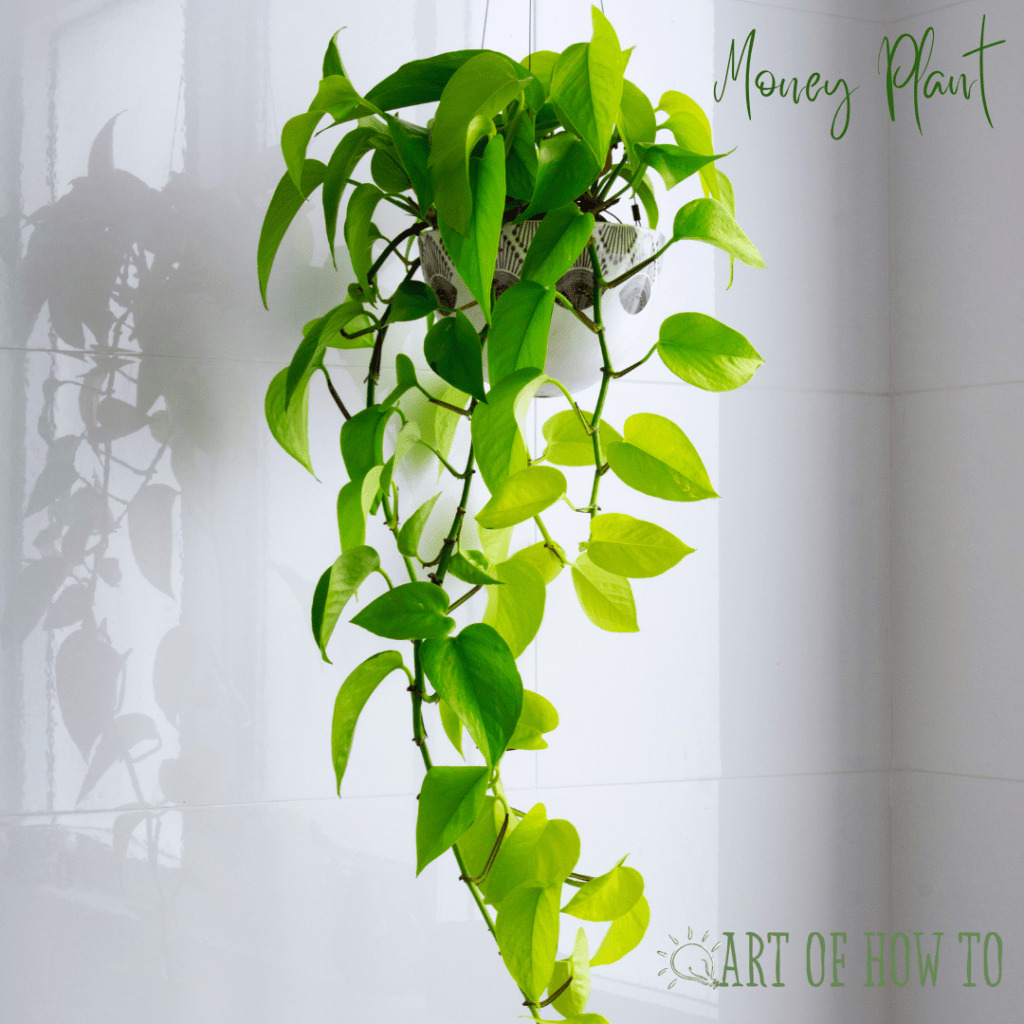
1. Money Plant

True to its name, people grow money plants at home for good fortune, prosperity and wealth. Money plant leaves grow like vines. You can tie a string or thread in any shape you like, hook it up on the walls, and let the leaves grow over them. The leaves grow in the same shape. These are outdoor as well as indoor plants. Grow money plants in glass bottles but make sure you change the water every third day. It reduces anxiety, purifies the home, spreads positive energies at home too. They are safe for pets and good for those with allergies and asthma.

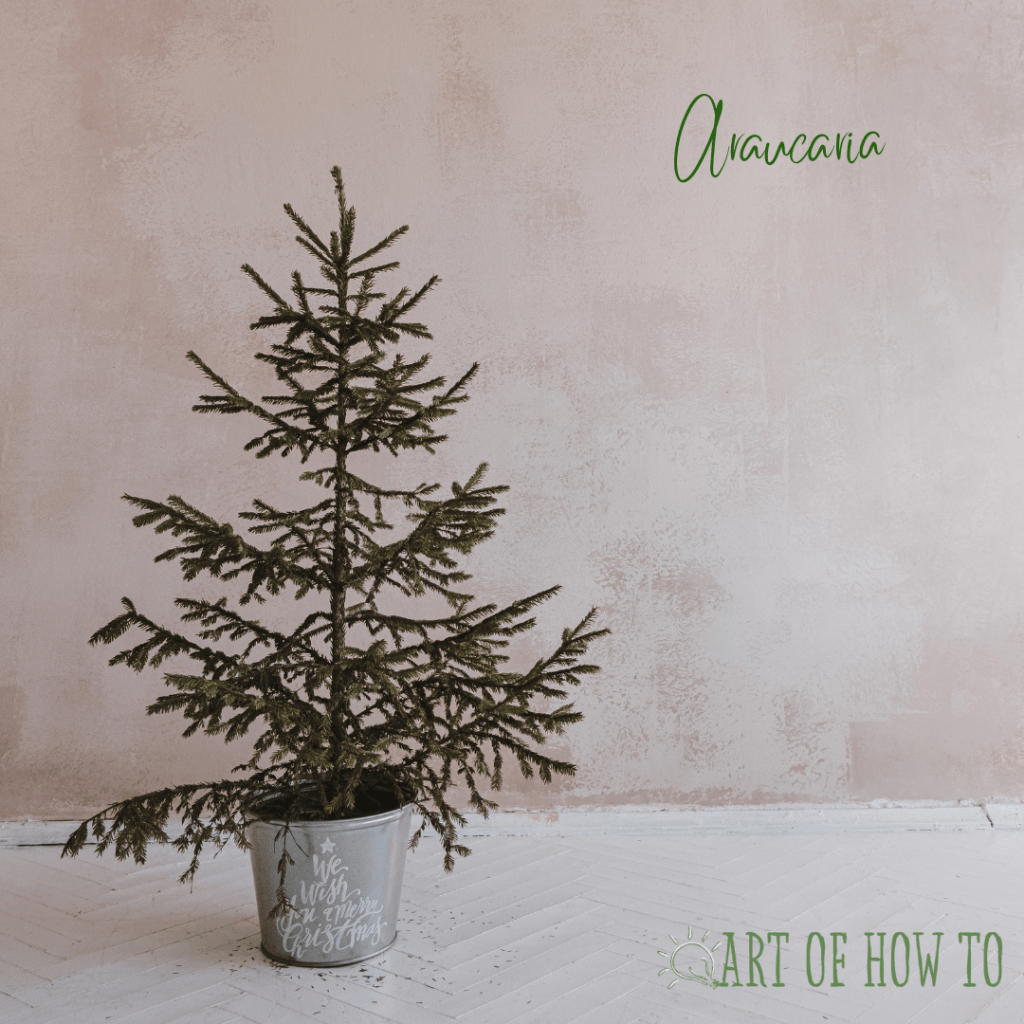
2. Araucaria or Christmas tree 

It is a beautiful and attractive plant that can grow quite tall. Yes, you can also grow this plant indoor. Its branches spread like whips and are covered with leaves shaped like needles. The advantage is you do not need to buy a separate Christmas tree for Christmas. Decorate it and light it up. Unlike the readymade Christmas trees, these can grow throughout the year and you need minimum amount of water for it. Water them weekly and a little more if it is too hot. Best plant for humid locations. As you are growing it indoor the care instruction is once in 10 to 15 days, the plant needs sunlight. So, please keep the plant pot outdoor for four to five hours.

3. Areca Palm 

It is also known as Butterfly Palm. This plant needs moisture just enough to keep the soil wet throughout the year. These plants can survive on diffused sunlight in the house. So, make sure you place them in a bright corner of the house. It improves the humidity content indoors, absorbs pollutants, adds to the aesthetics and most importantly, it is extremely safe for pets.

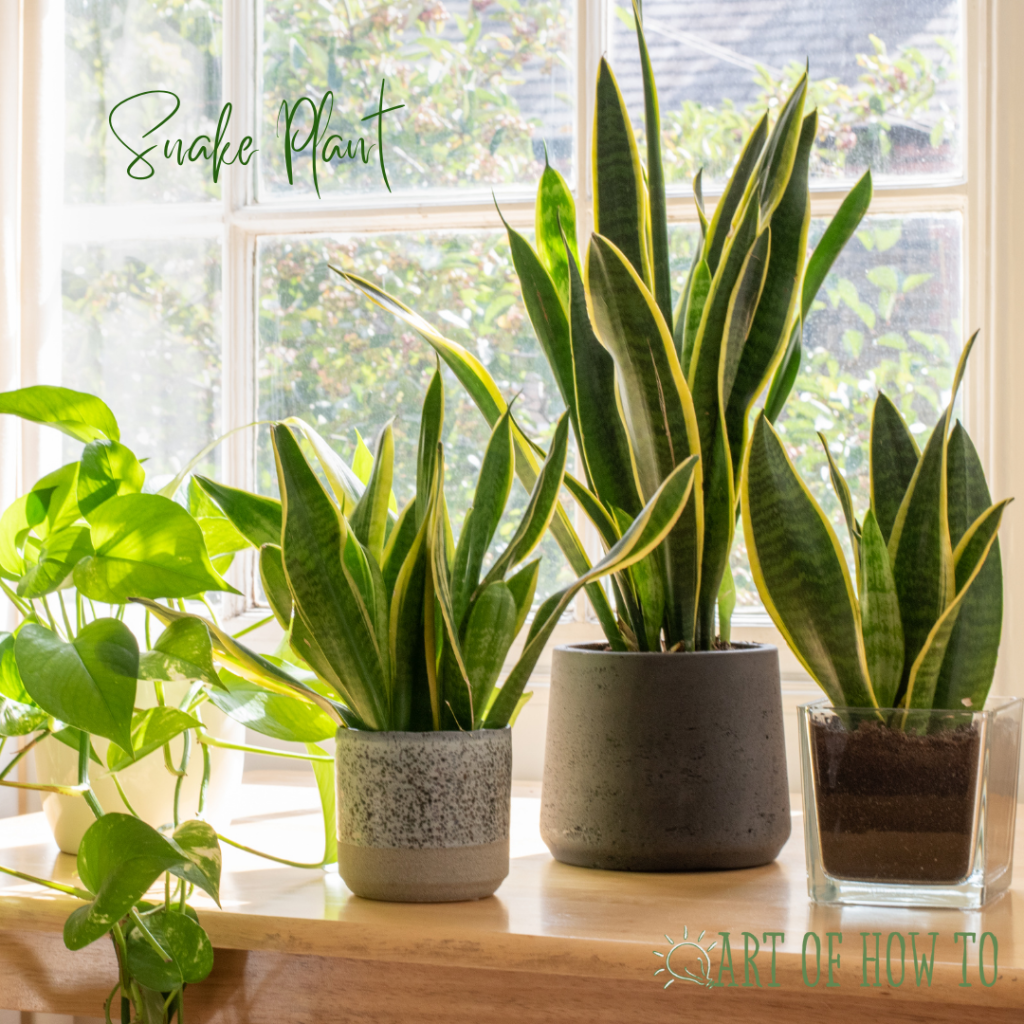
4. Snake Plant

This is another plant that grows well in diffused sunlight and a relatively dry soil. This means not much wetting is needed. It is an extremely hardy plant that survives on minimal moisture. It is extremely good for warm and hot zones. A word of caution from plant experts: you may want to keep pets away from this plant though it is low on toxicity.

5. Aloe Vera 

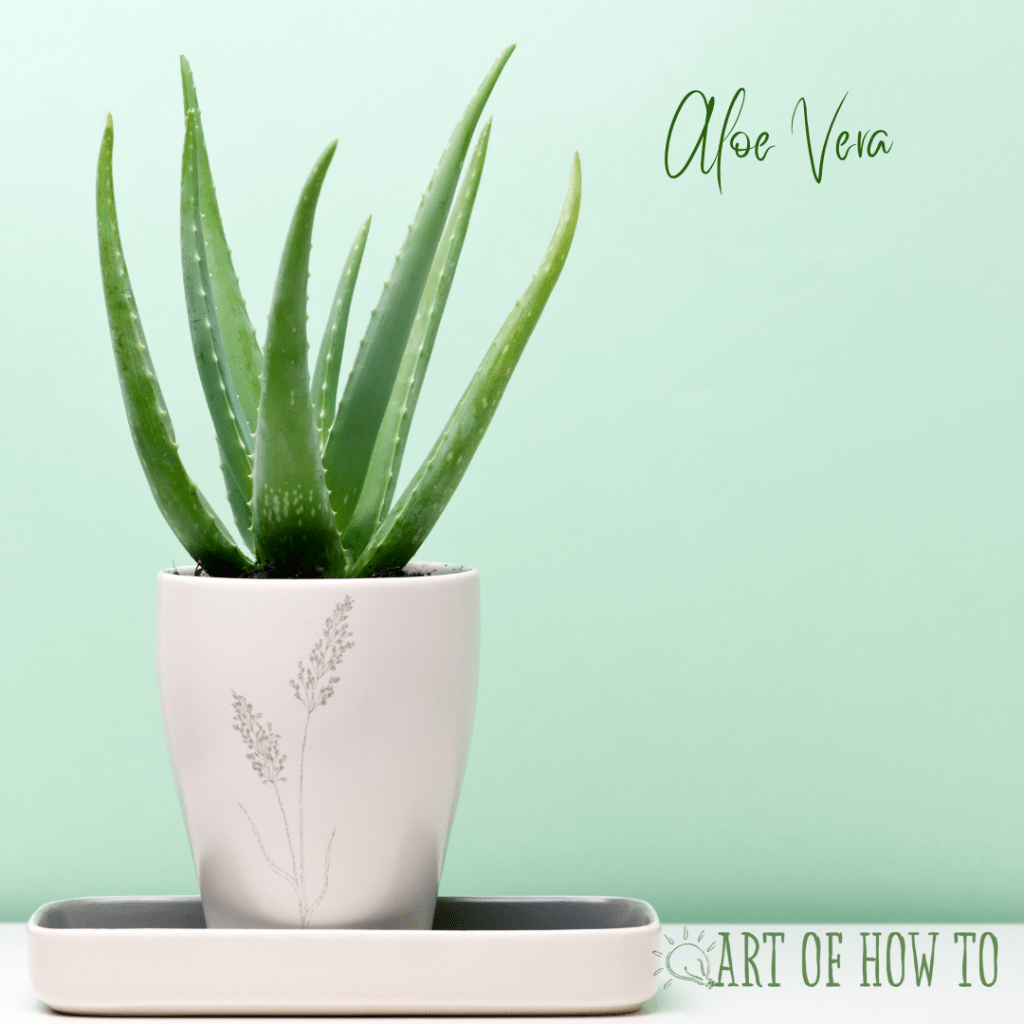
This grows with a short stem and thick green and fleshy leaves that spread out from the central stem of the plant. The edge of the leaf is serrated and has tiny spikes or teeth. You can place this plant in a bright corner with diffused sunlight. It has great medicinal properties – heals burns and cuts. The gel of aloe vera (the juicy part after splitting the thick leaf) is extremely good for the skin. It is safer to keep pets away from this plant. It doesn’t need frequent watering. Expert tip: grow this in a terracotta pot or any pot of porous material. It gives the soil to absorb water better.

6. Ferns

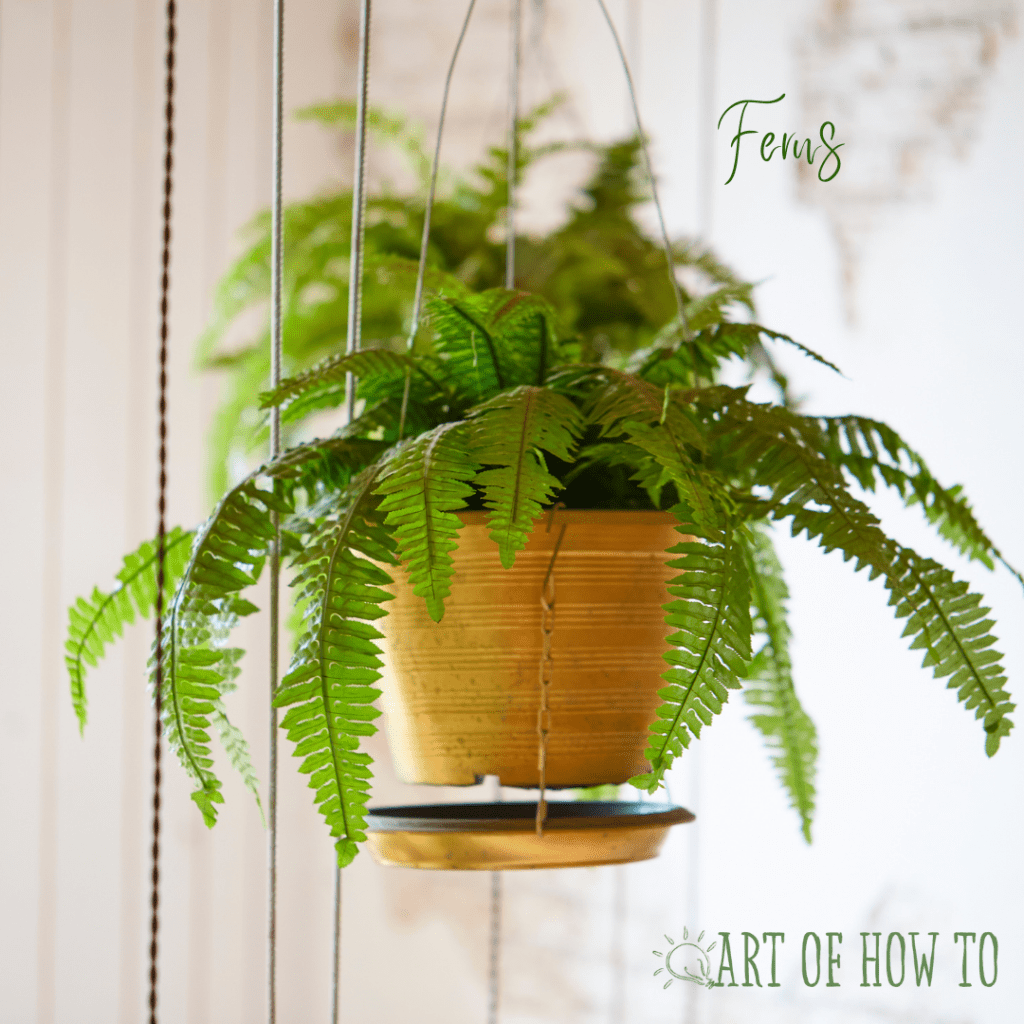
Also called “survivor” plants, these are one of the best indoor plants suggested by plant lovers. These grow best in terrariums. They look amazing in pots or hanging baskets. These are tropical, low maintenance plants. Make sure the leaves are moistened regularly if u have a dry air at home or in a dry clime. They are safe for pets

7. Monstera

Monstera Deliciosa is a beautiful ornamental plant that grows indoors. It helps purify the air. If looked after well, this plant can grow quite tall. The plant has the following benefits: calming the nervous system, improving humidity levels, and also bringing down the indoor temperature.

8. Anthurium

Known by its nickname Flamingo Flower, its red heart shaped leaves make the house bright and colourful. They are quite low on maintenance – needs a bright corner of the house with diffused sunlight. A word of caution: keep it away from pets and young children. It is a great air purifier and known to be effective in removing harmful chemicals like ammonia and formaldehyde from the air.

9. Peace Lily

Another beautiful ornamental plant for the indoors, it is true to its name. It has amazing medicinal properties and purifies the air. A tropical evergreen plant, the Peace Lily is a blooming white flower that comes in glossy hues of dark green leaves. It purifies the air, maintains indoor humidity, helps in better sleep, reduces anxiety and if you are working, it will help in work productivity as well. A word of caution: keep pets and young children away.

10. Warneck Dracaena

The name of the plant being unique, this ornamental plant originates from the Greek word dragon. It has bold, sharp and dark coloured leaves. It is a very tough plant that can survive in all conditions. Hence its care is extremely easy. This is another house plant that helps purify the air, known to increase attention span, humidifies the house, and found to reduce respiratory problems. 

Here are some green tips

1. It is important to bring pet friendly and child friendly plants as well. So, when you buy a plant, it is equivalent to buying a pet. It needs the same nourishment, love and care that animals need. 

2. One has to be careful about the amount of water to be poured to the frequency of airing it as well. There are many plants that need water once in three days and there are those that need hydration on a daily basis. Sunlight is important for these plants too just like the outdoor plants in your garden but not as frequently. 

3. The right balance of water and sunlight needs to be struck to grow healthy indoor plants. Indoor plants add to the beauty of the house as well. There are many ornamental plants that don’t need much water but grow very well indoors. 

4. Excess water can be harmful for indoor plants. Hence it is advised that you must do good research before buying these plants to see if it is suitable for your house or not. 

5. It isn’t that it will bring negative energies to your home but the plant might die if the ambient temperature at your house is not ideal for it. 

6. Each indoor plant comes with its own unique qualities. So, do consult your gardener or someone who has in-depth knowledge in plants before investing in your green friend.

As Audrey Hepburn once said, “to plant a garden is to believe in tomorrow.” So, why not plant as many as you can! Go green!

Follow Priya Rajendran

Dear Paper Bag

Happy Paper Bag Day!!! 12th July is celebrated every year as World Paper Bag Day. It is an initiative to encourage the use of paper bags over plastics because the former is biodegradable and the latter is choking the planet in various garbage dumps across the world. Plastic is killing the ecosystem since it is difficult to dispose of and harms animals too. It takes nearly 50-100 years to decompose plastic! 

Adopting sustainable and eco-friendly materials is the theme of this special day. In essence, it is all about encouraging more people to adopt environmentally-friendly lifestyles. Using paper bags is a part of leading green lifestyles. 

Those familiar brown bags used to pack foods, toys, daily use household items, and myriad other things, always get old-timers (like me) nostalgic. I still remember getting tasty nankhatais from the local bakery in Mumbai, as a child. The shopkeeper lovingly packed in an extra laddu along with the nankhatais in a brown paper bag. Even clothes were wrapped in these bags as shopkeepers found it expensive to buy plastic covers back then. Papers – bags/newspapers were used more often! All of us carried cloth bags or paper bags while going shopping. It was much later that plastic covers flooded markets and cheaper quality bags found their way into homes. By the time the toxicity and biodegradable properties of plastic were found by scientists, it was too late to stop plastics at the time. Plastic had already begun choking the environment, killing land animals and marine creatures as well.

“Raindrops on roses and whiskers on kittens.
Bright copper kettles and warm woollen mittens.
Brown paper packages tied up with strings.
These are a few of my favorite things.”

This is one of my favourite songs from the classic movie “Sound of Music”, which I used to listen to as a child. It played often on my radio. I simply loved the retro music hour back then on All India Radio. Now that I look back, it strikes me how old paper bags are. In the good old days, until plastic made its appearance, paper bags symbolized love and passion while gifting loved ones. Paper bags were indeed one of the favourite things of the bygone era. 

India is taking initiatives to revive paper bags in a big way in a bid to conserve the environment. Most areas have already banned the use of plastic, especially single-use plastics. A country-wide ban on single-use plastics has been on the anvil for a while. Shops and supermarkets have already taken individual initiatives to stop plastic in their shops, encouraging customers to get their cloth bags to carry back wares. The first state in India to ban the use of plastic bags was Himachal Pradesh in 2009 while Maharashtra followed suit, putting a blanket ban on single-use plastics in 2018.

Brown paper trails…

Did you know when the paper bag was invented? Yes, the same brown paper bag is given by pharmacies, shops, and supermarkets nowadays (thanks to the government banning plastics). The first paper the bag-making machine was made by an American school teacher/priest/ inventor Francis Wolle in 1852. Wolle’s design of the paper bag underwent further changes. In 1871, Margaret E Knight invented the machine that added a box shape to the bag. Following Knight’s design, in 1883, pleats were added to the sides of the paper bag by Charles Stillwell to give the bag a shape. After that, the good old paper bag got a cord thanks to Walter Deubener in 1912. People could now hold the paper bag with the cord easily. So, the paper bag we see today is the result of the hard work of these four passionate people. 

Interestingly, the paper bag-making machine factory-made by Francis Wolle and his brother – Union Bag and Paper Company in Savannah, Georgia, is there to date. After going through various mergers, the company United Camp Corporation was finally acquired in 1999 by a company called International Paper located in Memphis (Tennessee, USA). It is still operational.

World on a green drive

Cut to the current year, plastics have become a nuisance and most governments across the world are banning them. Good old brown paper bags are back in vogue. Top brands have lent stylish designs to them and they are in trend now. To make it eco-friendly, paper bags are being made from recycled paper. Recycled paper bags are becoming the norm now.

Social media is abuzz with awareness carousels and slides showing the importance of stopping the use of plastic. Local NGOs in various cities are doing the same. 

So why choose paper bags over plastic bags? Here are a few reasons why one should!

  1. Paper bags are biodegradable
  2. Less energy is needed to manufacture paper than plastic
  3. Paper can be recycled. They are reusable.
  4. Environment-friendly, safer for animals.
  5. You can craft and customize your bags; easy and simple DIYs are available online. 
  6. They are trendy too!

Ideally one doesn’t need a World Paper Bag Day, an Earth Day, Environment Day, Bio-diversity day or similar such days to preserve our Earth. After all our ecosystem is ours and ours alone for all our generations to live peacefully. Let’s take a pledge once and for all and not wait for special days to adopt a green lifestyle. Say No to Plastic Bags, Say Yes to Paper Bags!

Follow Priya Rajendran

Spice Up Your Monsoon Wardrobe

The first rains, the earthy smells, hot kadhais with oil spluttering – sliced onions and potatoes jumping into the hot oil, and a good rainy walk. School-going kids wearing raincoats, jumping in the puddles, dancing in the rains – our fantasies of monsoon since childhood. Isn’t it? 

I just conjured a few scenes of the rains for you while I was growing up (and for most of us who grew up in the 80s, 90s, and the 2k kids too). These have become rare sights now but I can still see these visuals in some places. In that era, kids simply wore frocks/shorts/skirts with a pair of floaters/rubber chappals to splash about in the rain. I still remember ladies back then would wear synthetic sarees, and salwar kameezes and carry black umbrellas to protect them from gushing winds and rains. Puddles were meant for rollicking! I am sure all of you will have beautiful rainy memories. 

Monsoons always meant our wardrobes going through another change. As summer vacations were getting over, we got our raincoats, and fancy-looking colourful umbrellas out (shopping only if needed). Any clothing is easy to dry. The markets used to be suddenly flooded with sarees, dresses, shirts, skirts, etc made of rayon, linen, or silk. It was fun exploring markets, and walking around – not to forget the yummy street food too! 

Fashion trends for the monsoon have evolved over the years. As I mentioned above, there was a time when only basics were considered for the season. Now, you can see personal preferences and choices have become trendier and, markets are catering happily to the masses. From synthetic sarees to trendy cut-offs and short hemlines, it has been a long journey for monsoon fashion trends! Our fashion designers have also been working hard to make budget-friendly designs every season. After all, budget-friendly shopping is top on the bucket list for almost every working individual, and looking stylish makes it attractive in any workplace! 

Barring the last two years of the pandemic (when the industries and markets suffered financial losses), markets have come back in full force now that lockdowns are no longer in place. People have got back to retail therapy with full force. 

Monsoon fashion trends have gotten trendier in 2022 vis a vis the Covid era. ‘Tis time to hit the local markets and indulge in amazing fashion melange. This season, go in for floral printed shirts, capris, asymmetrical skirts and kurtas, cut-offs, hemline shirts, crop tops, and colourful blouses. If you love accessories, the summer and rainy seasons are a time to go light on accessories. You can avoid sweating. Pair your outfits (depending on formal/casuals) with light accessories – a single silver Kada (bangle), tiny pair of jhumkis with thin layered chains (women), layered bracelets, and silver anklets. 

Easy-on-pocket shopping!

Whether it is office goers, students, homemakers, or small children, there is an eclectic mix of clothes and styles for the rains everywhere. Almost every city in India is colourful as soon as it is the month of June – a time when the rainy season hits most parts of India. As summer ends (the last week of May), most markets start displaying rainy wares. This is the time to hit the markets and stock up for the rains. You will get the best deals for raincoats, umbrellas, waterproof bags – school bags and handbags, slippers, floaters/crocs, and various attractive rain accessories.

(Sans treasure hunting & high prices.)

1.   Culottes – trousers cut off at the ankle, giving a skinny look.
2.   Floral print shirts – collared & round necks
3.   Colourful stoles (solid colours) wrapped around formal shirts (collared and non-collared)
4.   Crop tops paired with formal trousers or casual capris/cutoffs/denim skirts
5.   Sleeveless and spaghetti-strapped Kurtis (Pstt…go for oranges & yellows!)
6.   Kurtas (long)/Kurtis (short) in bright solid colours
7.   Asymmetrical Kurtas
8.   Hemline tie-up shirts 
9.   Short Kalamkari side-slit ankle-length skirts
10. Classic net shirts with spaghetti straps

So, what are you waiting for? Ditch those long skirts and long frocks, choose a short skirt or capris, pair it with accessories and comfortable crocs, and swing that translucent (transparent) handbag as you go. 

“Rain, rain, come again, ‘Tis time for getting’ stylish again!”

Let’s brighten ourselves as the clouds darken and pour down!

Follow Priya Rajendran

Hydrate Your Soul

Lately, it has been a soul search mode for me. I recently crossed my milestone 40th birthday too and I came across this beautiful quote. It made me reflect on whether we practice this or not. It says, “Your Soul is your best friend. Treat it with care. Nurture it with growth. Feed it with love.” Just like you treat your best friend, treat your soul well too. A happy, satisfied soul means their cup is full, and only when one’s cup is full, can one share happiness with others. 

The human body is made up of nearly 60 percent water. Drink a lot of water. So, we need to replenish it from time to time. The same goes with our souls too. Each person has their way to nourish their soul – at different times of the day too. It is a daily ritual for some, while some do it weekly and others do it when they get the time. There is no set time. Just like water and good food are for the body, there is food and water for the soul too. 

So, what is “food and water” for the soul? If you take the literal meaning of the phrase, you will get a list of people’s favourite food and drinks that satisfy the soul and take it to orgasmic levels. But in essence, it is a combination of everything – food, music, physical exercise, meditation, breathing exercises, good thoughts, and a lot of grounding exercises too. People are already practicing the first four. The last one used to come instinctively to people in the pre-gadget era – now, people have to practice it consciously – unplug themselves from the digital world to stay connected with their nature and surroundings.  

Grounding the soul

So how to unplug digitally? There are increasing initiatives across the globe for the same. Some events range from three days to five days. Do look up online and search for such events happening locally. People organizing such events, take their mobile phones and all gadgets and seal them safely till the event ends. These events are semi-structured where they have motivational talks organized. People attending these can be simply talking to each other minus gadgets. In an event that is inclusive of kids, they would be engaged in their activities – some structured and some left as it is.

Above, we spoke of structured events, but some things can be done by families or individuals on their own as well. For instance, you can set a “no-gadget” day on a Saturday or Sunday just for yourself and your family. The entire day can be spent outdoors (provided the weather is good and u have a good getaway near your place) – swimming, cycling, jogging, trekking, a good drive amidst nature, or even sleeping. A nap is the best medicine for stress! 

So, you can follow a “no-gadget” day too. Just hand over your gadgets to another family member, keep them in a known location at home or turn it off consciously – all by yourself. Disconnecting yourself doesn’t always mean only eliminating gadgets. So, it is about spending time alone with oneself as well. Maintaining a diary to record the emotions that flow through you during the day. Mandala art books are available online as well as offline. You need not worry about “good” or “bad” drawings here. None will judge you. It is extremely therapeutic to draw these patterns. Freehand drawings are good too.

A digital detox routine leaves you feeling rejuvenated and more in touch with your soul.

Listed are a few of the many ways you can keep your soul hydrated and well-nourished:

  1. Swimming.
    Water keeps us fresh and grounded. Simply floating in water is equivalent to rejuvenation. A lot of thoughts swim across the mind when inside water. So go ahead and dunk yourself.
  2. Drinking lots of water-based on the local climate. Avoid caffeine.
  3. Eat a lot of water-based vegetables and fruitsChoose fresh, avoid canned!
  4. Sleeping 
    Take power naps to rejuvenate. Don’t shy away from longer ones too. 
  5. Trekking
    A weekend getaway into the mountains or nearby hills can do amazingly well. Greens for the eye is therapeutic – combine them with fresh air for your tired lungs!
  6.  Me time! Make sure you get a lot of it.  

Finally, surround yourself with positive people and lots of laughter around. After all, “Humour is the best therapy!”

Follow Priya Rajendran

Do Not Take Your Heart Lightly

I keep getting news about cousins, relatives, and people dearly and distantly known to me who have died of cardiac arrest or multi-organ failures. All in two years, the number of these cases has risen. To add, the aforementioned people are in the 30-50 age group. During the peak of Covid, these deaths were more. This has reached a plateau in between but death tolls will tell you how people are falling prey to post Covid complications or developing comorbidities linked to the heart. 

People have also become equally health conscious about their diet and lifestyle. Despite that, people are losing lives to heart diseases every year. Our entertainment industry has suffered losses – so many celebrities and artists have passed away this year to heart diseases despite their exemplary fitness levels. 

Truly, heart diseases are silent killers that don’t announce their entry either. So, it is important to focus on improving fitness levels, and stamina and most importantly getting regular health check-ups. The 30+ age category is more vulnerable thanks to fast lifestyle, sedentary jobs, and bad food habits. 

The Internet is viral with several tips to maintain a healthy lifestyle and heart. Medical professionals across the globe are constantly speaking about the significance of maintaining a healthy heart, increasing physical activities, and also looking after mental wellness. A lot of meditation groups are being formed and group meditations are helping stressed individuals. Work from home jobs has increased stress levels for many – a matter of worry for families. Holistic healing practices and alternative medicines are slowly taking precedence during these tough times.

The UN’s WHO has come up with a stress management guide for coping with adversity called “Doing What Matters in Times of Stress: An Illustrated Guide.” It is available on the WHO website where people can download the guide in their respective country’s language. There are audio files for exercises ranging from Grounding, building awareness, being kind to oneself, and more. It is interesting to see how the whole world has united in one common effort to boost their citizens’ mental and emotional health. Almost every country has some kind of program designed for their people. There is a surge in yoga and meditation centers in every city. June 21st was observed as World Yoga Day across the globe.

The heart is the most crucial organ in the body after the brain. And Did you know?

  1. Your heart is roughly the size of a large fist.
  2. It weighs between 9 and 12 ounces. (250 and 350 grams)
  3. The heart beats about 100,000 times per day (nearly three billion beats in a lifetime!). An adult’s heart beats nearly 60-80 times/minute. A newborn’s heart beats faster than an adult heart – 70-190 beats/minute.
  4. The heart pumps about 5.7 liters of blood daily.
  5. The heart can produce energy to drive a truck for nearly 20 miles – equivalent to driving to the moon and back!
  6. The heart has its electrical impulse. It can beat even if it is separated from the human body – as long as it gets a good supply of oxygen.

Here are the top 10 Reasons Why the Heart should be happy

1. Keeps cholesterol and blood pressure in check
An unhealthy heart can increase the chances of getting a heart attack and stroke.

2. Maintains healthy blood in the body
The heart pumps nearly 5 liters of blood daily. The circulatory system in the body is responsible for sending oxygen and nutrients to all parts of the body. It takes away unwanted carbon dioxide and waste products too.

3. Prevents stress and depression 
Clinical psychologists say there is a link between heart and mental issues. Most heart attack patients undergo depression. So, it is extremely vital to keep the heart-healthy. 

4. Lowers the risk of dementia
There is a link between a healthy heart and the brain. Research shows that an unhealthy heart can lead to narrower blood vessels which can mean restricted blood flow to the brain. Lesser blood reaching the brain can result in memory loss, reduced decision-making capacity, and other mental disorders. 

5. Maintains hormones
The heart is linked to the nervous system and the endocrine system as well. While the former sends signals to the heart to control the heart rate, the latter secretes hormones that maintain blood pressure. The thyroid gland helps control the beating heart too.

6. Gets the music going on in the body
A perfectly beating heart ensures harmony and music between all the organs of the body in a rhythm – pumping blood to maintain healthy hormones and all other functions of the body. This is another reason why they say listening to music daily helps cause a healthy heart.

7. Well-nourished body
A perfect recipe to maintain a healthy heart is eating nutritious food like whole grains, lean protein, low-fat dairy products, and fruits and vegetables. Breakfast is considered the best key to a healthy heart. Being the first meal of the day, it decides the rest of your day.

8. Maintains happy hormones
They say to have a happy heart, one must engage in physical activities that may include weight lifting and regular strength training, jogging, running, walking, cycling, swimming and so many more. But all this must be done after evaluating your fitness levels with your fitness consultant.

9. A stress-free heart is a healthy heart
Go on a digital detox and discover how your heart beats. Zero stress levels mean a healthy hormonal secretion.

10. Regular health check-ups
As soon as one hits the 30s, doctors recommend annual tests for your body. So, don’t miss any of the tests. It will go a long way in keeping in check heart malfunctions or disorders.

So, what are you waiting for?
Run while you can and save your heart!
Keep smiling!

Follow Priya Rajendran

Earth Loses One More Musical Soul

We have lost seven gems – singers in the Indian music industry this year, including KK – Lata Mangeshkar, Bappi Lahiri, singer Tarsame Singh Saini aka Taz of Stereo Nation, Pandit Shivkumar Sharma, Sidhu Moose Wala and veteran Bengali singer Sandhya Mukherjee. Very few celebrities and artists have touched my heart in so many years. KK is one of the few whom I shall miss the most! He symbolized youth and lived life to the fullest. I have always admired you 

Krishnakumar Kunnath aka KK – very few know you by this name! Wishing you a peaceful stay in heaven! You are someone whom I have been following ever since I began my youth. Your music came as a breath of fresh air at a time I was struggling with my teens-adult anguish phase. Each word of your songs resonated with me – beginning with my first crush, friendships, betrayals and heartbreaks to my first relationships. 

You joined India’s music scene at a time when Indipop was at its peak in the cable TV and AIR era. After that, the MTV and Channel V era came. Then you released your first album “Pal” in 1999. There wasn’t a single day when I did not visit Planet M (the legendary music store) in Mumbai back then. Those were the days when we had listening corners in Planet M where we could listen to music on headphones for hours! 

Whichever genre you sung, you carved a special niche for yourself – Indipop, Bollywood, Kollywood, Tollywood and all entertainment spaces! Your voice would be missed by all of us here and the entire music industry. 

It was too early for you to leave Planet Earth! Little did we know that when you sang “Pal” years ago, its meaning would hit us now. We are all proud that you not only had a rocking entry into the world when you were born but also a rocking exit from the world too – when you did your last concert. You did what you were most passionate about your whole life – did what your heart told you to do. You left a job to be a full-time musician, performed for audiences everywhere before you got your big break.

Being in the limelight and maintaining your image isn’t easy, but you managed to rock the stage with your music for 28 years while keeping your private life intact. You literally breathed music and sang myriad songs to last us a lifetime – 3000 ad jingles, more than 500 songs in Hindi, 200 songs in almost 10 regional languages. Yet these will not be enough for us. Your unique voice that made you stand out among your peers and seniors, and will resonate and reverberate for life! 

Signing off with my favourite song “Pal”:

“Hum, rahen ya na rahen kal
Kal yaad aayenge ke ye pal
Pal, ye hain pyar ke pal
Chal, aa mere sang chal
Chal, soche kya
Chhoti si, hai zindagi
Kal, mil jaaye to hogi khush-naseebi
Hum rahen ya na rahen yaad aayenge ye pal.”
Follow Priya Rajendran

Please Talk Money

It’s not “a woman’s cup of tea !” Over the years, this thought has been repeated generation after generation. “It” refers to money matters. Until the 19th century, women were not entitled to work. Literacy spread much later. Nevertheless, women still stand backward in financial literacy. How do you define financial literacy? Straightforward. It is nothing but the knowledge of budgeting, investing, borrowing, taxation, and personal financial management. 

According to a 2019, World Bank report, 'India has amongst the lowest female labor force participation rates in the world. Women make up 48 percent of the Indian population, and, 65 percent of women are literate as compared to 80 percent of men.' 

‘Women’ has always been linked with myths and stereotypes about money and financial aspects. That is because traditionally there has consistently been a male figure who has taken over finances. Stock markets are also considered a male dominion! In the earliest times, ever since currency replaced the barter trade in our country, women folks took a backseat. The fact is women were rather put in the backseat when it came to finances. 

Reasons given back then were that women will get married and enter a different household, so they need not take interest vis a vis the male member who will be the driving force of the family – the “waaris” aka heir. Some households did have matriarchs (female heads of the family) too who did manage finances but those were exceptions. Even then, girls were not allowed to be at the forefront. So, years of conditioning left women to rely, depend, and lean on men for managing financial matters. 

Zoom into the 21st century… Vroom! Women are now heading successful business conglomerates, they are entrepreneurs, and they own successful start-ups! So, what is still choking or blocking women from being financially empowered  (read: knowledge on accounts, making finances and business decisions alike!) Even today, no matter how high the position of the woman in the company, there is always a male member who will take care of audits or finances. 

1. Keep track of performance appraisals

It is important to know the split-up of your salary – CTC or cost to the company, basic salary, gross salary, allowance, reimbursements, income tax deductions, employee provident fund, gratuity, and life and health insurance. When you enter a new company, knowing these elements will help in keeping track of appraisals and the rest of the performance records.

2. Know where your money is going

Keeping a written or digital record of expenditures is a good idea to know your monthly expenditures. In the older days, there were bound books or ledgers. Now thanks to digital media, we have various apps to record the same. There are digital wallets to store important financial documents too. 

3. Financial goals/Bucket list

Just like a travel bucket list to visit places of interest, one must have investment and saving goals for oneself and the family. This helps not only in times of emergency but also has long-term benefits like children’s education, your health, and family health as well as 

4. Role model for kids

Women can greatly influence the next generation by becoming financially empowered. Younger children will also learn the importance of being financially literate from an early age, looking up to women’s family members.

5. Financial emergencies, Death et al

In most cases, the male members take charge of the financial crisis. Women also can do the same if they have sound knowledge of legal and financial documents and records, especially where it is located. More often than not, it is when the male head of a family passes away, that the baton is suddenly passed on to the widow and other women members. The shock of death and sudden financial responsibility could be overwhelming. Financial losses in business can be managed well if women are equally involved in business transactions. They can help take over during crises.

6. Be informed while investing 

It is always nice if one knows the pros and cons of investments, shares, and stocks. These days, there are brief courses and quick tutorials online on terms and how to start investing. Industry experts take courses and help with the same.

7. Choosing loans and interest rates

Most of the loans taken are for buying a house, or vehicle or for availing of student loans. It becomes inevitable to know an agency that provides good interest rates for loans. Having good knowledge about compound interests, loan structures, and the ideal time duration to repay loans, will help one select a loan effectively.

8. Effective family budgets

If given a chance, women can make sound judgments and create good budgets too. A good family budget will have a healthy mix of budgeting, saving, borrowing, investing, and taxes in the money palette. The key is to set aside a good amount of money to reduce borrowing and increase savings.

9. Reduced financial stress & anxiety

Financial literacy ensures mental peace and sound decision-making for women in the family, apart from the other family members. It is crucial women are empowered to take the lead in learning, and comprehending all matters related to money, tax, investments, saving, borrowing, and even property matters.

10. Property, power of attorney, and ownership

Inheritance is a bone of contention in most families. Now that it has been made legal for women to have a part in family inheritance (irrespective of whether they are married/unmarried), it is more important to make them aware of legal and property rights, as soon as they become adults. Knowing who all are property holders in the family, their shares, and who has the power of attorney (signatory authority for all important financial documents) is an necessary part of financial education for women and it should start at an early phase of their life. From childhood, impart financial awareness amoung kids alike.

Remarkably fewer women take interest or invest in the time to learn the basics of investments, capital, savings, turnovers, profit-loss, and running a successful business. Another flip side of not knowing about finances is making wrong business decisions or slipping into the hands of scamsters. Thanks to more downward appeal to discover financial freedom, many stereotypes and jokes pass on through generations around females failing to handle money, businesses or enterprises successfully. 

It is time to stop the spread of stereotypical view concerning women. Time to learn and be better around money! Let us push ourselves and initiate to get financially literate and for achieving ultimate economic freedom. Raise your hands with me and let’s talk money.

Follow Priya Rajendran