Love Affair with Dance 

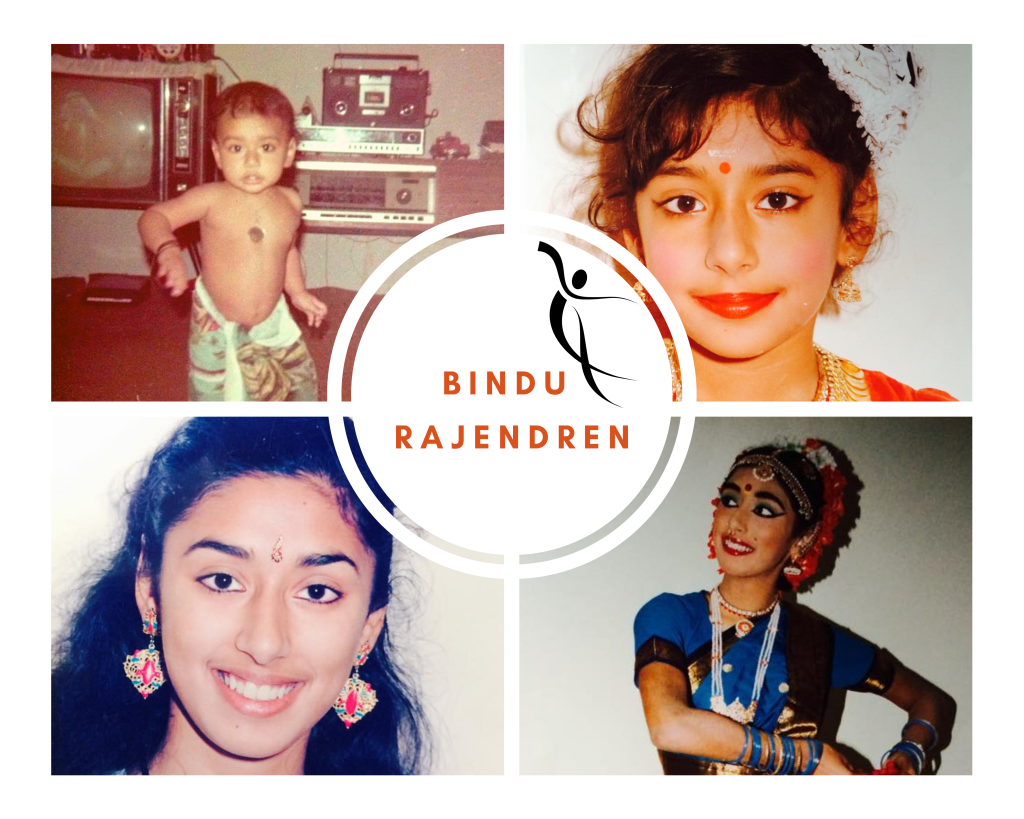
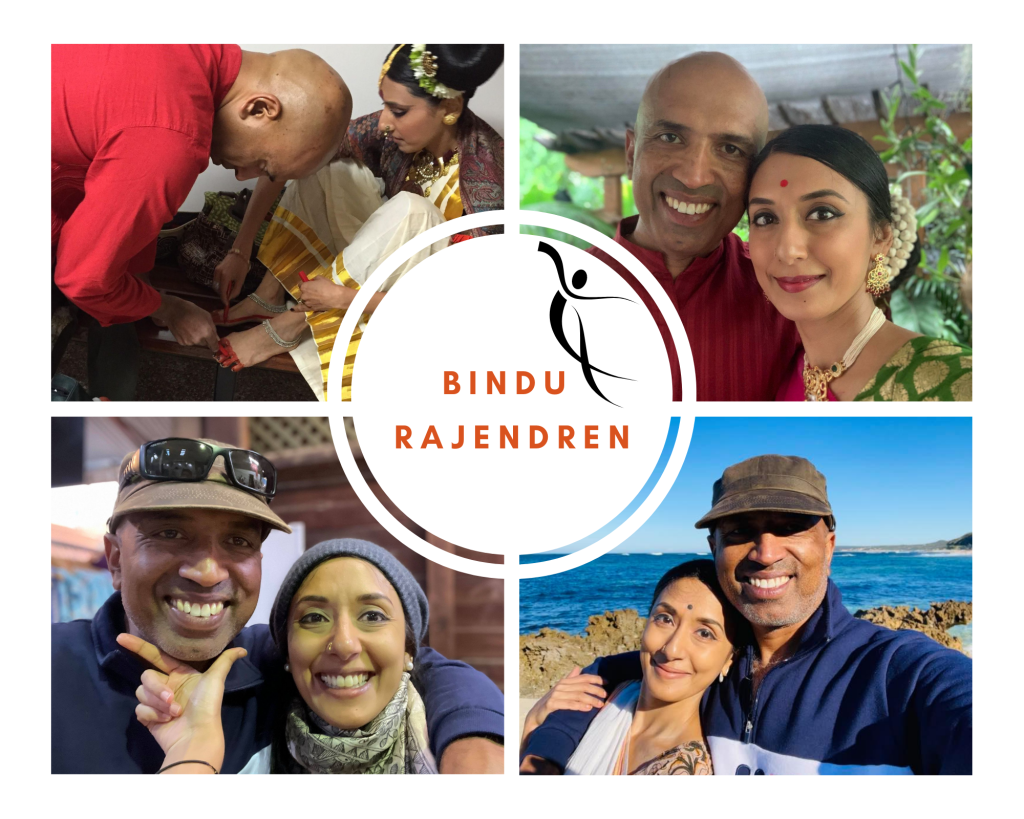
Presenting to you, Scrum Master, Dance Researcher, Dilettante Poet & Painter and Multidisciplinary Performing Artist, Bindu Rajendren.

When asked where are you from, she said it was a difficult question to answer. As our conversation got deep, I realised why. Though born in the middle east and migrated to New Zealand, and presently living in Australia, Bindu Rajendren is truly south Indian, without any doubt. Her links to her roots are deep, not because of a traditional upbringing, because she craves for it. She stays connected and makes every effort.

Her desire to learn is unfathomable, and she keeps digging for knowledge at every opening she gets. At present, for a broader understanding of the Natya Shastra, she is exploring dance lessons from her Gurus in Kerala. She also part-takes in workshops with great performing arts masters based in India. If you describe, she is in love with dance, that will be the most under-valued statement. 

Bindu works full time to sustain her passion for dance, and after years of saving, she found a dance space and built a Kalari. She named her Kalari, Sowparnika, her ‘go-to space’. Her daughter affirms if you cannot find Amma, all you have to do is look for her in the Kalari. 

Bindu has premiered her work at global, regional, and diasporic festivities and performances in Australia, London(U.K.), New Zealand, United Arab Emirates, and India. Last year and a half, the pandemic has induced a new space in the digital world for her. She has performed to a much wider audience, collaborated with artists from different genres. 

Today, I have with me Bindu Rajendren. Let us dive into an incredible story of a wannabe dancer who had to change course to be a nutritionist, who got lost on the way only to find her path afresh. Working full time as a Scrum Master and a Multidisciplinary Performing Artist, how did she make it? Let’s find out.
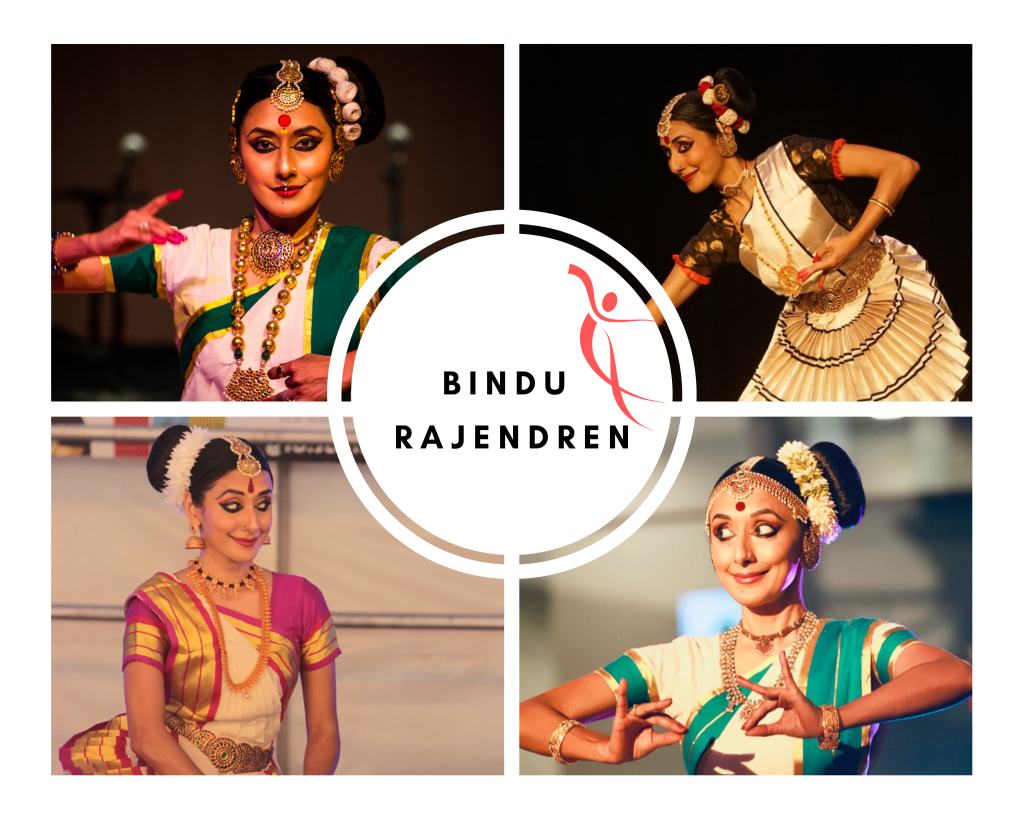
A conversation with Chippy & Bindu Rajendren,
Dance Researcher, Dilettante Poet & Painter and Multidisciplinary Artist. 

CKChippyHey Bindu, it’s been almost a year since we first met during the Zola Talks on ‘Kerala Performance Arts & Mural Painting’. Covid allowed us to make space around us closer. 
BRYes, it’s true. We are all connected now more than before. I work from home these days. Even pre-pandemic, I had negotiated early working hours from my employer. I start work at 7 am and finish at 3 pm. 
CKCAustralia has had a few lockdowns and has been isolated from the world due to Covid. How did you cope during this time? 
BRPandemic was a blessing in disguise for me. I used this time and space and opportunity to learn and constantly learn dance. 
CKCDance is your passion!
BRUm…I find the word passion overused. And to be frank, I have not found a word for what dance is to me. How we breathe, that’s what dance is to me. I love dancing. I hear a song, I break out into dance, wherever I am, be it on the sidewalks or a shop. Once in a Dubai shopping mart, I heard Jaya Prada’s famous song ‘Barsaat main jab aayega sawan’, and I had to dance. When the beats hit, I could not resist myself. I stood in the aisle and did the steps while my sister made sure no one was walking towards us. As the music played, I happily danced away.
CKCIt’s your pulse.
BRYes, maybe that’s the word. It’s there with me, always. Dance is life.
CKCDance is not your profession. 
BRI will say I have two full-time jobs. I work in a company here and I also dance. I usually refer to myself as a multidisciplinary artist with dance as my main focus.
CKCCrazy for dance…  How did this happen?
BRChippy, honestly I don’t know. There are no dancers in my family, from my mother’s side or father’s side, and no singers either. As a family, all were interested in arts but no artists in the family. I am probably the only one.  
CKCWhat’s your earliest memory of dance ?
BRThe earliest memory is a vague one from my Dubai home, maybe around three years or older. I remember dancing on top of a teapoy. I stood atop and danced while watching television. My mom stood behind me and told my dad, ‘this girl, she has got something, we need to send her for dance classes.’ It was my Amma who took me to Guru Kalamandalam Mohan at age four and enrolled me in dance class. I learned to dance from him for a total of 17 years. Am still in touch with him and he is so proud of me. He never thought that I would pursue dance even though I loved it.

I was born, raised and lived in Dubai till my 12th grade. I never used to miss dance classes. As much as I could I would continue to dance, even throughout my grade 12 year when typically all Indian kids are dropped from extracurricular activities to concentrate on studies. I refused, just said ‘I have to dance’. Amma was the one who took me to all my performances and to this day she encourages me. Amma never pushed me, she let me do whatever I wanted with my dance. Except after grade 12, she wanted me to be self-independent and be able to stand on my feet. 
CKCWhat were your plans after school ?
BRAfter 12th grade, I wanted to go to Nrityagram and learn dance. Ma’m Protima Bedi had just opened her school, and I was longing to join. That time, it was a different period altogether.  All I wanted was to dance, but at the same time, my parents asked me to do other things so I didn’t go to a dance school to pursue dance. My school Principal, my parents, and my teachers said in a synchronised tone, ‘no, no, no no, no, no.’ All were against me choosing dance. Hence, landed in Delhi to do B.Sc. in Nutrition. 
CKCBSc. Nutrition… Wow! What happened here ?
BRWhen I went to Delhi University’s Lady Irwin College to do B. Sc. Nutrition, I became the Music & Dance Society Secretary and President quickly. Any function I used to dance and any events I am representing the university for intercollegiate festivals and competitions. 

Oh… and there, I met my first Dance Goddess, Ma’m Asha Singh, an Odissi Exponent. She was amazing and she still is. She took me under her wings and allowed me to learn folk dance. The number of folk dances she taught me in my three years in Delhi, gave me an insight into a different aspect of dance and a good understanding of folk dances of India. I used to live in the hostel on campus. Ma’m Asha Singh who used to teach at the university, lived across the road from my hostel. Any chance I get, I will go across to her apartment and learn dance. I was privileged to learn from her. In those three years, I was introduced to contemporary dance, dances from Mizoram, Himachal, Odisha, & Kashmir. 

Once during my university days, Ma’m Asha, produced a dance production of different dances of India. I was in about six states in her production. The adrenaline was rushing those times, complete one folk dance and dress change and rush backstage for the next costume, and makeup, finish the next and the next, and then the next. It was unbelievable. 
CKCYou were the most wanted artist in your college.
BROnce for the intercollegiate IIT dance competition, our theme was a performance on different yugas. For this work, we were dancing 8 to 9 hours a day to premiere the work in the competition. Just before the final act, I collapsed on stage and I was in incredible pain. My teammates had to lift me. I could not do anything myself, my father had to fly down from Dubai and take me to Kerala. I was completely down, this was during my second year at the university. At 18, diagnosed with sciatica. I was put on tractions for a long time. I had to be careful after that. Always.

During college, my classmates and college mates supported, encouraged, and screamed for me to get up on stage and be me, whether it was a dance, fashion show, and on-demand request of Madhuri Dixit’s ‘Chane ke khet mein.’ Now that I think about it, the whole college, from juniors to seniors, teachers to lecturers, all of them supported me. They all knew my dance craze. I was happy to dance because of the encouragement. My outgoing student sash read, ‘Madonna Payalwali.’ (Madonna on anklets)
CKCAfter Graduation ?
BROh! I was lost. After B.Sc. I moved back to Kerala and was not sure where life was heading and did not know what to do. I was in a ‘what am I doing’ phase. Due to health reasons I was not able to immerse myself in dance at that time. I remember enrolling for a management course but didn’t even know why I did that. I was lost, no one to properly guide me, direct me. 
At that time I lived with my grandmother and she introduced me to Raj. Everything happened quite quickly after that, we got married and we moved back to Dubai. 
CKCYou never got time to find yourself. So after marriage what did happen ?Did you have a conversation about your craze for dance with Raj? 
BRNo, we did not have a discussion regarding dance before our wedding. I was twenty then, what do I know then. Raj knew about my passion for dance. After marriage, we moved to Dubai and I got into a job. Once Raj asked me if I would like to continue dancing. As soon as I heard that I called my Guru Kalamandalam Mohan and resumed my dance lessons and also did work full time. My Guru stopped coming to teach me after my seventh month of pregnancy, as he was too scared for me. After my daughter was born, I stopped dancing for two years and by then we had migrated to New Zealand as a family.
CKChippyHow did things move in New Zealand ?
BRI landed a job as an Administrative Coordinator for a Degree Programme at the University of Otago. What I did when we moved to New Zealand was to take part in community-based performances, every chance I got I used the space to perform my dance. That’s where I met my mentor, Alison East, Lecturer at the University of Otago. She is a teacher and choreographer with more than forty years of experience. She once saw me dancing at a community event and enquired about my background, we had a good conversation, and we parted ways.

My husband, Raj, was very encouraging. Even though he doesn’t come from an artistic family, he understands my craving for dance. He said, ‘why don’t you pursue your studies in dance’, and that’s when I was like. ‘Wow, okay‘. So I did not waste any more time, I enrolled for Masters in Dance Studies at the University of Otago, and I have never stopped dancing since.
CKCHow did masters change you?
BRWhile learning Indian Classical dance all my life I never got the depth, we learn items. Alarippu, Jatiswaram, Shabdam, Varnam, Padam, Tillana, all items after items after items. We never learn the theory of dance. 

When I did my Master’s, I got into the abyss. While learning I got into the depth of dance. Alison East held my hand and introduced me to the breadth of dance. During my studies there I engaged in independent research, workshops at the dance lab with guest artists and lectures, and the teaching approach combined theory, movement practice, and lectures. My thesis was on Theyyam and I completed my master’s degree studying part-time and working in the university as an Admin Coordinator. 

Rather than moving my body, I started moving my mind for dance. I became a thinking dancer. I started connecting movement to intellect. I found my niche there, found my sense of belonging there. I found myself. I was lost and found myself.
CKCYou said you got lost after graduation and did not have a direction. So, It took you that many years to find yourself. 
BRYes, to know what I want it took me years. 5, 6 or more… I was married very young, had my girl and moved to New Zealand, worked and studied. It took me a long time to find myself. 
CKCYou worked and studied…must have been full on.
BRIt was. I had to take my daughter to school, take her for music recitals, and I will be in the car studying, then get to work at University and also manage the chores at home. My Raj was my biggest support and constant companion, he is the reason I am standing tall. He was a great help then and is the greatest support now. 
CKCAfter your masters, how did things turn out? Was there a career you could make in dance?  
BRNo. One of the things I realised early on is, ‘I can’t dance and make money.’ So I did not want to associate what I love with a monetary benefit.  I wanted dance to help me be who I am. Dance has been my companion since I can remember and dance has never failed me. So she is my best friend and I always go to her every time. I am constantly thinking about her. It’s like this addictive love affair, that I cannot withdraw from.      
CKCDid you at that time have any clear idea on how to progress with dance? 
BRI didn’t have a clear idea or path. I just wanted to dance. That’s it. I continued to work. We moved a lot in New Zealand, from Dunedin to Christchurch then to New Plymouth,  again continued to work and also continued my dance. I did not have a guru during these times but I continued to learn by myself. 

In New Plymouth I started teaching a few children and also created a small dance theatre company, we used to perform for the New Zealand Rugby Festival, and for small events. We performed at the Taranaki Art Festival, I did 16 different shows on different art forms and I was approached by Java Dance Company on the recommendation of the Council to be the guest artist. I also worked with galleries there, and more. 
CKCAll this while doing a full time job ?
BRI don’t dance for monetary gains or reasons. I don’t think it will work for me. So I work to sustain my dance. Honestly, that’s why I am working. Always working. 

I did have a gap of three years where I could not find a job when I moved from New Zealand to Australia. I went into depression at that point. There were a few months where I was just in self-pity. Once I picked up dance and started to dance, I was a happier person and I found a job, everything fell into place again. During the most difficult phase in my life, it was my dance that got me out. She is my best friend.
CKCI am keen to know what your day job is ?
BRI work in IT. I lead a group of people in the Agile methodology. I am a Scrum Master. It’s a challenging job as well. 
CKCNutritionist to Scrum Master !!!
BRThe company I work for now understands my commitment to dance. They are fabulous, they have flexible work hours as well. All you have to do is manage your time, do your job and they are pro-work-life balance. I start work at 7 am and finish at 3 pm. Initially, the time arrangement was requested for picking my daughter and dropping her to her classes and after-school activities. I finish work at 3 pm, I have a cup of tea and at 3.30 pm I am present in my Kalari. Sowparnika Kalari, ‘my go-to space’. 

At my Kalari I am dancing, learning, drawing, thinking, teaching, researching, and studying dance. That’s my time and space for dancing. Some days I spend up to 10.30 pm at my Kalari. Most days I will finish up and be home and be with my Raj and Bhadra, my daughter, and we cook, and spend time together. 
CKCYour family is completely merged with you.
BRRaj and Bhadra are so supportive. I won’t be able to do what I am doing without them. My daughter and husband are my rock. Raj is my videographer, my daughter is very much into music, she helps me with music production, mixing and mastering, videography, and video editing. As a family, we are very much invested in my art form.
CKCSo is your employer. They are understanding, adjusting and cooperative for you to make this happen and balance the act smoothly. 
BRI am so grateful that my company understands. People only see the dance but there is this whole army of human beings and nature and company behind me who hold me up. At my job, my manager is interested in my dance and wants to know more, and wants me to share links to my programs, They are aware that I am performing at both national and international levels, they know that it’s not a frivolous thing, and people understand that I am very serious about dance.  
CKCThey are all rooting for you.
BRWithout my family and my company’s support, I would never be able to do what I am doing. Not even a little bit of what I am doing. 
CKChippyHow do you prepare yourself for the performances you do? The stories, the music and what art to perform, is there a process?
BRThere are two paths to how I perform. Currently, I am studying Mohiniyattam from my Gurus in Kerala and also taking master workshops. So the first way of choosing a performance is to perform what my guru teaches. Performing lineage of a great guru’s artwork is a beautiful thing to do and I like that. My second way is to do my music and my ideas, and create a performance and design based on my thought process.
CKCHow do you develop an idea ? How does it work?
BRHow it works. The whole process starts with an idea. I may or may not be actively looking for ideas, and sometimes I am just spontaneous. In the middle of the night I think of an idea, I jot it down immediately. I may have a choreographic moment that comes to me at night. I keep a journal on my nightstand and I write it down immediately. 

I just premiered my latest work Prithivii Tatvam, a call to action in response to climate change for the Erasing Borders Dance Festival 2021’ organised by the Indo American Arts Council, New York. The idea has been simmering in me for the last five years. It happened while I was reading. I read a lot and am often inspired by images and stories. This latest work was inspired by the Atharva Veda, a topic written in ancient literature.

The process is long. From concept to research to music direction, arrangement and vocals to direction to choreography to performance to videography to final mixing and mastering, when everything falls into place you are content. I enjoy the process and it keeps me alive. There are moments of spontaneity within this long drawn-out thought process and that’s how I work. 
CKCAny favourite music?
BRFor the last year and a half, I have been gravitating towards sopanam music, the indigenous music of Kerala. I am finding my movement striving in sopanam music. My body enjoys sopanam music. 

When you create your music composition, you will need a Music director, which means you have to have a violinist, veena, mridangam, edakka, and keyboard players. It’s an expensive affair. Now you know why I need work, only to sustain my passion.
CKCDo you have any hobbies?
BRApart from Dance, I am a spontaneous writer. I write poems and I paint as well.  I always saw these hobbies as separate from each other. They were all compartmentalised and they never saw each other. Last year I got an opportunity to create a work and with the encouragement of Ma’m Anita R. Ratnam. During this process I realised I can mix my creatives and let them layer themselves to bring out something greater. I used some of them to create a layered sense of understanding of my work. That’s what you will see in my Erasing Borders Festival performance. 
CKCHas covid disrupted your world of dance ? What were your most recent projects ?
BRIt was a blessing in disguise for me concerning my dance studies and research. The pandemic allowed me to extend my space for dance and research into the digital world and so far it has been great. Some of the noteworthy projects, if I have to say, are from 2020 and 2021. Ma’m Anita R. Ratnam commissioned me for Boxed 8.0, Mini Dance Series. She and her curators handpicked 40 dancers from around the world to create something in response to Covid. My project was titled ‘Hope’ and I collaborated with dancer musician Niharika Senapati. Again I also performed ‘Dance to the rain clouds, Andal’s Garden, a project commissioned by Ma’m Anita R. Ratnam again. Early 2021 collaborated with five artists, three Mohiniyattam artists, and two musicians from around the globe for a video production called ‘Vanasthali: Dance of the Forest,’ collaborative choreography in Mohiniyattam conceptualised and produced by myself. 
CKCYou have done quite a few work with Anita R. Ratnam.
BRFor a dancer of her stature, reaching out to help other upcoming dancers and established dancers, and writing about dance, I find her an all-encompassing dance world, how she tracks and extends it out, to others, I find that beautiful. Very few dancers can do that. As dancers, we are all focused inwards, and I find Ma’m Anita R. Ratnam’s focus is outwards and not egotistical. It’s ecoistic, and I find that beautiful. She is someone I admire.
CKCAny dancers you are inspired by or a role model for you ?
BRAnyone who dances inspires me. There are so many dance forms and multiple levels of dancing. Be it the technique, be it with ideas, everybody has a better skill in one or more areas. I am always looking for that little extra that I can get inspired from. I have created this Frankenstein model, where I take a little from here and there, a certain element from various dances.  So I created my own Frankenstein dance model. So thats’ my role model. 
CKCAny word for advice for people who pursue dance as a passion? 
BRWho am I to give advice? I don’t have any words of wisdom. My circumstance is such that people around me were rowing the boat along with the flow. For me, it worked. 
For anybody who loves dance, and feels that’s where they belong, they should work within their circumstances to make it happen. My belief is if you love something and if it is dance, you have to go after that.

Nothing beats hard work. I promise you nothing can beat perseverance and hard work. Even when nobody acknowledges you, you know you have worked hard. Your conscience that’s the most important thing. That’s where I find my true sense of happiness. After I finish rehearsals, my feet are sweaty, my clothes are drenched and I have to think about washing my hair, even though I washed in the morning, at the end I go to bed happily. Because I know I have made my heart and soul happy, just doing what I want to do. 

I didn’t have shows for a very long time and all I did was dance at home and was perfecting and practicing and perfecting, doing what I can because no one can take away what you worked so hard to get. So, if someone wants to pursue dance they should. But, they need to work out how they are going to sustain their dance.  
CKCDance is an expensive affair ! 
BRIt’s like running a small business. Unless you are paid well to perform, you cannot pay your accompanying artists, or to create music or to produce music, or to learn. If you are producing music yourself, you have to pay. You have to pay all artists. You have to pay all the accompanying artists who perform with you. Sometimes you need to work to sustain your passion.

My daughter is all grown up, she is artistic, independent and she now needs me less and I have the time now to completely immerse myself in dance. My husband is incredibly supportive and he has learned the skills to support my work. He worked hard on his photography and videography skills to support me. He invested money in his gear to support my dance. We need all this to work out to support dance. If I had all my hard work and everything and my husband and daughter didn’t have the skills to do the video and music, I would have to engage someone else to do the video and when you have to bring in external resources you will have to think about the monetary cost associated with dance.  I always pay people who I work with. I can do that because I work. If I am spending on my dance and doing it is because I can.

In all honesty, unless you come from a wealthy family, or you have another means of support, to continue dancing, it is an expensive affair.
CKChippyYou made the world around you work for you in a positive way. 
BRThere was a time, I was told I cannot dance. Remember my collapse during the college festival. I had sciatica and had to put traction on my legs for a while. It was hard after that incident. After my marriage, even though I started dancing, I could not sit in aramandalam for a while. I had to work through it at a slow pace and I did fix it.

When you are in this frame of mind where you are constantly worrying about your health you are not in a position to be creative. That is a big hurdle to get over. I have had health issues for a long time. I had depression and associated with that I had health anxiety, all of that impacted my creative thinking. 
CKCAnxiety is a hurdle.
BRWhen you have health issues and when you are scared it’s going to be something horrible, how can you dance? How can you be creative? It takes lots of perseverance to get past that. 
CKCHow did you silence that voice in your brain?  
BRIt’s not easy, it’s very hard. Three years ago I lifted a suitcase while in India and sprained my psoas muscle. Without realising what happened I returned home to Australia and I started getting this lingering pain. I was so sure I was going to die. My husband had to take me to the emergency room and I was hospitalised for two days and doctors advised two months of bed rest. 

Chippy…In 2 weeks I will be premiering a new show,  and it was a sold-out show. My brain was in anxiety mode. I sincerely took a break from all activities for one week and then the next week I somehow got to work and managed everything and performed to a sold-out audience. Sometimes you just have to believe in yourself and just do. These voices can tell you so many things and the moment you listen to these voices, it becomes horrible. For me when I feel sick, if I dance, I feel better. My husband always says, if you are feeling blue, go see green. For me, if I am feeling blue, I go to my Kalari.
CKCAs an artist, you must come across people with opinions and some with judgement. How do you deal with criticism ?
BRInitially, I used to get affected a lot and get upset and when situations like this occur, I used to say I am going to stop dancing. The moment I started dancing for myself, my happiness, when I am sure I made my heart and soul happy, I stopped caring. Of course, I value opinions. If my Guru instruct, ‘Bindu, work on your movement at this point’, I will listen and take their suggestions seriously. Unsolicited and unnecessary advice, unless it is of any value, I don’t see anything in it and I just let it slide like water off a duck’s back. That’s the only way I can maintain my sanity and from my experience of knowing who I am and how I deal with things. 

People are allowed to critique. They should. If it’s not coming from a place of ego or malice there is so much value in the criticism. Constructive criticism is acceptable. Sometimes it’s okay to ignore and it’s fine. At times, we need to agree to disagree.
CKCYou are still figuring out a lot about yourself through dance. Your desire for learning dance is intense.  You were constantly working towards your purpose. 
BRLearning and getting in deep and finding how I fit and where I fit and why I fit. I am still trying to figure it out. The more I discover knowledge, the more I realise I am ignorant. I am working towards a space of enlightened ignorance.  I am eager to learn. 
CKCYou are working two full time jobs. How are you balancing your love affair and work?
BRWhen you are having a love affair, you make time. Right!!! 
CKCI have to agree, you are having an affair with dance ! 
BRDance constantly excites me. You can see from this entire process that I was lost. Only dance was the commonality. When you fall in love for the first time, you feel flutter and flurry, I feel that every second with dance. Even now. 
CKCButterflies in your stomach.
BRAbsolutely, I am always excited to dance and even when I am sick, dance can cure me. I dance and it helps me. 
CKCIn sickness and in health.
BRExactly. 
CKCYou meet yourself at 18. What would you tell her?
BRI would tell her not be too hard on herself and that it is ok to be a wildflower and bloom where she lands, the best way she can. The sun, rain, wind and love will always follow her if she is true to herself.
CKCThank you, Bindu. It was so good to connect with you again. I am so glad you agreed to be part of my new adventure. Your love for dance is spectacular. I love you for that. 
BRAbsolutely. I am so happy that you chose me. I hope it’s of value. Thank you, Chippy.
Follow Bindu Rajendren
Happening By Chance

A coincidental journey into the world of People Management & Operations.

Clever, confident, articulate, and always with a smile, that’s how most will remember her. Our paths crossed in 1998 when we started our Bachelor’s program in Visual Communication. Never in the front, always at the back, researching, coordinating, directing, organising and delivering what she said she will. She is a born leader, and takes pride in her reputation as a creative problem solver and an out-of-the-box thinker, then and now.

In 2001, fresh out of university, a brave soul embarked on a journey from Kovai to Chennai to learn graphic designing. After lectures, to kill boredom, she decided to work part-time as an Event Manager. When an opportunity came by to move to Bangalore, she found a role as the Assistant Film Coordinator with an advertising firm. Not fond of the limelight and being a technical person, she decided to try her luck in satellite radio as a Radio Computing Software Programmer. As her career in media was taking off in India, her family had other plans. Marriage happened, and she had to move her base back to Kuwait. 

Life changed, and adjustments were made. A year-long search to find a break in the media did not take away her spirits. With no opportunity to pursue a career in media, she understood that she had to find other options. Without hesitation, when an opportunity emerged, she embraced the chance and dived into a world of uncertainty and decided to start from scratch.

Meet Richlene Edison, Senior H.R. Business Partner, at one of the world’s leading brand franchise operators in Kuwait. Today, Richlene is an insightful People Management professional with over sixteen years of experience. As a person who places her skills to work for the benefit of the organisation and the people, in our interaction Richlene will be sharing her path into the world of Human Resources and how it changed her life.

Join us in conversation with Richlene Edison & let’s find out, how did a person with a potential brilliant media career make it in the world of People Operations & Human Resources?

A conversation with Chippy & Richlene Edison, Sr. H.R. Business Partner, Kuwait.

CKChippyHow has life been? It’s been twenty years since we parted ways. So much has happened. Tell me how has life been and what have you been up to since graduation? Shall we take a walk down the memory lane.
REGood. I am good. It’s been twenty years already. Wow. Time flies. Where do I start ! From Kovai, I moved to Chennai to join a Graphic Designing course. The course was only in the morning and I was quite bored after my class, thus I decided to work part time. Fond worked at Blues Power, an Events Management company. I was delighted by the experience I was offered.
CKCHow long did you work here?
REI was there less than a year. An opportunity to move to Bangalore came about, and I started working for Saatchi & Saatchi in their Film Production division as Assistant Film Coordinator. We were only two of us, and I was assisting in coordinating all the films and it was an amazing time. We were on the sets, directing and it was so cool. I enjoyed my one year there. 
CKCFrom there you made an unusual shift.
REI went to Radio. 
CKCThat was bold.
REOh yes. What I realised with all of the jobs that I did was I did not like being in the limelight. I liked the technical side of things. With the Film Production what I loved was the fact that I was behind the scene, looking at the lighting, editing, and working with editors, I enjoyed that bit of it. 

So when the opportunity came in World Space, which was the satellite radio, I went for it. It was easier than live radio because we are programming and then it goes live, so I had a chance to learn how to program. And again, I tried both. I tried being an RJ and I was doing the programming at the back. Again realised, I enjoyed the programming and the technical side, so I started doing more of it. And I was really good at it. I worked here for over a year.
CKCWhere did you move to next ?
REKuwait. The typical Indian way, got married and had to move to Kuwait for good. I lived all my life here so it was not a strange land for me. If given a choice I would have stayed back in India pursuing a career in the line of Programming but I had no choice at this phase in my life. 
CKCWhat direction did your life go, after marriage? Did it take a different path? 
REIn 2004, after marriage I moved back to Kuwait. Ever since, I kept trying for a job in the same avenue that I had worked. Let me be frank, at that time, be it in Event Management, Radio or Television, it was quite difficult to get a break in the Middle East, especially for a woman. In Event Management, everything was overnight, and here it’s a very male dominated industry, not that in India it wasn’t, but it was easier for me to embed myself in India than it was here.

I tried the radio as well, the salary they were able to give me in the Radio station was not at par with the industry standards then. At the Radio station the Director told me, ‘Richlene, I cannot hire you because you have more experience than the people here, and I cannot pay you half as much as I pay them.’
CKCA creative person who is too qualified for a job.
REToo qualified and cannot get paid equally.  
CKCHow did you take all these rejections? Your forte is in creative fields, and you were great at it.
REHow did I take that?  I understood and did not waste my time thinking too much about it. I had to think out of the box.
CKCNow where are you at? Did you find a job? How did the search go?
REI came here in November 2004, until June 2005 I could not find a job. Obviously newly married, we have an apartment, in terms of financial contribution, I wasn’t doing much, so I put pressure on myself to find myself a start somewhere.  Instead of being prescriptive about what I want, it was more like, let me find a job. Oh and in terms of experience in Kuwait, I didn’t have any!
CKCWhat did you do next?
REI had to do something. I heard about a role in a company. They were looking for ‘Smart, Young girls with good language skills for Administrative Support’. I said to myself, fine, whatever it is, let’s go for the interview.
CKCIt was a start from scratch situation. How did you do? 
REAbsolutely. Start from scratch. I went for the interview. I was confident about my language skills. I had the ‘I can do,’ attitude. If you have knowledge of what you want to say, when given a chance, I say to myself, ‘I can impress the person that  I am speaking to.’ I also had the, ‘I will learn’ mentality. This is very important especially when you are starting. 

I remember saying, ‘I can learn, teach me whatever you want to teach, I will learn and I will learn and I will be good at it’. With this attitude I aced the interview, and they said fine. Let’s get her. I joined SMS International Co.
CKCWhat was the job?
REThe hire was for a Marketing Executive. The first job I did was a combination of administrative & marketing support. I went in there to be a Marketing Executive to help with the marketing of their company, their products, and they also said, you can be the receptionist,  you can be the admin support and all in all. It was a small company and I did a lot of roles there. I used to even order lunch for everybody there. I was like a back end person of the company. 
CKCNow you are the administrative personnel here.
REI was everything. I learned a lot and after one year they saw the potential in me and placed me in the product division. It involved interacting with the clients, project leaders, contacting the project leads and understanding their needs.
CKCWas there room for growth?
REAt that particular point, the H.R. personnel went away. So the company said, ‘Richlene, you start handling H.R. as well.‘
CKCThat’s how you got into H.R, a happening by chance.
REIt was not my preference and yes, that’s the first time I got into H.R. That was my second year with SMS.
CKCYou were working there without a clear career path. Now you are placed in a new position, that you don’t know anything about. Human Resources. How did you manage this role? 
REI started learning. About payroll, labour law, understanding recruitment and hiring. I taught myself. I read and learned and did it.  After two years in the role, they made me a Manager, just to keep me happy, as they were happy with the way I handled everything in the company. 
CKCWere you not happy? You said to keep you happy they made you a Manager.
REThe thing is you see, I don’t believe in getting a title if I don’t deserve it. I was a Manager there because there was nobody else. 
CKCWhy do you feel you did not deserve the title?
REDo I know everything about H.R.? No, I did not know. I learned everything that I could, and because of that I could support the company with everything they needed. Is that what HR really does? That was my question. There was nobody to help me or support me or tell me otherwise because no one else there knew what H.R. was. 
CKCSo you started looking for other options.
REI got an opportunity to work with my present company. There was a vacancy available for H.R. Coordinator. My company is one of the biggest companies in the Middle east. We own a lot of the retail brands and now we own home furnishing, beauty, food, we are a huge company. We have about 60,000 employees all around the middle east. We have established brands in Egypt, Russia, Turkey, Poland & U.K. We do have a back office in India as well.
CKCHow did the interview go?
REOh yes! I got the opportunity, came here, attended the interview and got the job. I was in a comfortable space and it was not giving me space to grow. I was a big fish in a small pond and here I became a small fish in the sea.   
CKCHow was the change?
REWhen I came here, it was amazing. It was not the Kuwait I knew. There were people from around the world here. It was a new experience for me. It was multicultural. It was a different world and it was fabulous. I felt I came into a different world. I saw the world here.
CKCWhat was your role?
REI came as a H.R. Coordinator for Fashion & Footwear. I worked with people from the U.K., South Africa, Australia, and many other countries, and I started seeing the world here. This was a new experience for me and it was a good start for me at that particular point.
CKCYou knew nothing about H.R. Whatever you knew was self taught. What did you do to fit in ?
REI started learning about H.R. I had to make myself knowledgeable. I love talking a lot and because of that I started building my relationships within my area. I was not afraid to speak to people, or approach them. Because of that the people who hired me started seeing potential in me. ‘She is not bad, she has already built relationships, she has already got people to listen to what she has to say, let’s help her’. Thus they placed me into a program seven months into my joining.  
CKCWhat was the program?
REH.R. Development Programme. The program helped me in developing an understanding of my career path, what do I want next. This changed my life and I started getting curious about H.R.. 
CKCTell me more.
REOur H.R. Department is huge. My division is the H.R. Business Partnering department. We are the connection between the different divisions and H.R. We are generalists and the others are specialists. We are the link between the specialists to the business. I talk to the business, if the business needs something, they tell me and I tell the specialist. I started getting interested and it piqued my interest in listening to the people.

I always liked psychology and if i didn’t do Visual Communication, Psychology would have been my second choice. I wanted to understand different people, their motivation, and try to understand where they want to grow, the progression, what ticks & makes them, how to support them, how do they learn. Many things that are interesting came about through this programme.  
CKCYou had potential for growth and you were doing well.
REIn 2008, when the recession hit, I was lucky to have been retained because my managers recognised that I had potential and I was interested in where I was and was interested in making a difference to the company and the individuals I look out for. They saw that and they retained me
CKCHow did things progress from here on?
REThat point we created a central function where we supported the whole business. Earlier, I was looking at just fashion, I started looking after the business, and started supporting the business. All happened because I had support from my manager and I had the interest as well. They kept pushing and pushing and pushing and I really enjoyed being in H.R. 
CKCEnjoy. That’s a strong word.
RECommunication is always my soul. I will not say I didn’t like H.R., but if I had been given a choice and knew what H.R. was early on, I might have even chosen H.R. as my job from the start. I think H.R. fits my profile and it fits me as an individual fantastically. Where I am today, I have to think both from the business and from the people perspective. This fits me extremely well because I can think from both aspects. I enjoy it.
CKChippyNow, what do you believe you are?
REEven here, I don’t want to be in the limelight. Everybody knows Richlene. I walk around my floors just to say hello so that people know who I am, and my presence gives them the confidence that I am accessible to them. That’s what I want to believe, that people think I am accessible and they can come and speak to me when they are having an issue and I can find a solution. 

People always think H.R. or be it H.R. Business Partnering is a division of blockers or policemen. These are words that people use when they think of H.R. I don’t believe that’s what I want to be or that’s what I want to portray. I always try to find a solution to the business if I believe that’s a business requirement.

I am supposed to be the individual that brings consciousness into business propositions. If there is something to do with the proposal from a people perspective, how is it going to affect the people, bring that side to the table. To be honest my boss trusts me with that perspective and for my boss and myself to work together, our working relationship has to be clear and upright. If we are in disagreement always, we are not going to get anything accomplished.

I am fortunate enough to forge a pact and build that bridge with my boss, and we work well together as my opinions are acknowledged and valued when it comes to People Operations. That’s a good boost for me. 
CKCHaving the confidence of your boss is a strength.
REYes. I was lucky to have lots of people who supported me during my journey. That’s been the best part. People have seen the potential in me wherever I have been. 

Antoinette Sullivan, my second Manager in my present company pushed me to the core. She used to be a hard taskmaster but now that I think about it, I can see that she was trying to push me to where she thought I should be. Antoinette made you work to your bone but she is the one who pushed me towards, ‘Richlene, you need to do this and you have to do it.’ She was someone who saw the potential in me and pushed me hard to get to where I am today, and throughout that whole time believed in me and made me believe in myself. She is still an inspiration for me in spite of not working together for a very long time. 
CKCWhat makes you happy about your work?
I really enjoy my job. I come to work and really enjoy my work. I WANT to come to work. I really like giving solutions to people, finding solutions for people.

There are difficult days when you have to terminate somebody, days where you might terminate somebody you know. But there are days where you help someone move from one brand to another because they had a problem and now they are flourishing in another brand.  There are days where you suggested one person should be part of a product and they are now flourishing well and they get a promotion because of your push. There are days when you say something to your boss and they make a decision for the company because of you. You feel absolutely valued.
CKCDo you get credit for your efforts?
REAlways remember, if you are a person who wants to be appreciated, praised or thanked all the time, H.R., is not the job for you. You work in the background. Nobody sees that you are the one pushing. I call this a game of chess. What do I move and where each day is my prerogative. Nobody sees your move. You talk to person A and then to person B, suggest a solution, now A and B are having a conversation, and the result is success. They get the credit. You are happy and content.

It’s not about the credit, it’s all about that person who is flourishing because of all the decisions that were made by us. And you feel proud inside, ‘Yes, that worked. That was the right decision.’ 
CKCWhen that works, it works for the employee, the employer and you. 
REThat’s what I believe, ‘if you have a happy employee, you have a happy company.’ They will work hard for you to get there. That’s why I love my job.
CKCYou started out as an H.R. Coordinator almost 13 years ago. How did you grow to be H.R. Business Partner. How was your career growth ? Is there room for more growth.
REH.R. Coordinator, H.R. Officer, Area H.R. Manager, H.R. Manager, H.R. Business Partner, & Sr. H.R. Business Partner.

There were steps in the last thirteen years and seven months in my career. It takes time to establish yourself and the more you learn, the faster you grow. Yes. Now, I am at a divisional view. I can see all my brands. There are two more steps that I can achieve and think about. One is the Director of H.R. Business Partner, and the next is the Chief People Officer, CPO. Everything comes through experience and it will not happen tomorrow. Maybe in ten years or less. 

The whole point in H.R. is about experience. You know the theory, you know what needs to be done, you know the thoughts of what has to be done. But the experience with dealing with people, difficult, easy, different nationality, different transformation, all of these experiences builds your view point. That’s what you need to bring into the team is a greater view. It is not just your view, the view of the team that you are looking after, you have to think that wide, I don’t believe I am there yet. The minute I am able to think that wide, I will be ready for the next step. 
CKCWhat is your contribution to your team now?
REI have come to a position in my career and within myself where I am confident enough to say, ‘I need this for my division’, ‘no, I believe this will not work for my division’, ‘I want and I believe for my division this is essential,’ and, I am able to say ‘my division needs this’. If you want your team to perform, they need you to voice your opinions. I have to voice, raise and create noise, that is part of my role. I believe changes have been made within the company when you raise those concerns.

Earlier in my career, there was a period where I was intimidated by everybody around and never had the courage to raise my opinions. I was silent in meetings, general or business, and I kept my views to myself. 
CKCYou were intimidated ! What motivated you to voice your opinion?
REI was always lucky to have people with me to give the right advice, good mentors in life who guided me to the right path at the right time. Before I became the H.R. Business Partner, my manager Perdy Tungate guided me. She also gave me a book, The Chimp Paradox by Steve Peters. The gist of the book is about not listening to the other voice in your head. Everybody has this other voice in their head, when you want to do something, it says, ‘maybe you should not, or maybe you should skip’. The voice is always going to be there but it’s about tuning that voice lower, so you are not listening to it as much and you are listening to what you really want to tell yourself louder.

Perdy helped me with that. She believed in me, when I did not believe in myself. She told me I could do whatever I wanted to do and she used to support me in whatever I wanted to achieve. She did not micromanage, she used to let me be.
CKCYou stopped self doubting yourself because of that support Perdy gave you. Moral support.
REIt’s not just that. She supported me in such a way that it helped me to hear my voice. That gave me confidence and every time she spoke to somebody about me, she spoke highly of me. That gave me even more confidence. She supported me and I went from there forward, I have never gone backward.
CKCI think that’s a good way to help grow in an organisation. I am glad there was an Antoinette Sullivan and a Perdy Tungate in your life. Everyone needs people who believe in us.
REYes. Especially in my career, I have been lucky that in different intervals I have always had the right person to push me forward from where I was at that particular moment.
CKCNow, if somebody is to enter People Management & Operations, what would you genuinely suggest? What do they need to do, where do they need to start? How do they start?
REIt’s all about interest. Do you like talking to people, meeting people? If I am starting now, I would start with getting a degree or a certification in H.R.. There is SHRM, U.S., CIPD,U.K., when you are certified, you get more advantage. 

You have to be a good listener and in full control of the situation. You are going to listen to people’s problems almost on a daily basis and should be able to not absorb that negativity and sadness and must bounce back instantly whilst they are talking to you. 

You should not be a person who gets upset because somebody is upset. They should be able to think clearly. What is the solution you can give them while they are confiding in you? While they are crying, when you terminate them or for other reasons, how can you soothe them rather than crying and being upset yourself.

You should be a people person, but at the same time, at times a bit hard hearted as well. How do you get that balance is the question? You cannot be hard-hearted all the time. You should have a sense of empathy rather than sympathy.  You have to be all these to do this job. Last but not the least, don’t expect to be thanked or praised.
CKCHow do you personally do it all?
REI don’t know. I ask myself that question everyday. You have to make employees self-sufficient. That’s one of the things you have to do. With simple things like policies and procedures, how to do things, you cannot keep feeding them information, you have to make them self sufficient. 

Next,  You have to manage your time. Period. I have 7000 employees I look after all around the middle east. If there are issues with individuals, I have to look at it, these are people issues, salary issues, family issues, immigration and residency issues, I cannot say I will look at it tomorrow, I have to sort it immediately. Then and there, I have to manage time and prioritise. I am not saying I am perfect. It is about the right priorities being looked at. I need to clearly gauge my priorities and set them accordingly. 

I block morning one hour in my calendar, so no one can book out times. I have requested my stakeholder’s offices to book my meeting only at allocated times on set days. I have to have time for myself at work to get my objectives done. 
CKChippyWhat do you need most in your profession?
REResilience is essential. I have had situations where I have had to work hard to convince an idea or suggestion to the people at the top of the food chain. When I joined this division, I was at the lowest end of the chain and, a lot of people did not listen to you because you are only at a middle management level. Hierarchy vice, ‘who are you to tell me?’ is often an issue. So, you have to have the resilience to keep saying if that’s the right thing you need to say. You have to have the guts to open up and say it. You are the voice of their conscience, you have to voice for the sake of the people and your organisation.
CKCYou are the face of the company, for both the employers and employees. Sandwiched between everyone.
REThat’s right. There are days where I have had screaming contests with business leaders, and the next day is like, ‘hey how are you?.’ You have to be resilient enough not to take it to heart. And think of the cause, why you are doing this. For me, it’s always the greater good and how I can support the people.

To make it simple, I have had an individual who had an issue with a manager and who wanted to move out of the division. On the other end, the Business Leader in one of my brands needed an appointment immediately for a position. I arranged the interview for the position, spoke to the manager, re-assigned the individual to a new position. My job is to make a difficult situation better for all.

It’s all about the people, not you. What’s the greater good? The greater good is about helping that individual move to another brand and helping that guy to do well in his resources, so that everybody is happy at this point. It is not about you. You need to be that kind of a person where it is not about you. It’s about everybody else other than you. 
CKCPeople Operations is all about trust.
REEverything I do is about trust. If they don’t trust you, they will not do anything you request. I have been in this division for almost three years now. I believe I know every single person in my head office team.  Recently, I have had a new team mate join me. While we walked around the floors, I knew almost everybody by their name.  I have a lot of individuals in my head office and my colleague was surprised at the fact that I knew everyone by the name. I am open and know their names because I want to genuinely know each and everyone. I make that effort and it helps build trust. The fact that I can talk to you by knowing your name builds trust between you and me.
CKCHow did you build that trust? 
RE1. By delivering what you say. You say something, you deliver.
2. Point to note, when there is a circumstance when you are not able to, communicate that with the person.
3. Take accountability if you have messed up or done wrong.  
CKCYou are a working mother. Is there work-life harmony?
RELet me set this straight. I am a workaholic and I am good at both fronts. There are days I have had to bring work home, which I have to do because of a deadline and I will do it if my work need it. In general, I neither take home to work or bring work home.

At home being a mother, I have huge responsibilities. While my kids were growing up, I was lucky that my parents were supportive of me and were there for me and my children till they were ten years old. My mother took care of their studies and cooked for them. Being neighbours to your parents meant I could drop my kids whenever I had to work, or if I had to work late or needed a time out, my parents would look after my kids and I could work without feeling stressed out.
CKCYou have had incredible mentors who held you up when you needed guidance at work. Support from work and home are so crucial for women when they are working to achieve professional advancement. You had a great support system at home during early days of your career ass well. 
REYes. The comfort and support my parents provided cannot be dismissed, they have helped me to advance in my profession. My parents have moved back to India for good, and now my girls are old enough to look after themselves, almost. My girls support me and we are each other’s strength and support. I take care of my kids, and spend time with them. They cannot do everything themselves, I am there for them, they know that. I don’t have to worry too much now. They will always have me as their strong hold.
CKCYou take care of everybody. Is there anyone to take care of you?
REAgain that goes with resilience Chippy. I have a few friends and I hold them dear to my heart.
CKCOne last question, if you had a chance encounter with your 18 year self, what would you tell her?
REI would tell my 18 year old self, ‘Believe in yourself and stand up for what you believe and want’.
CKCThank you Richlene. This has been a long conversation. I am glad you took time and shared your incredible journey. You have always been an inspiration for me and I believe your journey will inspire many more.
REThank you Chippy and keep smiling.
Follow Richlene Edison

Oh Yes Its Monday Again

An air of melancholy forms around the early hours of Monday, making us emotionless, serious, and unable to be. What is going on inside our brains? Why does this keep happening to us? Once hit, there is a mammoth task to rid ourselves of it. To find the exit door to boot out this extreme feeling is a hurdle.

Monday blues are real, and this niche emotion cannot be expressed in just a word. A feeling of hopelessness is what keeps hitting. Some of us are not affected at all, some learn to cope well with it, and some among us can never beat the blues. Frankly, the usual thoughts on Mondays in a person affected by the blues are unspeakable. Most define this feeling as dreadful, painful, depressing, and Oh God! Not again.

There are plenty of reasons why this could happen. One of the many realities that make Mondays hard is due to the fact that we leave all our routines behind on Friday, fall off the wagon on weekends, and try to find the pieces we left behind again on Monday, making it impossible for #MondayMojo to happen. Another possibility, several research states, is if these thoughts occur habitually on Mondays, it is clear that one may not be happy at work or with the work at hand, and it’s time to find the solution. Period.

There are ways to cope with these emotions. Listing a few ways to cope with Monday Blues.

1. Identify the Problem

There is a problem and there is no denying it. We should identify what’s the reason for our anxiety. Once the issue is clear, one can deal with it and find a solution. Identify the origin of the worry.

  1. What am I worried about?
  2. What is stressing me out?
  3. What am I feeling? Is it anger, anxiety, grief, hate, sadness, rage, nervousness, doubt?
  4. Why am I feeling this?
  5. Do I feel I am contributing in my week?
  6. Di i feel connected with work?
  7. What can I do now to get pass these feelings? 
  8. Maybe I should talk to someone to clear my mind? A friend, a colleague, or professional help.

2. Follow Routine

Our happiness and productivity depend on our routines. Not only does routine give a sense of control over our lives but also it gives meaning to our life. When we give ourselves a break on the weekends, don’t break our daily routine. If we wake up daily at 5.00 AM, do the same on weekends. Keep Monday’s schedule to a minimum with more time to yourself, this allows one to finish what’s pending from last week and give enough time to sort through all matters one has to complete. 

  1. Avoid over scheduling on Mondays.
  2. Complete the assigned work from last week on Monday
  3. Prioritise tasks by urgency and importance.
  4. Make time to plan the rest of the week on Mondays.

    Ways to Get Started10 productive ways to get started and be focused & make your day easier and more manageable. 

3. Disconnect 

Unplug from work devices at-least for few hours a day on weekends. If you run a business or if you work, make sure you find a few hours to unplug on weekends and have some quality time to yourself. Treat Sunday as a day of rest, try to hit the bed early on Sundays, and wake up early to feel well-rested. If you are working on weekends, make sure you get yourself time off on the weekdays.

  1. Disconnect from devices for at least half a day on weekends. 
  2. Disconnect from work or work-related matters on weekends. (If possible.)
  3. Take time to develop yourself.
  4. Read about questions you have.
  5. Work on your fitness.
  6. Connect with family and friends on weekends.

4. Smile

Remember, Mondayitis hit not just you. A grumpy face keeps people at bay and a happy face inspires others. Smiles are contagious. It’s positive, refreshing, and drives energy that’s flowing from you, and it could motivate others and ensure approachability. Let’s give it a try.

  1. Stop complaining and always remember to keep our grumpiness to ourselves. 
  2. ‘Be like Teflon and don’t let negativity stick on to you, let it roll off you smoothly.’
  3. Dress comfortably, and look the best for yourself. 
  4. Interact with others.
  5. Take small breaks.
  6. Go out for a short walk or enjoy lunch with a friend or co-worker. 

5. Blues throughout the week

If you feel the same throughout the week, tired, moody, irritated, anxious, unmotivated, uncontrollable emotions you may be dealing with something more than an incurious feeling of returning to work after a weekend. If that is the case,

  1. Please reach out to your health professional and ask them to refer you to a therapist or look up local resources available and seek help.
  2. Talk to a friend or a colleague to help you in case you are lost.
  3. Do not stop yourself from seeking help.
  4. IMPORTANT MESSAGE
    If you or anyone you know needs help and support please reach out to a crisis resources center near your area.

Monday blues should neither be treated as normal nor be brushed aside or laughed off. It is real and we need to learn to pull ourselves out of it by creating no space to feel sorry for ourselves. Always remember, there is nothing as great as Monday because we get new beginnings fifty-two times a year. Every Monday is a new door, a knock, and there is a new opportunity. So, keep hustling, keep going, keep growing, keep moving. And, always remember our Monday morning thoughts set the tone for our whole week. As Gabriel Garcia Marquez once said, ‘this should be the spirit every Monday. Know that something good will always happen’. 

Happy Monday Everyone. Let’s do this.

Staying Relevant, Staying Connected

Entrepreneur & C.E.O., Krishna Kumar on why constant learning and upskilling matter.

We shop, sell, study, learn, create, and decode everything on the world wide web. Everything is online. From flowers to fast food, veggies to vitamins, work to workout, clothes to classrooms, electronics to education. You name it, and it is just on the tip of our finger. The last twenty months saw an exceptional growth in online learning. Schools, colleges, and universities have adapted to this norm. Education has evolved during the pandemic era. Everything is on the web. Now, major universities around the world are offering free limited online modules on various courses from an array of disciplines to choose from. All you need is a smartphone and a reliable internet connection. Any of us can learn, unlearn and relearn. It’s about time we realise, ‘knowledge is democratised’. That means we have every available opportunity to upskill and upgrade our knowledge to stay relevant and reliable too. 

We have with us today, Krishna Kumar, Entrepreneur & C.E.O. of Green Pepper Consulting. Krishna is the leading expert in hiring, technology, finance, marketing, and strategy in helping leaders grow companies in a digital economy in India. With over 15 years of experience helping companies and leaders solve complex problems.

Let’s find out from Krishna Kumar his outlook on staying relevant in this pandemic stimulated digital world.

A conversation with Chippy & Krishna Kumar, Entrepreneur, Co-Founder & C.E.O.
of GreenPepper Consulting, India.

CKChippyHi Krishna, How have you been? Pandemic was unexpected. What were the challenges your organisation faced during this unprecedented time? How have you adapted?
KKFirst of all, a global health crisis like a pandemic creates uncertainty – and it leads to panic, and confusion about thinking what is really ahead. Moving from a physical office to remote work is a giant step for all. So far we have been enjoying a different life, and over the last 18 months, millions have adopted a remote work life and are quite well adapting to it. 

Being into hiring and digital services, I’ve always been working with distributed teams and have not felt much difference, though at times I miss going to the office. Coming to terms with it was quite fast, considering the possibilities to work more time, and collaborate with people online. 

I delivered more than hundred learning sessions as webinars with industry forums, startup communities and colleges. That allowed me to prepare more content, read and learn more, and most importantly interact with a wide variety of people – from CEOs to school children. 

On the business side, we automated many processes, brought digital tools to make things easier. We also started working with new teams to bring in skills to boost our services area for our clients. As a team, we realised the power of networks in the digital economy. 
CKCKrishna, you have helped hire over 2500 employees for more than 200 employers in India. Hiring the right people from competitive markets must have been challenging. Times have changed now. The last 20 months have drastically changed the hiring sphere. Unplanned lockdown, new concept called Work From Home(WFH), more lockdowns and unending WFH scenarios, it’s a challenge. In these times the way hiring is done must have shifted. 

What do you search for in your hires? How is it different from prior to Covid? And now, what are you looking for from an individual who is applying for a job you have advertised?  
We are a focussed technology hiring company and the pandemic boosted the remote work possibilities making companies to reinvent their talent strategy. 

Engineering skills for product companies are in huge demand and we are working on that space. The candidates with strong foundations in algorithm data structures and coding are more in demand. 
Generic hiring is reduced, a lot of people lost jobs. Many people can become redundant in the digital economy, if they don’t upskill themselves.

People who aspire to build careers must focus on skilling, and building communication skills, along with the ability to work with teams. That differentiates you from a solo-player to a team player. Freelancers with niche skills now have opportunities to be part of platforms, offer their services, and get money credited through Razorpay or Stripe. The world is moving to remote independent work more and more, allowing more people to enjoy work without moving to big cities. 
CKCWhat are the challenges you face now, from the candidates when they are applying for positions. And what do you expect?
KK Primarily when candidates actively seek jobs, they apply everywhere, and try to attend interviews everywhere, making them confused about the possibilities. It also results in time wasted for employers. Many candidates do job shopping, especially when they are skilled and have a decent portfolio of work to show. 

There are so many channels including Whatsapp chatbots that help candidates to apply. Remote work also brought in the independent work mode, where people who otherwise can’t work from office also opened up the possibility to enter the workforce. That is a huge boost for freelancers, and women trying to re-enter work. 

Having said that, constant learning and upskilling makes them relevant for new kinds of jobs, in an internet economy. 
CKCAs said earlier, ‘knowledge is democratised.’ And this means no one has the right to excuse themselves and say,’I did not know, I didn’t have a chance to learn, I don’t have the means to learn. I did not have time.’ 

Online learning is possible; there are many free upskills programmes available on several platforms.  From major universities around the world to LinkedInLearning and Coursera are offering limited free courses to upgrade your skills. Due to the demand for online education, the fees for upskilling are also affordable.

How is this new form of education influencing companies’ hiring process? Does your organisation value these self-learners and do employers give any preference to these individuals who are constantly upgrading and upskilling themselves? 
Massive Open Online Courses (MOOCs) are accepted by employers in the hiring process, and given extra weightage as it shows the candidate’s self learning drive and capabilities. The lifelong learning is all about constantly learning online, upgrading with MOOCs, acquiring skills through cohort-based learning and doing practical projects. Coursera, Edx, Linkedin Learning, Udemy, Udacity, Skillshare and many more have made it easier for anyone willing to start learning instantly. 

Companies are now buying learner licenses in Coursera and Udemy to help upskill their people for the digital economy. A massive reskilling program is going on in all kinds of jobs, gradually it will help millions of people to stay relevant. 
CKCHow do you see this influencing those currently in the workforce, upskilling and learning themselves?
KKThe pandemic has given time for people to think for themselves. It has also given them time to do developmental activities, like learning, building on a hobby, or even redesigning life priorities. 

A lot of young people have entered the workforce remotely, and started considering it as a way of life. The collaboration tools make it possible. Seeing people lose jobs because of redundancy has made people take learning seriously, and online learning makes learning affordable and flexible. 
CKCHow do you deal with candidates who have shortcomings in their skills? 
KKA self-motivated candidate is always driven towards learning and that makes him employable. If we do not see those efforts, they are hardly marketable. Learning includes being part of complex projects and navigating it with digital and cognitive skills. 

Skills shortage is always a problem as the economies are expanding, and systemic changes bring a lot of disruption in many areas. 
CKCExperience will always trump everything else. Now when you hire, do you look for people who self-learn also? 
KKMost of the digital economy jobs need skills that are not taught anywhere. So it requires constant self-learning. Employers are always looking for self-learned people who are active with live projects in real problem solving. 

As Naval Ravikant says, “free education is abundant all over the Internet. It’s the desire to learn that’s scarce.” 
CKCKnowledge and experience. How has that impacted hiring and recruiting? 
KKNew problems need constant ‘cognitive and technology’ muscle building considering the dynamics. More than knowledge, employers look for what unique value the employee can bring in, what skills can be brought in, to solve and build. 
CKCWith the trend that is there today, how are companies looking at candidates,  is it the same as before, or has it changed? 
KKEmployers have different channels through which they can attract candidates. Linkedin, Hirist, Cutshort, Instahyre, Naukri, Monster, Github, Dribble and many more to source tech, product and design skills. Social media hiring, employer branding and Glassdoor, all working as channels to source interested applicants. 

The process is more automated now. The biggest channel being job referrals.

The talent marketplace is competitive and employers with money and work culture muscle wins.  
CKCWill there be a change in the way employers seek their future hires due to more self-educated/self-learned candidates? 
KKAlong with performance appraisal, companies are also doing learning appraisal, what more did employees learn during the quarter, and how do they add value to the company. If they can teach others new skills, that will add to their credibility and value. 
CKCKrishna, you are in a delicate place, where you need to take care of your company, the position you are filling in for your client and also take care of the candidate who is coming in for the role. How do you do it all? 
KKIt is a delicate act. And you are right, sometimes multiple stakeholders having diverse expectations can pull us in different directions. But the goal is to make workplaces better. So the goal keeps us driving towards making things better. Managing expectations, resetting expectations and leading them to a better direction all matters in a leadership role. 

My team is focussed and disciplined, they bring in a method to the madness. And that inspires me to work more, and build better. We are also automating many processes. That helps to reduce manual efforts, and refocus those energies to strategic and creative things. 
CKCWhat more do you like to see from future job seekers? 
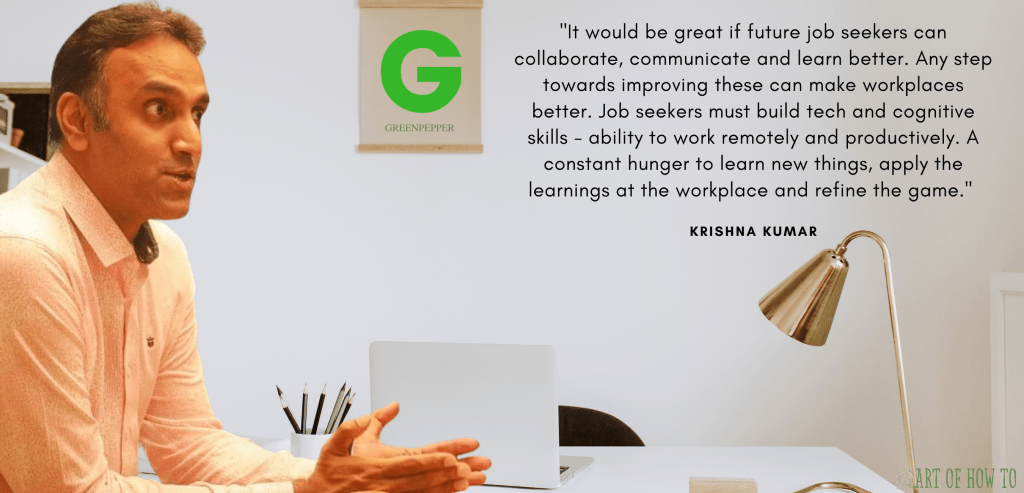
KKIt would be great if they can collaborate, communicate and learn better. Any step towards improving these can make workplaces better. Job seekers must build tech and cognitive skills – ability to work remotely and productively. A constant hunger to learn new things, apply the learnings at the workplace and refine the game. 
CKCWhat changes do you expect in the Job Market? And do you have any suggestions for those seeking new positions? 
KKThe job market is going to be interesting for candidates with digital economy skills. I always say that on various platforms. The only way they can remain relevant and stay competitive is through building it. 
CKCKrishna, thank you for agreeing to be part of this dialogue. This has been an incredible conversation. Could I look forward for more!
KKIndeed, having meaningful conversations help to reflect on what we do in a detached perspective, and build thoughts to make it better. 
Follow Krishna Kumar 
For more information, latest news & updates on Green Pepper Consulting India Private limited.

An Accidental Entrepreneur

Presenting to you, craft revivalist, jewellery designer and preserver of craft heritage, Gina Joseph.

Born to a family from Kerala, Gina grew up in Delhi & Chennai, moved her base to Bangalore after studies and in pursuit of a future. For the next 8 years, she worked in the field of advertising, public relations and corporate communications.  From her first job in advertising to her last stint in corporate communication, she was the best at what she did.

From the very first interaction, I was inspired by Gina. She was dedicated and she knew what she wanted and where she was heading. I have known her since 2014. We both met at the ‘Under the Parijatha,’ exhibition held by Purple Fete in Trichur. We were entrepreneurs working hard to make it in a competitive world, selling our products with passion and the fact is our survival depended on us influencing potential customers and in Gina’s case, spot sales. We had a connection and that spark led to a seven year friendship. Gina’s story is not just adventurous, challenging and inspiring, it most notably is a story for all those who are aspiring to make it on their own.

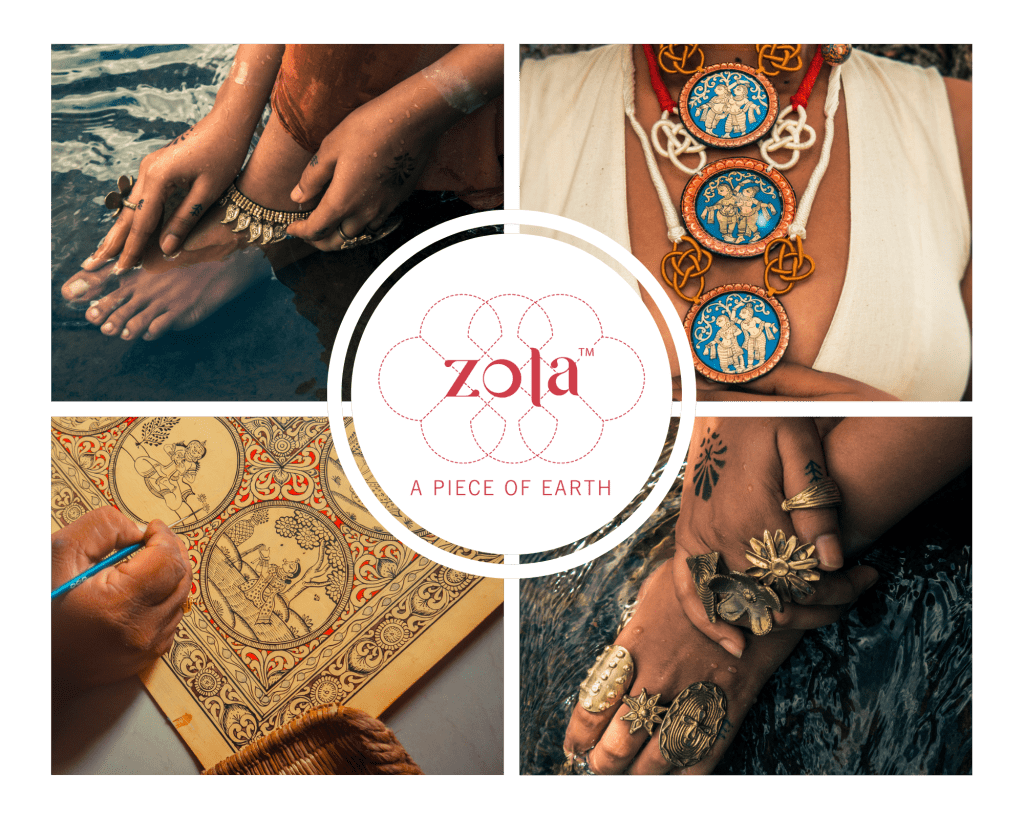
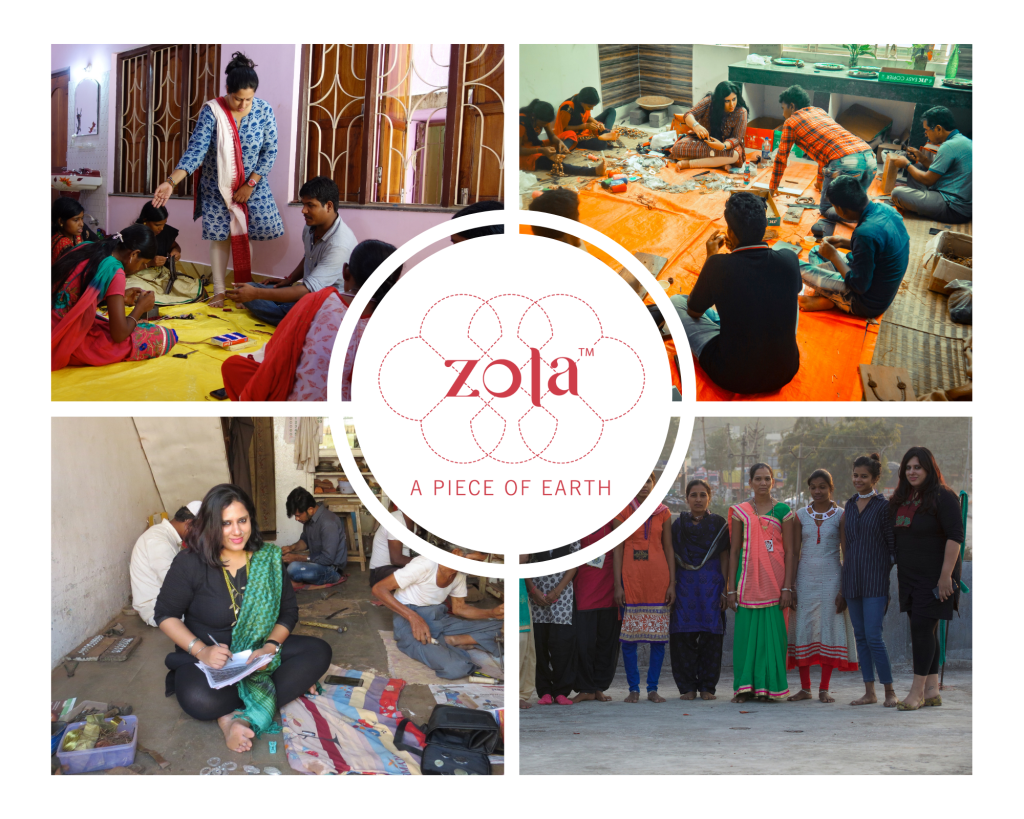
Over the last seven years, Gina has worked with artisans from various parts of the Indian subcontinent through her brand, Zola India. Through Zola, Gina provides a platform for artisans from various craft forms like Dhokra, Pattachitra, Toda embroidery, Wall Mural art, Aranmula mirror art, Leather puppetry and Lac Turnery, Bidri and Bead Embroidery and works along the fourth and fifth generation artisans from Odisha, Tamil Nadu, Kerala, Andhra Pradesh, Karnataka and Gujarat. Gina has conducted over 30 design workshops with over 500 hundred artisans across rural India. Her work is unique and it supports the sustenance of various craft forms and provides artisans a platform to showcase their talent in new style, form and appearance.

Today, I have with me Gina herself, let’s dive into an incredible journey from an advertising internship to entrepreneurship.  How did she do it ? A corporate guru to a craft revivalist ? Let’s go.

A conversation with Chippy & Founder, Zola India, Craft Revivalist & Lead Jewellery Designer Gina Joseph.

CKChip Hey Gina, how have you been? 
GJI am good. Keeping myself occupied, working on new projects, collaborations and more. Considering the pandemic, I am okay. We have had to make a lot of changes and the early pandemic phase is not something I wish to see again. Hope to see the world in a better shape sooner with businesses and the economy thriving.
CKCThe last one and half years must have been testing. How are you coping with the pandemic and how has it affected you and Zola ?
Oh yes. It was indeed testing. It was hard initially. It was our artisan community that was hit hard. They found it hard to make ends meet and carry on with the basic livelihood. 
Now, things are a lot better, and we are striding in a direction that’s sustainable to our artisans and the business. 
CKCHow did you achieve this ?
GJInitially, the artisans were not able to sell their crafts. They could neither make new stock as the sales and shipping channels were closed for over two months. The solution was to create an online presence for our artisans products and create collections virtually. We also urged our customers to make a conscious effort to buy handmade and artisanal products to support the vibrant craft community.          
CKCLet’s move from the heavy topic and make it lighter. 
GJOh yes. Please do.
CKC You always say you were an accidental entrepreneur. Did you ever imagine you would become what you are today ? 
GJNo. Never. Not even once.
CKCSo how do you explain your success?
GJI don’t know how to answer that question. I have done a mix of things work wise. In 2004, I started in advertising. Later did a small stint in Public Relations. Then I was a journalist for about six years and was part of Corporate Communication for three and a half years. I made a conscious decision to take a break from the corporate world & work, and head back to studies. 
CKCThat must have been a hard choice to make.
It took a bit of getting used to, but I wanted a change. I did the Arts Management programme from Dakshinachitra in Chennai where I got introduced to the world of Indian and western art history, anthropology, museum studies and a lot more. I was always an art appreciator and this programme surfaced at the right time in my life. 
CKCSo, this programme kick started your brand.
Pretty much, Yes. There is a story behind this. Zola actually stemmed out of my Indian art project that I had to do while doing this arts management programme. The project was to create three pieces of Toda jewellery by whatever we are inspired from our programme literature or studies.
I was inspired by temple architecture and at that time Hindu mythology was very new to me, I was aware of a few stories, but not many details. Hindu mythology was fascinating for me. I was wowed by the pantheon of gods and goddesses, ancient architecture and the sculptures at these temples.For my project I took three women from Hindu temple architecture. These women were not goddesses, they were at the entrance of the temple. They all have names, a woman hanging from a tree is called ‘salabanjikas’,  a woman who has a parrot on her shoulder is called a ‘madanika’, a woman holding a mirror and staring at it is a ‘darpana sundari.’ Then there are apsaras and devadasi. I found these women more fascinating and interesting than goddesses. I thought why has no one explored more on creating textiles or designs and jewellery based on these women. So I thought I should do it. 
During my time at Dakshinachitra,  I interacted with artisans from across the country, getting to know them, about their craft and artistry. I met an artisan from Orissa here and shared my idea and asked if he could carve my designs onto wood. He sent it across to his brother in Odisha and got the work done in 10 days.
CKCWow, this is exciting. And then what happened. 
GJI created my first three pieces of jewellery as part of my Indian art project . The temple women in Indian sculpture, one was from the Gupta period, one a Madanika from Chennakeshwara temple and another woman with an ornate hairdo from the 10 century. I got them carved in wood and put them together with semi precious stones. My concept was ‘to wear a piece of history on you’. I made it into necklaces and called it ‘Zola.’ 
As I came from an ad world I wanted to brand my project, I didn’t think about it as a business, it was just a project. Zola is an Italian word that means a piece of earth. It resonated with the fact that the craft was part of my country’s history and culture, a part of my soil.  
CKCThree pieces of jewellery changed your life forever. So in fact Zolal is your first child
GJYeap, very much. 
CKCSo that was your beginning, the birth of Zola.
GJIn Fact no. 
CKCOh really. This is getting interesting. Could you please elaborate ?
GJI didn’t have any idea of taking it forward. I thought it would end with the project. I named and branded the project Zola, I did it as part of my history, tradition and culture and I thought a piece of earth really fitted the tagline for my project. That was that. After the project, everyone had rave reviews and everyone enjoyed it as well as loved it. Feedback was ‘you should make something more.’
So I had a conversation with my artisan and he made me realise something and this was a turning point in my life. My project happened soon after the Orissa flood and the money I paid the artisan for their work benefited them in ways I could not fathom. He said ‘with that money we were actually able to manage one months expenses at home. Thank you so much for that work.’ That was the thought I had, the upliftment of artisans with Zola. Still I had no intention of making it into business. 

In the background of Project Zola, I was planning and preparing towards attending the Art Marketing Course based in New York and also working on getting into an internship at the Smithsonian. My aim was to get into art writing and get into selling art. I believed as I had a communication background and now this one year Art Management course gave me new insights, I believed this was the right path for me forward. 

The “aha” moment happened seven years ago, when I had the opportunity to meet Ms Geetha Ram, the Chairperson, the Craft Council of India, (CCI). She knew I had attended the art management programme and I thought it would be beneficial to meet and discuss something totally different, not related to jewellery design. I wore my newly carved necklace and she admired and as well as was genuinely appreciative of it. I had the chance to explain to her my process and talked to her in length about project Zola.

As my conversation with Ms Ram happened, she urged me to do a jewellery design workshop in Odisha.  That’s how I got to do my first Dhokra design workshop in Bhubaneswar with 20 rural artisans. It was a turning point of my life and there’s been no looking back. 
CKCDid that trust encourage you to think about taking a plunge into the abyss?
GJOh yes. The trust in me and my work that was the stepping stone for Zola India. I was scared and at the same time, very excited about the journey . So I went to Odisha and  met the women artisans who came from the village to attend the workshop.  I was at ease and things fell in place. It was a great experience, I just saw lots of beads lying in front of me, lots of petit motifs and different colours of threads. Like a kid in a candy store, I sat on the floor, taking one by one and putting it together and created one piece at a time. At the end of the workshop in five days we made seventy five designs of necklaces, earrings and anklets in all.  
CKCWhat transpired after your first workshop ?
GJAfter the workshop when I came back they managed to get my designs displayed in a store and I was skeptical and told the store owner that I was not sure who would buy my jewellery. 70 Pieces were displayed and after 25 days the store contacted me and they said, ‘Gina, we need to re-stock.’ I was thinking, ‘people love it.’
CKC This must have boosted your confidence.
GJWhat actually gave me lots of confidence was my first exhibition by The Craft Council of India. This was happening just a few weeks  after the return from Odisha. I ordered whatever jewellery I made, but had no idea where I was going to build the capital to pay for it, I was extremely scared. This exhibition was for three days and by the end of it we ended up making a handsome profit. That time my products were available from Rs 300 to Rs 2000. This gave me a lot of confidence to create and take Zola forward. 
CKCSo Zola took off.
GJAfter this exhibition, I started exhibiting in different places, attending exhibitions and also had my products in twenty plus stores in India and also ventured my own online store. Along came design piracy, a lot of my work was getting copied and reproduced and that was hard to deal with.
CKCYour product started trending.
GJI don’t know about that but after a while I thought I should diversify and explore other craft, so I conducted a leather puppetry workshop. Initially people only made lampshades of it, nobody made jewelry. I explored ways to make jewelry from it. So I gave the entire thing a sculpted twist and started making neck collars, earrings and more.  I got to work with senior artisans and went and stayed with them for a week and came back and made it available online. People loved it and it sold out. Again people started reaching out to my artisan and offered him over a lakh to copy my work. Recently for another project, I met with him and he shared an interesting fact, ‘five or six of us work on your project and we only make it for you but more than ten households in the neighbourhood are running because they copy your work.’ 
CKCHow do you feel about it? Should you not challenge them legally !
GJI don’t know how to take it. When Dhokra designs were copied so vastly I had to send legal notice to so many individuals. 
CKCSo that’s all about yourself. Who you are. If someone asks you ‘tell me about yourself’, you will have to start from the beginning, a beginning even prior to Zola. 
GJYes. My work defines me in a big way and I think that’s fine. Especially now, at least in the past 7 years. Before that, I was working for someone else and that was a different phase in my life. No other job in the past gave me so much satisfaction and fulfilment. I realised that this is what I was meant to do.
CKCThat realisation of ‘what I am meant to do,’ is what all entrepreneurs seek. Did you as a child ever want to be in business?
GJNo. Never. I don’t think so.
CKCCan I take you back to your childhood? When you were a kid, did you ever have any thoughts about doing something close to what you are doing now ? How did this interest in art and craft come about, was there anything growing up. 
GJNo. I don’t think so. I was always drawn to making something from scratch. I was crafty as a child. I was interested in embroidery, working with papier mache and anything craft related. I was very alert and interested in craft, it excited me. 
CKCAfter 10th grade/standard, which field did you move into.
GJCommerce.
CKCAfter 12th grade/standard ?
GJB.Sc. Visual Communication
CKCWhat prompted you to move from commerce to communication?
GJI loved the whole course structure and was more inclined towards choosing it because of the advertising unit and writing part of the course. I wanted to get into advertising, so I chose this course. The other part that wanted me to choose Vis Com was for the psychology and media studies part of the course. It was quite interesting. 
CKCWas there any person in particular who you looked up to during your Vis Com days, who gave you a path forward for your future. 
GJNo and yes. I don’t think there was anyone who I looked up to. One exception was Professor Fr. Jerome of Loyola College. He gave me lessons on punctuality and discipline.  Even his lesson plans were not book bound, it was relevant to current affairs of the time from around the world, which was engaging.
CKCWhat happened after your graduation ? As planned, did you step foot in the ad world?
GJYes, I joined O&M Bangalore and stayed there for a year. Moved to Delhi and worked in PR for the next eight months. That was a short stint as I realised I hated PR. During this time I met many journalists and one of them offered me a job. I said yes and joined the magazine, Incredible India and at 21, I held the Assistant Editor position there. From here I moved to India Today, Spice for two years. I moved back to Chennai when I joined the launch team of Time of India and worked with them for two and a half years. Next I joined Uninor in the Corporate Communication team and handled the corporate communication for the whole of Tamil Nadu and Kerala. And my final employment was with Volvo based in Bangalore handling the Corporate communications for Trucks division of India and the highlight was the frequent travels to Sweden. 
CKCThat’s more than ten colourful years of amazing work experience in the advertising and corporate world. You really did well. 
GJAfter I quit my last job, I wanted to take a break for a while. Then, my friend from Bombay arrived to attend the Arts Management Course in Chennai. She started talking in length about this course and the more she describes the more I was tempted to join and I did. And it changed my life. 
CKCBig time !!! Your path to your Zola. 
GJYes, correct. It changed my life in the sense that after the course my path completely changed. After the project work, there were people interested to write about my work. I was not running it as a business until 2015. I used to have minimal collections and did make and sell my products to small groups and exhibitions and displayed in stores.  
CKCWhat changed to go full on business mode ?
GJIn Aug 2015 I did a four month programme called  ‘Crafting Luxury and Lifestyle Businesses’ (CLLB) from IIM Ahmedabad which helped me figure out a business model and investor pitch, which was really helpful in planning the way forward for Zola.  
CKCLet me ask this, how will you describe yourself in one word ?
GJOne word, that’s difficult. If I have to say a phrase not a word, I will have to say, even though I am someone who hates change, but for me change has been the only constant in my life. I hate it. I hate change. If I like a restaurant, I usually end up going to there often.  I don’t like change but change has just been such a big part of my life. 
CKCAll the changes keeps life excited for you right !!!
GJIt does but sometimes it is a little scary. 
CKCSo, if you had a chance to meet your 18 year old self, What would you tell her ?
GJI will tell 18 year old Gina to go and live a little because growing up I was told I cannot do this, do that and I was put into that box from a very young age.  I was just scared to explore anything new. When you are put in a box, you become this very righteous person who thinks if you do X, it is wrong, if you do Z, it is right. I will tell her, ‘people will talk anyway, so just go live your life.’ 
CKCThat’s a good one. And what’s your take on failure. Do you believe, in life, one should fail at least once.
GJYes, yes and yes. In my life it has happened so many times, in so many ways. Failure keeps you grounded and helps you come up with solutions to the problem instead of running away from it. 
CKCWhat do you stay away from mostly?
GJThese days I stay away from toxic people and toxic food. 
CKCAny words of wisdom for your future self ?
GJOh yes. It will happen when it has to happen. I will tell Gina that just continue living the way you are and be open to surprises of life and as said what has to happen will happen anyway. 
What is meant to be yours will be yours. Noone can take that away from you. What’s not meant to be yours how much ever you try to hold it, pull it, it’s not going to be yours.  
CKCYou love Chennai.
GJChennai is home. 
CKCAny plans to move out of Chennai ?
GJNot right now. If there are any opportunities, why not. 
CKCYou have travelled vastly. What’s your favorite city ?
GJIn India, it would be Kashmir. It’s a completely different experience.Outside India, two places that fascinated me so far, first, Oslo, Norway because it was extremely cold. It was -24°C. It was paying a price for beauty. Everywhere I set my eyes, it was picture perfect.Second was Maasai Mara, Kenya. I loved it there. I had the opportunity to watch the great wildebeest migration, it was magical and I have never experienced anything such as this. 
CKCWhat are your future plans for Zola ? What are the new projects and what’s new ?
GJPandemic has definitely changed me to push things around. It was a testing time for Zola and for myself. Like most small businesses we have had to change and make changes. As I said, change makes me very uncomfortable but it excites me again when I get a little bit comfortable with the change. 
So I am coming up with other product options other than jewellery. We are currently working on decor products, home decor and games.
CKCDiversifying is essential. And your new projects will also have craft as your underlying factor.
GJYes diversifying and of course and definitely everything I do will be craft oriented. No change in that. 
CKCHas there anyone who mentored you when you changed path and stepped into the craft world ?
GJWithout a doubt, Ms Ashrafi S. Bhagat. She is a living legend. For me, Ashrafi was my guru and mentor, when I did my Arts Management Programme. I don’t think I have seen so much discipline, commitment and passion towards art from anyone else in my life like I have seen with her. I was destined to meet her and she has definitely been an inspiration.
CKCIf you look back, from an internship at O&M, to PR to Incredible India to India Today to Times of India to UNINOR to Volvo to a project that launched an entrepreneur. It’s been an incredible journey. 
GJYes, when you say that loud, it sure sounds incredible. I agree, it’s been an incredible journey, it’s true and quite crazy too. 
CKCYou should be proud of yourself for what you have achieved. I am so incredibly happy to have known you from your humble beginnings. You are a woman who inspired me and still inspires me. I mean it. I wish all those who get a chance to read this piece will be inspired and motivated to aspire for more. Not many can take the entrepreneur pathway, it’s not an easy task. 
GJI was pushed into it. And then I kind of quite enjoyed it. Literally, one year into Zola, I was offered a job, I said,’no thank you. I’m going to stick to my business.’ 
CKCThat is the fact. Once you are an entrepreneur and you set your ideas into motion, you know your potential and you will never want to work for someone else. You want to work for yourself, build up your skills for your projects and products. It’s a different mindset and pathway all together. 
GJAbsolutely true. 
CKCPeople are wearing your craft as art and it’s very fascinating. What you expected has happened and it must be very meaningful to you. Wearing your jewellery is like wearing a piece of our heritage. 
GJOh yes. My idea and concept was ‘to wear a piece of history on you,’ and also it was to give people an opportunity to wear something traditional in a modern way. Zola is helping craft to be seen and worn and enjoyed.
CKCYour craft has had few famous personalities adorn them. 
GJAll my clients make me famous when they wear my piece. I love it when I get to see my customers in one of my jewellery. It’s an amazing feeling. Richa Chadda has worn quite a few of my pieces. She did wear them with so much love and passion. I was very excited when Revathy wore my necklace. As a big Revathy fan, it was a dream come true. Reema Kallingal got a few of my jewellery while I did an exhibition in Kerala. I am blessed to have customers across India and the globe. 
CKCI believe all your customers become famous when they wear Zola. It enhances our personality and Zola for sure is a confidence booster. That’s my take on it.
GJThat’s very kind of you to say that. It was so good to talk and once again relive my journey. I enjoyed it thoroughly. 
CKCI am glad we did this. I am hoping our conversation reaches that one person who is looking for that one story that not only inspires but also assists in making that first step in making a choice, a decision, a move that will change their life. Fingers crossed.
GJFingers crossed. Thankyou for having me.
Gina's mentor and friend, in her own words,

"I have known Gina for the past seven years, initially as a student of Arts Management at Dakshinachitra and later she maintained her contacts with me developing a relationship that went beyond guru shishya to that of a warm camaraderie, which extended to becoming travel companions when we started visiting kochi Biennale. Gina developed a passion for art in her arts management programme. From pictorial Indian art traditions of arts and crafts as well as modern Western Art history, she articulated and extended her knowledge when she initiated designing jewellery and other crafted forms. With sufficient knowledge of art history and traditions, Gina jumped into the fray of jewellery designers but with a distinct and different touch. 

Gina is innovative, always in quest to introduce originality and novelty, contemporizing crafts and art designs to suit the market and individual needs. She is meticulous and thorough in her research; paying similar attention to the finish of her products. Through her venture - Zola A Piece of Earth, she provided opportunities to several craftsmen in Orissa, Kerala, Karnataka and Tamil Nadu in generating income as well as employment and most importantly keeping the craft tradition alive. She has created and designed varied ornaments that are as evocative and beautiful as they are poetic and wearable all created according to her contemporary sensibility. 

Gina's success lies in her humility and respect for knowledge. She is warm, gentle, loving and empathetic. An enterprising entrepreneur, a supportive friend, generous hearted and an intelligent companion she can light up anybody's life with her contagious laughter and optimism. She has an aura of positivity about her and I consider myself fortunate in having known her and having her in my life." 

Dr Ashrafi S. Bhagat
Artist, Art Historian, Art Critic, Author and Curator
Associate Professor & Former Head, Stella Maris College, Chennai

For more information, latest collections, news & updates on Zola india

Visit online store

CLICK TO SHOP NOW

Step Up & Inspire

Listen to this Blog Post : Step Up & Inspire. 

‘Step Up & Inspire’, that’s my purpose. It sure sounds simple, nevertheless a tad bit complicated. Growing up in southwestern coastal state of India during the 80’s and 90’s there were not many icons or personalities to look up to. Like me, most lived with families, some large and some ‘nuclear’ with loving and annoying siblings, cousins, or relatives. So who did we look up to ! By default, our family, extended families, family friends, our school, the teachers and the staff and most definitely our friends. They influenced and shaped us to be better or worse, even without our knowledge. We look up to someone in this circle and one among them will in turn become our ‘role model,’ who will mould us to become someone they want us to be, rather than what we want. The fact of the situation is we never knew what we were capable of. Some among us, still live another person’s vision of us not knowing what we are really meant to do or be. 

This is the reality for most of us in this world. We are better off on our own and the more we let someone else decide our path, the more we let our ‘self’ fade away. Over the last fifteen years I have come across some amazing individuals who have carved their own destiny. It may not have happened as and when they wished, yet they made it happen and they want to share their amazing stories and here at ‘Art Of How To’ we will be bringing you those breathtaking tales of persistence, dedication and determination. With each story we will be presenting to you one of those extraordinary lives and hope to inspire and help take charge of one’s life. 

Let’s make sure we figure out who we are, what we are meant to be and where our path leads us. Let each one of us find our own path and make sure no matter what happens, win or lose, succeed or fail, we will always get up and march on and get going. 

Here are some of the amazing stories from real life people, who made it even when everyone around them broke them, even through the difficult of difficult times they picked up the pieces and work towards their goal. They paved a path for themselves. They are the unbreakable, role models for young and all. Let’s get inspired to step up in our lives.

10 Ways To Get Started 

Listen to this Blog Post : 10 Ways To Get Started
Duration : 23:16 Minutes

Let it be the beginning of the day or let it be life itself, we need to start somewhere. Most of the time, we wing it and hope for the day to take its course. We tend to go with the flow. We tend to accept the fact that going with the flow is OKAY! Is it? Never. If we are accepting this path in life, it has to stop. We should not make do of a path where we are not sure what we must do. Clarity on what we are, who we are and where we are headed are critical and it’s crucial to our very existence. Knowing what to expect from our daily life and leading a path forward is the key to our happiness and in the long run leads to making our life worth every second we breathe.

How can we take control of our life one day at a time.

Nothing can be achieved in a day. It takes effort, perseverance and will power to make a change in life. That happens when we take that one small step, the step to make a change in ourselves and in our life style. Once we are ready, we will slowly learn what we want and we simply unclutter our minds and look forward to plan a future we aspire. We will only get to know what we need when we search within ourselves. Here are ten productive ways to get started and be focused & make your day easier and more manageable. 

1. Know Tomorrow Starts Today
2. Create Daily Routine
3. Dress to Impress yourself
4. Switch on Work Mode
5. Work on Your Emotional Wellbeing
6. Have a friend or friends on tip of your finger
7. Practice Mindfulness
8. Read, Read & Read
9. Reward Yourself
10. Enjoy your Weekends

1. KNOW TOMORROW STARTS TODAY

Yes, that’s true. Today we plan for tomorrow, so tomorrow starts today. The sooner we realise, the faster we adapt. No matter what we do, we have to plan ahead. We cannot wake up ‘today’ morning and plan, organize and schedule our day. We have to plan ahead. We all know the effort it takes to organise a birthday party. It needs careful preparation and planning. Invitations to be send out, catering to be arranged, venue to be decorated, games to be prepared, cake to be organised and the list goes on. We need to map out a plan for everything in life. Sudden impulse and spontaneous decisions do happen in life, one must envy people who can live all their life in that fashion. Yet having a schedule for the day is more productive and keeping a system in place for our day is essential. We don’t need for a master plan, a simple plan of action will suffice. How do we plan ‘Today, a tomorrow,’ here are few ways to do it.

  1. Set reminder. For all plans and actions, use reminder. Set alarm to start work and allocate and set time for all activities.
  2. Use Calendar. Let’s time each event or activity on our calendar. Organise and schedule using calendar. From work out to car wash, meetings at work to catching up with friends, schedule and allocate time and calendar it.
  3. Create a ‘to do list of the day’ and check the progress on each activity on our list. If you missed an activity from the list, reschedule for later that day or the next day or for a suitable time. We should try to complete the hardest task first in the morning. Most importantly, focus on one task at a time.
  4. Set deadlines. Please do not slow down your efforts on a task by prolonging it for too long. If a task is rescheduled or postponed twice, put all efforts to complete by the third reschedule.

2. CREATE DAILY ROUTINE

Our happiness and productivity depends on our routines. Not only does routine gives a sense of control over our life but also it gives a meaning to our life. Making our bed is as meaningful routine as walking 30 minutes a day to keep ourselves active. It’s that simple. Yet we are lazy to act. The fact is we should just follow a routine. Yes, just do it. Least we can do is give a try. How can we make this possible, here are a few tips.

  1. Wake up early. Before rushing off from the bed, sit on the bed for few minutes and let’s just relax, breathe easy and use this moment to be thankful for the day. Earlier we are up, the more time we have for rest of our day. We can make time for all our activities without rushing out and pushing or squeezing everything to the last moment. We should try waking up daily at the same time, it sure will assist us to maintain time, a balance our activities and keeps us in order.
  2. Make your bed. Simple chore yet we all feel it is not important. Before we start any any activity, first routine should always be bedmaking.
  3. Exercise. Regular exercise gives us energy throughout the day. If we cannot find time on a regularly, at least 3-4 days a week will be great. Active body keeps us happy and our mind will be more open to challenges ahead.
  4. Check ‘to do list of the day‘. We should make a habit of checking the list for keeping up with the progress on scheduled activities and events as this makes our day better by keeping our list crossed. If something has to be rescheduled, do it ASAP.

Few other routines to add are

  1. Hydrate. Drink plenty of water. Water before and after meal assist with good digestion. It flushes out bacteria from our bladder and also prevents constipation. Consuming 1 – 2 litres of water daily is good for health.
  2. Eat well. All of us have a busy schedule and we tend to skip a meal or consume too much junk food. If possible have two healthy meals a day. Have an early breakfast. Most of us who are working, doing a small business or studying tend to do takeout or eat out at a spot near our work space. Keep it healthy and reasonable by including plenty of proteins and salads.
  3. Find time on a hobby. Yes, after a tiring day at work or school, we all tend to relax. No. Don’t try to relax. instead we should keep ourselves relaxed by taking on a hobby, such as lego building and collecting, solving puzzles, joining a book club, learning a new language, taking on painting, gardening, carpentry, evening walk with friends, attending a dance class or learn to play music, these are some great hobbies. Now as online lessons are in trend, anything we want will have a online option available. A hobby is also a way to figure out what other things you are good at and expand on it. Many small businesses started from a hobby. Fingers crossed.
  4. Disconnect. Hard as it may be, we should cut ourselves from the devices at least for 30 minutes or an hour daily . This 30 minutes can be used to reflect on ourselves. Prepare our ‘to do list’ for tomorrow.
  5. Journaling. Reflecting on our day and writing down about the day is therapeutic. From what happened, to things that made us happy, to people who made us happy or upset, an event that didn’t go well, or mistake we made in our business. Journaling helps us to express ourselves. It is believed this exercise can keep ourselves in check and sane.

3. DRESS TO IMPRESS YOURSELF

Yes, you heard that right. Dress for yourself. Period. Wearing a piece of cloth to make ourselves happy is the best way to feel content in life. Our style may not be something others like. That doesn’t matter because developing own signature style is worth the effort and ultimately rewarding. It’s selfcare. Moreover, wearing what we are comfortable with happens to be the only way to be truly ourselves. It makes us who we are. So in short, wear what you want. Here are reasons why.

  1. Impress self. The moment we realise we don’t have to impress others we impress ourselves.
  2. Wear what makes you happy & fab’. Wear anything that makes us cheerful and fabulous. We all have own own style, we all know what suits us, what style fits us, we all have own fashion and a sense of what is best for us. When we wear what we love, our body positivity also doubles. If any of you have not thought about it, it’s time to do so.
  3. Our view on ourselves change. Our attitude, behavior and performance have deeper impact on how we view ourselves when we wear an outfit that we love. Wearing what we like keeps us comfortable. Don’t let anyone tell you otherwise.
  4. Confidence. Wearing what we put together with confidence and blend it with our best accessory, our smile or smize. Attitude !!!
  5. Comfortable. When you dress for ourselves, we will be comfortable. Always.

4. SWITCH ON WORK MODE

Be it work, business or study, it is essential to have a scheduled. Time management is key. Yes, that’s why it’s so important to wake up early. We have 24 hours in a day and in that the first few hours after we wake up takes all our effort. It starts when we make our bed, brush our teeth, meditate or go for a jog or run, wake up kids if you are a family, prepare breakfast/s, get ready for work or school. We work about 8 hours a day, that includes our daily tasks at work or business, meetings and more, packing, mailing and delivery of our products to our clients or when in Uni we hop from class, to library to catch up with fellow classmates, to research labs, to debate halls, to seminars sessions and that takes our entire day. Let’s not forget the to and fro travel to work, trip to post office or mail room to ship products, kids drop off and pick up, that takes 2 to 3 hours from our daily life. In the end, we are left with just 4 hours and we hit the bed. If you are business owner, your work time may alter as it’s literally a 24/7 schedule. Even then one needs to have a work time and off time. Balance is not something we have in this pandemic world, there is a shift in our style of work, we are always on work mode, we forgot when to disconnect. Keeping a balance is possible. It’s hard. We can give it a try. How do we power up our work mode and make it effective?

  1. Plan. Starting the day without a well organised to do list is pointless. Just as we have a to do list for your day, at work it is crucial to create a daily schedule. With each task assign a time limit and this schedule will help to manage time at work efficiently. Hard tasks first.
  2. Prepare. At the end of the day and well before logging off for the day, prepare a list of the most important tasks for the next day. If there are any pending tasks, list them down. This will help to be organised for the next day.
  3. Prioritise. Key to successful time management is prioritizing. More than urgency, prioritise tasks on ‘to do list’ based on importance.

5. WORK ON EMOTIONAL WELLBEING

Mental health. Yes, we need to talk about it. Our ability to deal with life’s challenges is emotional wellness, it includes dealing with our feelings, thoughts and emotions as well. The world we live in has changed drastically. None of us have time for anything and let alone for anyone and this means we need to work on our self, by ourself. Keeping our emotions in check and mental health in check should be number one in our list. How do we do that. Here are few tips on how to work on emotional wellbeing.

  1. Say ‘NO’ when you need to.
  2. Seek help when you need to.
  3. Be aware of your emotions.
  4. Be aware of your surroundings.
  5. Think before you act.
  6. Keep away from toxic people.
  7. Surround yourself with people who care about you & your well being.
  8. Be active.
  9. Keep learning.
  10. Do something for a friend or a person who needs help. Look out for others too.

IMPORTANT MESSAGE

If you or anyone you know needs help and support please reach out to a crisis resources center near your area.

Seeking help is human and it is the first step to recovery.

6. HAVE FRIEND OR FRIENDS ON TIP OF YOUR FINGER

Friends, we all need at least one who we can reach out to, who will be happy for you when something great happens in your life and who will hold you together when you are at your worst in life. Friendship is hard and to find that person or a few is a blessing. As it is said, a good friend will enrich your life and improve your health. So, we do need a friend/s in our life. And what friend/s do we need around us ?

Say it loud, I need –

  1. A friend who is always honest.
  2. A friend who is trustworthy.
  3. A friend who is respectful of me & my choices .
  4. A friend who will love me for myself.
  5. A friend who believes in me.
  6. A friend who will find time for me.
  7. A friend who is thoughtful & mindful.
  8. A friend who will stay with me during the best and the worst times.
  9. A friend who is non-judgemental.
  10. A friend who will stand up for me.

7. PRACTICE MINDFULNESS

In life, we play the game of tug of war on a daily basis. We are constantly pushed into a box and pulled out when it suits someone and squeezed into situations we are uncomfortable and in the end we remain constantly in a stressful, emotional and in a frustrated state. How do we get out of this mess ? We have to because we are losing our relay with the present moment and we are missing out on how we are feeling. We have to focus our attention on the present moment by being mindful. Mindfulness helps to relieve stress. Research has found it helps with increased happiness. Our mental and physical wellbeing is restored through mindfulness. How do we practice mindfulness ?

  1. Kick start the day with right mindframe. Once we wake up, and before rushing to start our day, just sit on the bed for a few minutes and take that time to be thankful for the day. Just sit and reflect.
  2. Go out. Find time to get outdoors, a walk around the block or stroll through the park is all that matters. It helps to be present at the moment.
  3. Meditate. Meditation is a stress buster. Disconnect from all your devices and connect with your mind alone.
  4. One task at a time. Focus on one mission at a time. There was a time all resumes had multitasking as a skill. In recent years it has become clear that multitasking increases mistakes and if you focus on one job at a time, the quicker the task is completed and the faster we can move on to the next one. this is a much relaxed way to do chores or tasks and this mindfulness is what helps us live in the present moment.
  5. Take up a hobby. Encourage creative side. Take up a hobby that will help master a new art or talent in life. Use this new found hobby as a platform to express yourself creatively and make own creations and let the work speak. Use this as a stage to express thoughts and feelings and do it guilt free. Expressing feelings through dance, songs, music, art, installations, and more, let the hobby you take up keep you thankful and mindful.

8. READ, READ & READ

As Jhumpa Lahiri once said, ‘books let you travel without moving your feet’, and as Haruki Murakami once said, ‘if you only read the books that everyone else is reading, you can only think what everyone else is thinking.’ It is true, ‘you are what you read.’ Books make us and break us, they keep us grounded and keep us informed, books helps us to escape to a world far away and help us to walk in someone else’s shoes. Reading can be magical, realistic and futuristic. Why do we always hear ‘you should read’, why do people list books to read. Here are the reason why.

  1. Reading is a stress buster. Relaxes mind and gives relief from the present stress.
  2. Reading keeps mind and body active. Our brain functions well when new knowledge and wisdom is passed on. Reading helps improve our language, vocabulary, critical thinking and gives us a much better understanding of the world around us. It is said, reading also increases our lifespan. Reading is an activity that helps our brain to keep engaged and increases concentration, which in turn improves memory.
  3. Reading increases happiness. 30 minutes of reading in a day can make you feel satisfied, as reading can improve mental health. As Stephen King explained, ‘books are a uniquely portable magic.’
  4. Reading makes you more tolerant, empathetic and understanding.
  5. Reading can transform us as a person. Good books, be it biographies, self help books and autobios, they have a tendency to transform a person. One can identify with the other person in the book, connect with their emotions and struggles, it is a way to transform oneself and book can definitely assist in changing a person for the best.

9. REWARD YOURSELF

Yes, we have the right to spoil ourselves. When we reach a goal self reward. Say to self, ‘I deserve it.’ It’s a pat on the back for a job well done and a reason to treat self to something you love. We can indulge, dive into luxury and present ourselves a gift for the hardyards we put in. Why some may ask ! Because it works. We should always remember to be kinder to ourselves. Treating ourselves well, will keep ourselves motivated and inspired. Self rewarding has many perks. In our path to reach the goal, a personal reward system helps to keep going when the going get tough. Always make sure you choose a reward that will makes one feel great but make sure to choose the right reward. Right reward means choosing something that will encourage ourselves more of a behaviour that lead us to our goal. Choosing the right reward for self is happiness. Here are the few benefits of self rewarding.

  1. Self Rewarding improves self esteem.
  2. Self Rewarding improves self confidence.
  3. Self Rewarding improves self respect.
  4. Self Rewarding improves positivity within self.
  5. Self Rewarding improves sense of pleasure.

10. ENJOY YOUR WEEKENDS

Weekends are time to disconnect from devices & reconnect with friends and family, it’s a time to reflect and relax. If anyone knows how to enjoy a weekend, it will definitely be the Germans. For them Saturdays they enjoy to the core, it’s a family day, time to hang with friends and do the essential shopping et al. And Sundays, ‘Ruhetag,’ which literally translates to a day of rest. According to the law, Sunday is a day of rest and all activities that will disturb the peace, calmness and tranquility of the day are forbidden. Yes, they have a law.

We should have that in our life, a law of rest in our life. As soon as Friday hits, our work brains should shut down. All we should think is Friday night dinner with friends/colleagues or family or movie night with family, or a trivia night at our pub or a quiet night with sweetheart or just curl up in bed with a book. Once we log off from work our mind is searching for freedom and is in search for cut off from all that stress and buzz from the reality.

So why should we have a weekend and why is it so important to enjoy it and how can we make the weekend productive and more enjoyable. Here are some pointers.

  1. Wake up as usual. As lovely as it may sound, sleeping in on a weekend will disturb your regular flow of activities and a break in your pattern can alter a lot in life. Yes, it is tempting but continue as usual.
  2. Disconnect. The whole idea of a weekend is to de-stress and re-charge. One way we can make that happen is if we disconnect from devices for at least half a day. We live in a online world, everyone is 24 hours online, either shopping and selling. the buyer and the seller, we both need a day of break. We get sucked into the success of a business and we forget to care for ourselves. If you are working a 9 to 5 job, you must log off on Friday and reconnect with work only by Monday. All of us need a break to breath and enjoy life. Yes, we deserve it.
  3. Connect with family or friends. We live in such a rush, we almost forget to find time for those who matter to us the most. Weekends can be a time to connect with them. A call (zoom, whatsapp )or a visit (if possible) should be in the agenda. We can catch up with an old friend or plan a dinner with folks, coffee & cake with favourite aunt or cousin, boys day out or girls day out with friends or family. There are so much we can plan for every weekend to spend quality time with friends and family.

Few other pointer to reflect on are

  1. Try something different. Do something that wasn’t done before. For example, go for a hike, travel to the mountains, reserve a table at a fancy restaurant that was in the wishlist, go see a opera or a musical. There are so much to try.
  2. Plan for next weekend. Yes, that’s right. ‘What would you like to do next weekend ?’ Scheduling activities ahead can give something to look forward to. As soon as the week is over, we know what we have instore for us. It’s a good feeling.
  3. One full day of no work. Sounds easy and exciting. Of Course, hard to follow. We can try to make Sunday a Ruhetag in our lives. No chores, no studies, no work, no activities, or it could be more like less chores, less studies, less work, less activities. We should disconnect from devices and just reflect on self or make it purely a family day, just mom,dad and kids.

In conclusion, know this, we can start somewhere to make a change happen. Take few pointers from here and apply in life and see if that makes a change. Take small steps, stick to a routine, work smart, disconnect from all electronic devices at least 30 minutes daily, plan, prepare and prioritize everything in life and stick to your schedule. If changes happen, re-schedule or why not start over. Yes, start all over. Stay happy, eat healthy and keep yourselves in high regards always. Always.

Do Follow our blog 'Art of How to' on Instagram & Facebook. 

To Listen to all our Blog Posts visit Art of How to PODCAST on Anchor.fm